This article contains Amazon affiliate links. As an Amazon Associate we earn from qualifying purchases.
\n
\n
In short :
\n
- \n
- Warm wood is your safest bet for a leather sofa, especially in a round or softened shape.
- Size your table to about two-thirds of the sofa’s length so the proportions feel right.
- Glass and stone can work, but balance their coldness with soft textures around them.
- Match the undertone of the table to your leather rather than chasing an exact color match.
- Pick something you can live with daily, not just something that looks good in a photo.
\n
\n
\n
\n
\n
\n
\n\n
A leather sofa is a statement piece. It’s warm, it ages beautifully, and it anchors a living room with a certain quiet confidence. But here’s the catch nobody mentions when you’re admiring that sofa in the showroom: leather is a bit of a diva when it comes to its neighbors. Pair it with the wrong coffee table and the whole room can feel off — cold, cluttered, or worse, scratched.
\n\n
This guide has helped friends and readers style leather seating in everything from tiny city apartments to sprawling family rooms, and the same questions keep coming up. Glass or wood? Round or rectangular? How do you avoid the dreaded “airport lounge” look? The truth is, there’s no single perfect table — but there is a perfect table for your leather sofa, your room, and the way you actually live. This guide walks you through the decisions that matter, so you can choose with confidence instead of guesswork.
\n\n
Start With the Material: What Plays Nicely With Leather
\n\n
Leather has a rich, tactile surface. It reflects a little light, it has visible grain, and it’s naturally warm in tone. The material of your coffee table either complements that texture or fights it. Here’s how the main options stack up in real rooms.
\n\n
Wood: The Safe, Warm Classic
\n\n
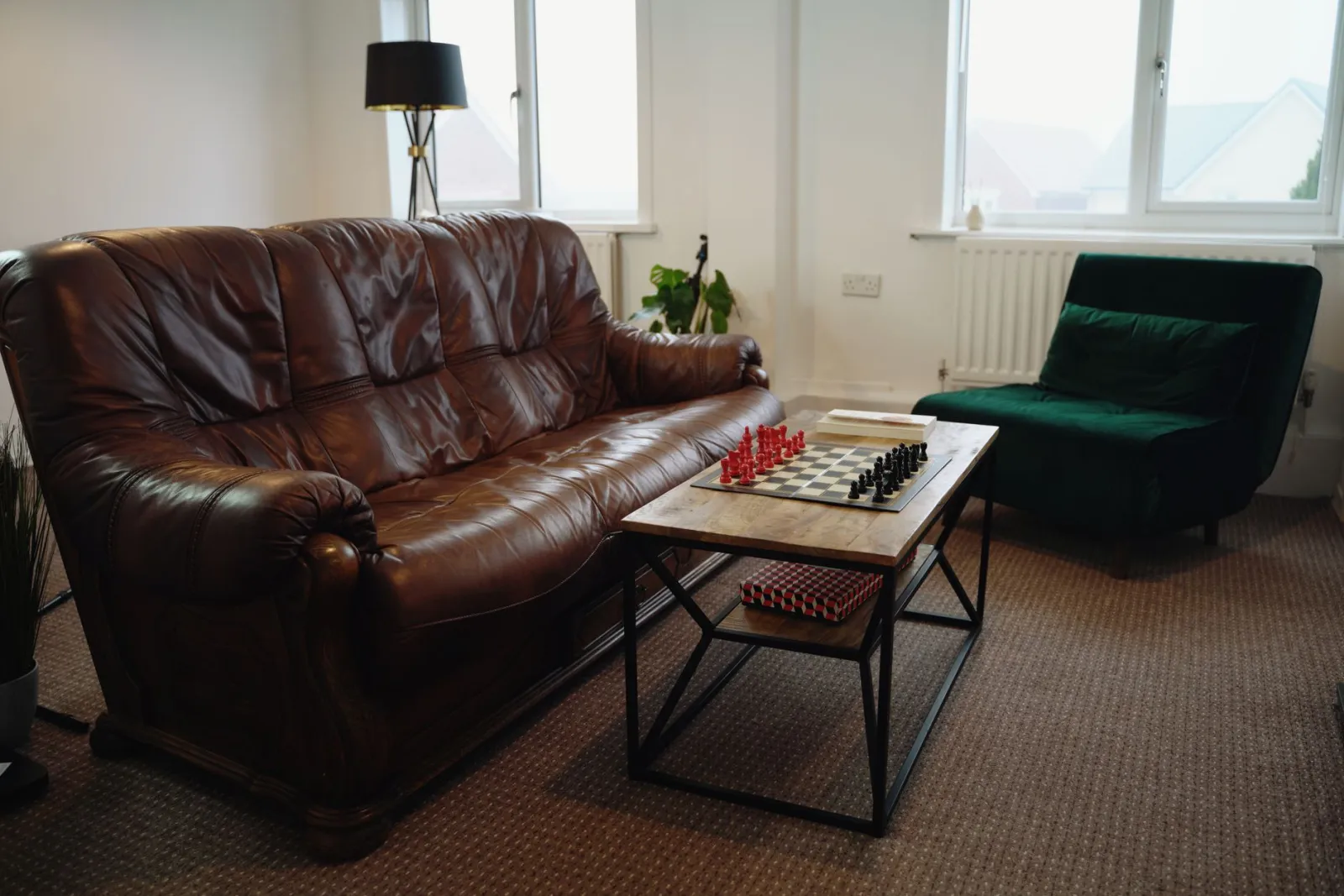
Solid wood is the natural companion to leather. The grain of an oak or walnut table echoes the organic feel of the hide, and the warm tones sit comfortably together. This is the pairing recommended most often, especially for traditional and mid-century rooms.
\n\n
A common story: someone buys a glossy black lacquer table for a cognac leather chesterfield. It looks stunning in photos but feels clinical in person — like a hotel lobby. Swap it for a reclaimed wood table and the room instantly feels “lived in.” That’s the wood effect in a nutshell: it softens leather’s formality.
\n\n
Glass: Bright, But Handle With Care
\n\n
Glass opens up a small room and lets a beautiful rug show through. It works well with sleek, modern leather sofas. The downside? Glass can feel cold next to leather’s warmth, and it shows every fingerprint and dust particle. If you have kids or pets, think twice — a glass top and a leather sofa in a busy household is a lot of wiping.
\n\n
Metal and Stone: Bold Statements
\n\n
Brushed metal or a stone top (marble, travertine) creates a striking contrast. A dark leather sofa with a pale stone table looks gallery-chic. Just be aware that hard, cold surfaces next to leather can tip a room toward “corporate.” Add a textured rug and a soft throw to bring the warmth back.
\n\n
| Table Material | Best Paired With | Watch Out For |
|---|---|---|
| Solid wood | Warm-toned, traditional, mid-century leather | Very dark wood can feel heavy in small rooms |
| Glass | Sleek modern sofas, small spaces | Fingerprints, cold feel, less kid-friendly |
| Metal | Industrial or contemporary leather | Can feel cold; needs soft textures nearby |
| Stone | Dark leather, statement rooms | Heavy, hard to move, can chip |
\n\n
Shape and Size: Getting the Proportions Right
\n\n
This is where most people go wrong — and it’s the easiest thing to fix. A coffee table that’s too big crowds a leather sofa and makes the room feel cramped. Too small, and it looks like a lonely island.
\n\n
The Two-Thirds Rule
\n\n
A reliable guideline: your coffee table should be roughly two-thirds the length of your sofa. So a two-meter sofa pairs well with a table around 1.2 to 1.3 meters long. Leave about 40 to 45 centimeters between the sofa’s front edge and the table — enough to walk past comfortably, close enough to reach your coffee.
\n\n
Round, Rectangular, or Organic?
\n\n
Leather sofas tend to be boxy and angular. A round or oval table softens those straight lines and makes the conversation area feel more inviting. A rectangular table, on the other hand, reinforces a crisp, tailored look — great for formal living rooms.
\n\n
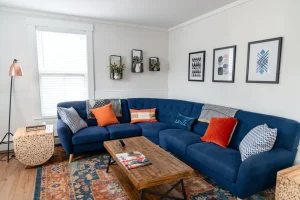
Here’s a concrete example. A large L-shaped leather sectional with a rectangular table can feel “stuck in a corner.” Switch to a round table, and suddenly the seating feels like a proper gathering spot. The shape changes the whole dynamic, not the furniture.
\n\n
Height Matters More Than You Think
\n\n
Your table should sit roughly level with, or just below, the seat of your sofa. Too low and you’ll be leaning awkwardly for your drink. Too high and it visually competes with the sofa. If your sofa has a low, deep seat, choose a lower table to match.
\n\n
Color and Finish: The Details That Make or Break the Look
\n\n
Now for the fun part. Color is where you can either harmonize or create a deliberate contrast.
\n\n
Match the Undertone, Not the Exact Color
\n\n
You don’t need a table that matches your sofa perfectly — that can look matchy and flat. Instead, match the undertone. A warm brown leather pairs beautifully with warm woods and brass accents. A cool grey or black leather works better with cooler tones, pale stone, or matte metals.
\n\n
Contrast Is Your Friend
\n\n
Light leather sofa, dark table. Dark leather sofa, lighter table. That contrast creates depth and keeps the room from feeling monotone. A tan leather sofa with a deep walnut table is a classic that never looks dated.
\n\n
One practical tip from experience: if your leather sofa is the star of the room, keep the table quieter. A busy, heavily patterned or heavily carved table competes for attention and can make the space feel cluttered. Let the leather breathe.
\n\n
Practical Considerations for Real Life
\n\n
Style is lovely, but you live in this room. A few down-to-earth checks before you commit:
\n\n
- \n
- Kids and pets: Rounded edges beat sharp corners. Avoid glass if you have toddlers or enthusiastic dogs.
- Storage: A table with a lower shelf or a drawer hides remotes, magazines, and coasters — a lifesaver in family rooms.
- Weight: Stone and solid hardwood tables are heavy. If you rearrange furniture often, consider something lighter.
- Maintenance: Leather needs occasional conditioning; wood needs the odd polish. Glass needs constant cleaning. Pick the upkeep you’ll actually keep up with.
\n
\n
\n
\n
\n\n
A reader with two young boys chose a sturdy wood table with rounded corners and a lower shelf. It survived juice spills, toy cars, and the occasional fort-building session — and still looked good years later. That’s the kind of table worth buying: one that fits your real life, not just your Pinterest board.
\n\n
How to Style the Table Once It’s Home
\n\n
Choosing the table is only half the job. What you put on it decides whether the room feels finished or fussy. A few principles that work with almost any leather sofa:
\n\n
- \n
- Keep it low and layered. A stack of books, a shallow bowl, and one object with texture (a small ceramic, a candle) is usually enough. Height on a coffee table blocks sightlines and makes the room feel smaller.
- Repeat a material from the room. If you have brass lamp bases, echo that with a brass tray. If the sofa sits on a wool rug, add a wool or linen element on the table. Repetition is what makes a room feel intentional.
- Leave breathing room. Roughly a third of the surface should stay clear. It sounds trivial, but an empty patch is what makes the styled parts look deliberate rather than cluttered.
- Protect the leather, not just the table. Coasters and a soft mat under heavy objects matter, but so does the gap between table and sofa. Bumping a hard table edge into leather repeatedly is one of the most common ways sofas pick up scuffs.
\n
\n
\n
\n
\n\n
A Real-Life Example: The Small Apartment With a Big Leather Sofa
\n\n
Picture a one-bedroom apartment where the living area doubles as a dining space and a home office. The centerpiece is a deep, dark brown leather sofa — comfortable, but visually heavy in a room that’s maybe four meters wide. The original coffee table was a large rectangular glass piece with a chrome frame. On paper it was the “space-saving” choice. In practice, it reflected the TV, showed every smudge, and made the seating area feel like a waiting room.
\n\n
Here’s how the situation gets resolved, step by step, using the principles above:
\n\n
- \n
- Downsize the footprint. The glass table gets replaced with a round wooden table roughly two-thirds the length of the sofa. The round shape means no sharp corner jutting into the walking path between the sofa and the kitchen — a small change that makes the whole room feel easier to move through.
- Warm up the palette. The new table is a mid-tone oak, which picks up the warm undertone of the brown leather instead of fighting it. The chrome is gone, so the room no longer has two competing cool surfaces.
- Add softness around the hard edges. A textured rug goes underneath, and a throw basket sits beside the sofa. These aren’t decorative extras — they’re what stops a leather-and-wood pairing from feeling austere.
- Style with restraint. A tray holds the remote and a couple of coasters; a single stack of books and a small plant fill the rest. The surface stays mostly clear, which matters in a room where the table also serves as a desk overflow and a dinner spot.
- Plan for daily use. Because the table is wood, it gets a felt pad under the plant pot and a coaster rule that everyone actually follows. The leather sofa keeps its distance — no one drags the table across the floor to reach an outlet.
\n
\n
\n
\n
\n
\n\n
The result isn’t a magazine spread. It’s a room where the sofa still leads, the table supports it, and nothing feels like it’s fighting for attention. That’s the goal. Notice that none of the decisions were about buying something expensive or trendy — they were about proportion, undertone, shape, and daily habits. Those four levers do most of the work in any living room, whether the space is a studio or a suburban family room.
\n\n
The same logic scales up. In a larger room with a tan leather sectional, the equivalent move might be a longer rectangular wood table with a lower shelf for storage, paired with a lighter rug to keep the floor from going dark. In a formal room with a black leather sofa, it might be a pale stone top balanced by warm textiles. The materials change; the reasoning doesn’t.
\n\n
Mistakes Worth Avoiding
\n\n
Most disappointing coffee table purchases trace back to a handful of predictable missteps. Watch for these:
\n\n
- \n
- Buying for the photo, not the room. A table that looks dramatic online can feel cold or oversized once it’s next to your actual sofa. Measure first, then imagine it in your space at your sofa’s scale.
- Ignoring the walkway. If the table leaves less than a comfortable stride between sofa and table, people will sidestep it every day. That friction adds up.
- Over-matching. A table in the exact same tone as the sofa flattens the room. Aim for harmony in undertone, contrast in value.
- Forgetting the edges. Sharp corners on a hard material next to leather seating is a recipe for scuffs and bumped shins. Rounded or beveled edges are worth prioritizing.
- Underestimating upkeep. A surface that needs constant polishing or wiping will quietly become a source of irritation. Choose the material whose care routine you’ll genuinely maintain.
\n
\n
\n
\n
\n
\n\n
Questions fréquentes
\n\n
What coffee to use in a coffee machine?
\n
This question comes up often, and the short answer is: match the coffee to the machine, not the other way around. Automatic bean-to-cup machines and filter machines generally do best with medium-roast whole beans, because they’re forgiving across brewing methods. Very dark, oily roasts can clog some automatic grinders over time, while very light roasts may taste thin in a drip machine. If your machine grinds beans itself, whole beans are the safer choice; pre-ground coffee is fine for filter and French press but loses aroma faster once opened.
\n\n
Which coffee powder is best for a coffee machine?
\n
“Coffee powder” usually means pre-ground coffee, and the key variable is grind size. Espresso machines need a fine, consistent grind; drip and filter machines want a medium grind; French press and cold brew want coarse. Buying pre-ground coffee means you’re locked into one grind, so choose a bag labeled for your brewing method. Freshness matters more than brand — check the roast date where possible and store the coffee in an airtight container away from light and heat.
\n\n
What coffee machine makes the best coffee?
\n
There’s no universal winner, because “best” depends on the cup you enjoy and the effort you’ll put in. Espresso machines give you control and intensity but demand practice and a good grinder. Bean-to-cup automatic machines trade some control for convenience. Drip filter machines are simple, consistent, and great for larger volumes. The machine that makes the best coffee for a given household is the one whose routine fits daily life — a machine you’ll actually use every morning beats a fancier one that stays in the cupboard.
\n\n
What kind of coffee do I need to get for an espresso machine?
\n
Espresso machines work best with freshly roasted whole beans ground fine, ideally just before brewing. Look for beans described as suited to espresso — often medium to medium-dark roasts that hold up under pressure and produce a balanced shot. Very light roasts can be tricky on entry-level machines, and stale or coarsely ground coffee tends to produce thin, sour, or gushing shots. A burr grinder and a scale make a bigger difference than switching beans.
\n\n
Does the coffee table material affect how the leather sofa wears?
\n
Indirectly, yes. Hard, sharp-edged tables placed too close to leather seating increase the chance of scuffs and pressure marks when people move around. Rounded edges, a sensible gap between table and sofa, and a soft rug underneath all reduce everyday wear. The table itself doesn’t damage leather, but the way it’s positioned and used certainly can.
\n\n
Can a glass coffee table work with a leather sofa?
\n
It can, especially with sleek modern sofas and in smaller rooms where you want to keep the space feeling open. The trade-offs are practical: glass shows fingerprints and dust quickly, feels cooler next to leather’s warmth, and is less forgiving in households with young children or energetic pets. If you go with glass, balance it with warm textiles — a textured rug, a soft throw — so the room doesn’t feel clinical.
\n\n\n
To make your choice concrete : Live Edge Wood Coffee Table Cleaning: Care Criteria
\n
\n
Sources
\n
- \n
- Amazon Associates Program (affiliate disclosure context)
\n
\n\n\n\n
Full guide :Decor & Storage
More from this guide :
Was this guide helpful?
Share your experience with the WiseHomeGuides community.