This article contains Amazon affiliate links. As an Amazon Associate we earn from qualifying purchases.
\n
\n
In short :
- Cook your bacon in a single layer with space between each strip so the hot air can reach every part.
- Match strips of the same thickness, since thin-cut and thick-cut need different temperatures and times.
- Preheat the basket first, and start checking a minute or two before you think it’s done.
- Most uneven batches come from overcrowding, skipping the preheat, or mixing thicknesses in one go.
- Get those basics right and you’ll get flat, crisp strips without flipping or hovering over the pan.
\n
\n\n
Cooking bacon in an air fryer sounds like a shortcut with no downside. No splatter on the stovetop, no greasy baking sheet, no hovering over a hot pan. Yet plenty of people end up with strips that are burnt at the tips and pale in the middle, or a curled-up mess stuck to the basket. The problem is rarely the appliance. It is almost always the way the bacon is arranged, the temperature chosen, and the timing.
\n\n
Bacon cooks unevenly when heat cannot reach every part of the strip at the same rate. Fat renders, moisture evaporates, and the meat browns — all at slightly different speeds. An air fryer moves hot air in a tight space, so small differences in thickness, spacing, and position matter more than they do in a wide oven. Get those basics right and you can produce consistently flat, crisp strips without flipping or babysitting.
\n\n
This guide focuses on one thing: even cooking. It covers thickness, spacing, temperature, timing, and the mistakes that cause patchy results. No brands, no gadgets to buy, just the mechanics of how the air moves and how bacon responds. By the end you will know how to set up any air fryer for an even batch, whether you are cooking two strips or a full basket.
\n\n
Thickness of the Strip: The First Thing to Check
\n\n
Bacon is sold in a wide range of thicknesses, and that single variable changes everything. Thin-cut strips can go from raw to carbon in under two minutes. Thick-cut strips need a gentler approach so the outside does not scorch before the inside renders. If you treat both the same way, one batch will always disappoint.
\n\n
As a rule of thumb, thin-cut bacon cooks in roughly half the time of thick-cut. If you are unsure which you have, look at the edge of a raw strip. Thin-cut looks almost translucent and bends easily. Thick-cut holds its shape and has visible, solid white fat. For even results, cook strips of similar thickness together. Mixing a thin strip and a thick strip in the same basket guarantees one will be overdone.
\n\n
A practical test at home: lay a single strip flat and press it gently with a finger. If it flattens without resistance, it is thin-cut. If it springs back and feels firm, it is thick-cut. That quick check tells you whether to lean toward a shorter, hotter cook or a longer, slightly cooler one.
\n\n
Spacing and Layering: Give Every Strip Room to Breathe
\n\n
The single biggest cause of uneven bacon is crowding. An air fryer works by circulating hot air around the food. When strips touch or overlap, the trapped areas steam instead of crisp. You get rubbery patches surrounded by burnt edges — the classic uneven result.
\n\n
Place strips in a single layer with a small gap between each one. Do not stack them. If your basket is small, cook in batches rather than piling up. Yes, that takes longer, but two even batches beat one uneven pile every time. For most standard baskets, three to four strips fit comfortably in one layer. If you must cook more, use a rack that lifts the bacon so air can pass underneath, or accept a second round.
\n\n
Here is a real-world example. Someone cooking six strips in a compact basket folds them into a heap to save time. The outer strips burn while the inner ones stay limp. The same six strips cooked in two batches of three come out flat and evenly crisp. The appliance did not change. The airflow did.
\n\n
Temperature and Timing: The Balance That Prevents Patchy Cooking
\n\n
Bacon needs enough heat to render fat and brown the meat, but not so much that the thin edges burn before the center catches up. A moderate-to-high setting works best for most air fryers. If your appliance runs hot, drop it slightly. If it runs cool, nudge it up. The goal is steady, even browning across the whole strip.
\n\n
Timing depends on thickness and your preferred level of crispness. Thin-cut strips typically need only a few minutes. Thick-cut strips take longer. Start checking earlier than you think you need to. Air fryers vary enormously, and the difference between perfect and burnt can be under a minute. Pull the basket out, look at the color, and decide whether to add more time.
\n\n
You do not need to flip bacon in an air fryer if it is in a single layer with space around it. The circulating air reaches both sides. Flipping is only useful when strips overlap or when you want a very specific texture. For even cooking, leave them alone and let the air do the work.
\n\n
Preheating and Basket Prep: Small Steps, Big Difference
\n\n
Preheating matters more with bacon than with many other foods. A cold basket means the fat starts rendering slowly while the meat sits in its own moisture. That leads to steaming and uneven browning. A short preheat — just a few minutes — gives the bacon a hot surface and moving hot air from the first second.
\n\n
Basket preparation is equally simple. You do not need foil or parchment for even cooking; in fact, lining the basket can block airflow and create the very unevenness you are trying to avoid. If sticking is a concern, a light brush of oil on the basket is enough. The bacon’s own fat will do the rest. Never let strips touch the heating element, and always keep the basket below the maximum fill line.
\n\n
A common observation: people who preheat and skip the foil consistently get flatter, more evenly cooked strips than those who line the basket to save cleanup. The cleanup saving is real, but it comes at the cost of even results. Choose based on what matters more to you that day.
\n\n
Common Mistakes That Cause Uneven Bacon
\n\n
Most uneven batches trace back to a handful of repeat offenders. Overcrowding is number one. Cooking mixed thicknesses together is number two. Skipping the preheat is number three. Each one disrupts airflow or heat distribution in a predictable way.
\n\n
Another frequent issue is not patting the bacon dry. Surface moisture turns to steam, and steam prevents browning. A quick blot with a paper towel before cooking makes a visible difference. Finally, walking away without checking. Air fryers cook fast, and bacon goes from nearly done to overdone quickly. Stay nearby for the last minute or two.
\n\n
If your bacon curls badly, it is usually because the strips are too thin or the heat is too high. Lowering the temperature slightly and cooking a bit longer helps them stay flatter. If the ends burn while the middle is pale, your basket is overcrowded or your strips are overlapping.
\n\n
FAQ
\n\n
How long should you put salmon in the air fryer for?
\n\n
Salmon is a different food with different timing, but the principle is the same: moderate-to-high heat and a short cook. Most fillets need only a handful of minutes depending on thickness. The key is to check early and rely on visual cues and internal temperature rather than a fixed number. The same airflow rules apply — single layer, space between pieces, no crowding.
\n\n
Should I wrap salmon in foil when air frying?
\n\n
Wrapping in foil blocks airflow, which is the opposite of what you want for even cooking. Foil can be useful for keeping moisture in, but it prevents the dry, circulating heat that gives air-fried food its texture. If you want even results, cook uncovered and let the air move around the food.
\n\n
What are some common mistakes when air frying salmon?
\n\n
The same mistakes that ruin bacon: overcrowding, skipping the preheat, and not patting the food dry. Mixing thicknesses is another. For salmon specifically, overcooking is the most common error because it dries out quickly. Check early and remove it as soon as it flakes.
\n\n
Conclusion: Even Bacon Comes Down to Airflow and Timing
\n\n
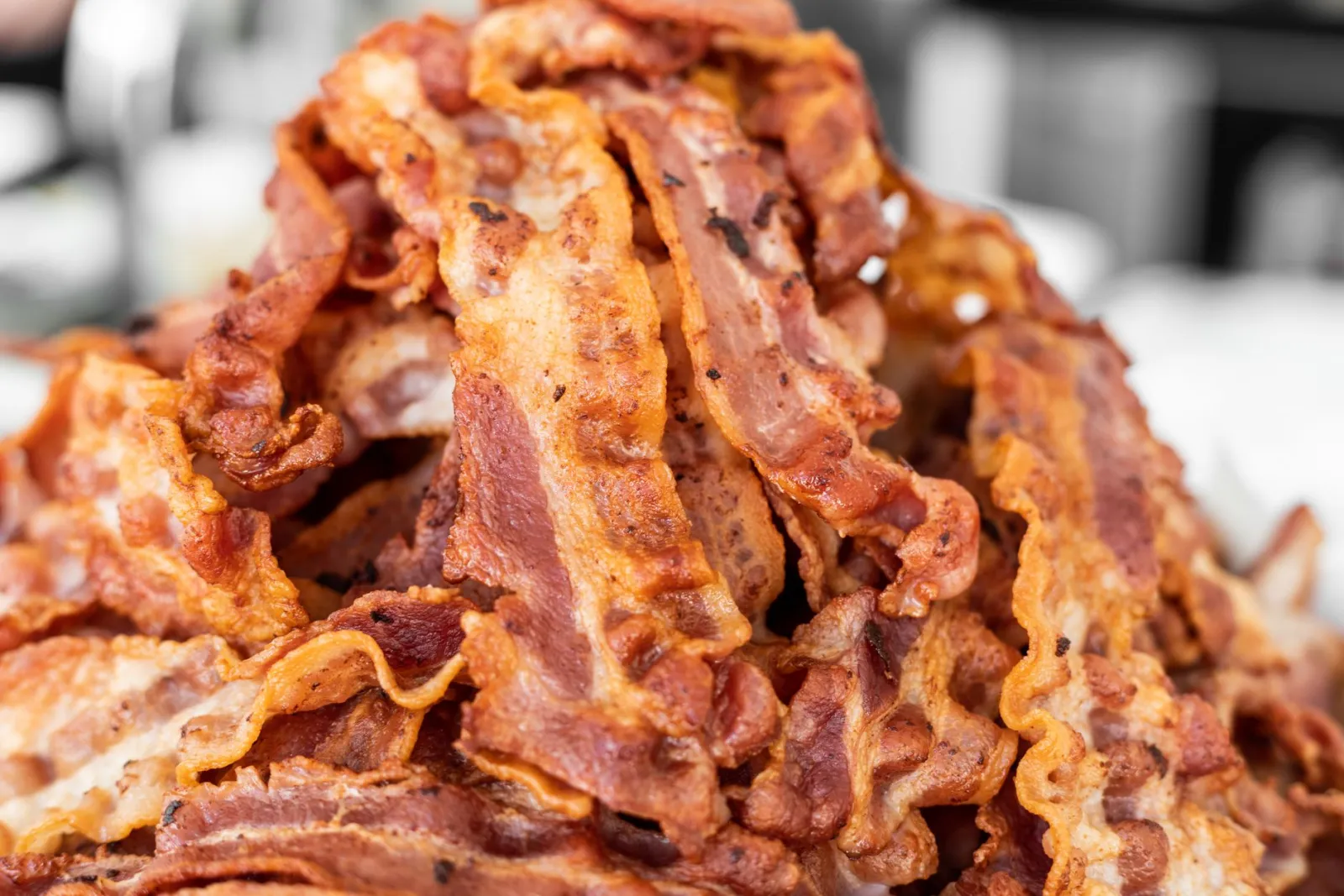
Even air fryer bacon is not about luck or a secret setting. It is about thickness, spacing, temperature, and paying attention near the end. Keep strips in a single layer, match thicknesses, preheat the basket, and check before you think you need to. Those four habits solve almost every uneven-bacon problem.
\n\n
If you want the broader picture — how air fryers handle different foods, how to read your appliance’s quirks, and how to adapt timing across recipes — a more complete guide on the general topic covers it in depth. For now, the strip in front of you is what matters. Space it out, let the air move, and pull it at the right moment.
\n\n\n
\n\n\n\n\n\n\n
Also read :
🔗 Read also
- How do I reheat pizza in an air fryer?
- Heat Pump Dryer Repair: Fixes for Not Drying
- Why is my air fryer not heating up?