
This article contains Amazon affiliate links. As an Amazon Associate we earn from qualifying purchases.
In short:
- Aim for roughly 30 to 40 percent protein and 15 to 20 percent fat for adult cats, with a named animal protein first and taurine included.
- Match the formula to your cat’s life stage and health, since kittens, adults, and seniors all need different things.
- Wet, dry, or a mix can all work — what matters is that your cat eats it without digestive trouble.
- Switch foods slowly, and if your cat has a diagnosed condition, let your vet and bloodwork guide the choice.
- Store food properly, respect its shelf life once opened, and replace it when it smells off or has been open too long.
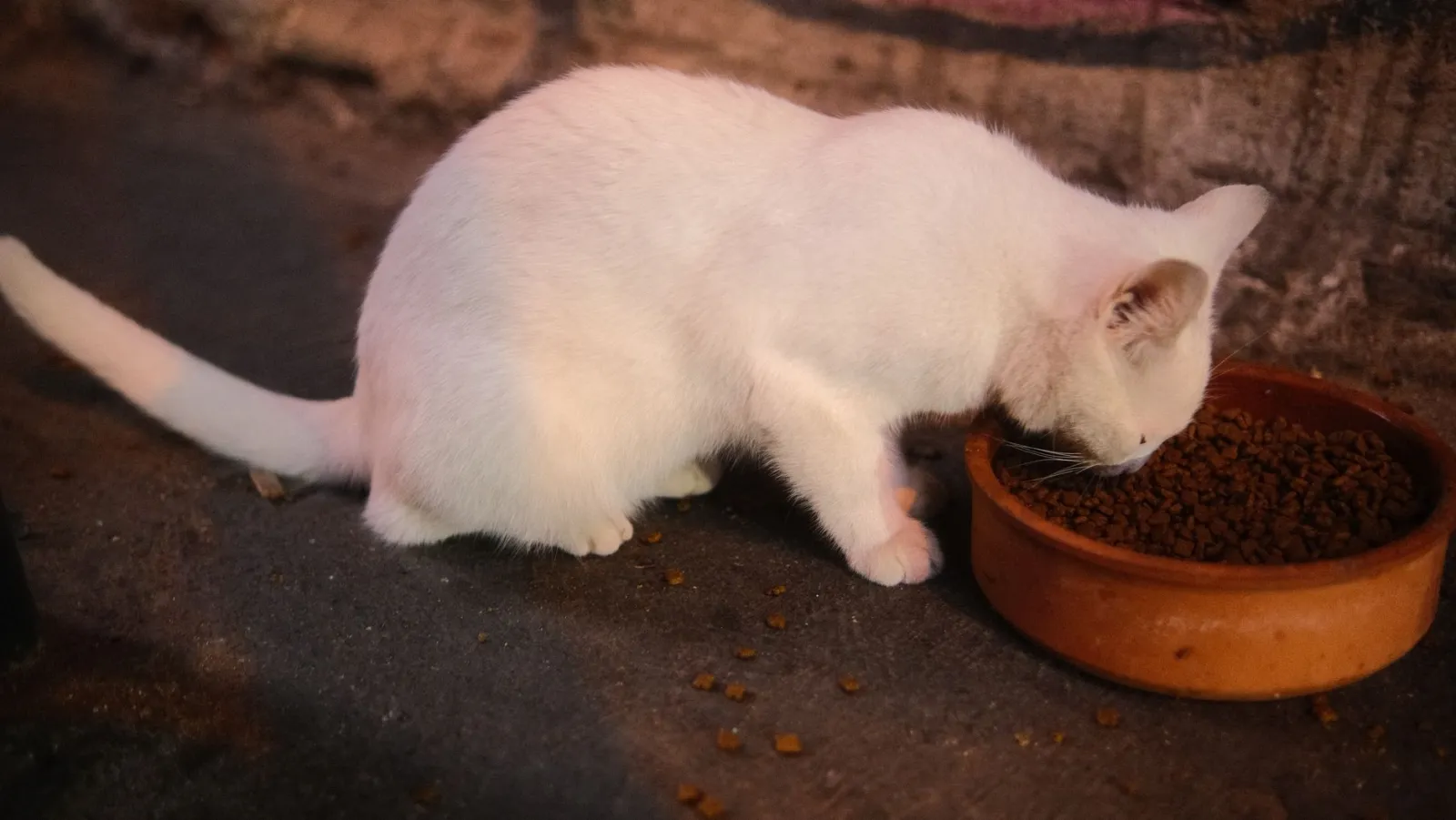
Walk down any pet food aisle and the wall of bags and cans starts to blur together. Chicken, salmon, turkey, grain-free, indoor, senior, hairball control — the labels promise everything and explain almost nothing. Choosing the best cat food isn’t about finding the single perfect product that works for every cat. It’s about matching a formula to your cat’s age, weight, health, and eating habits, then reading the label with a critical eye. Cats are obligate carnivores, which means their bodies are built to run on animal protein and fat, not on carbohydrates. That single biological fact should guide most of your decisions. This guide breaks down what actually matters on a label, how to match a formula to your cat’s life stage, and how to transition foods without triggering a hunger strike or an upset stomach.
Start With the Label, Not the Front of the Bag
Marketing lives on the front of the package. Nutrition facts live on the back, and that’s where your attention belongs. For adult cats, a good baseline is roughly 30 to 40 percent protein and 15 to 20 percent fat on a dry matter basis. But percentages alone don’t tell the whole story — the ingredient list does.
Ingredients are listed by weight before processing. That means a fresh meat named first is heavier than it looks once water is removed during cooking. A common trick is splitting grains or starches into several entries (corn, corn gluten, ground corn) so no single one appears at the top. If you see three versions of the same filler in the first five ingredients, that’s a signal.
A concrete example
Say you’re comparing two cans. One lists “chicken, chicken liver, chicken broth” near the top; the other lists “meat by-products, wheat gluten, corn starch, chicken.” Both might show 10 percent protein on the label. The first gives your cat recognizable animal tissue; the second leans on plant proteins and ambiguous by-products. For a carnivore, the first is the better bet — and you didn’t need a chemistry degree to spot it.
What to look for, in order
- A named animal protein first — chicken, turkey, salmon, or similar, rather than a vague “meat” or “animal derivative.”
- Moderate fat — enough for energy and coat health, but not so much that an indoor cat gains weight.
- Taurine — an essential amino acid cats cannot synthesize in sufficient amounts. Its absence causes heart and vision problems.
- Limited fillers — some grain or starch is fine for most cats, but it shouldn’t dominate the list.
- A nutritional adequacy statement — a sentence confirming the food meets complete and balanced standards for a specific life stage.
Match the Formula to Your Cat’s Life Stage
Kittens, adults, and seniors have genuinely different needs, and feeding the wrong stage long-term creates problems. A kitten on adult food may not get enough calories or calcium for growth. An adult cat on kitten food will likely gain weight fast.
Kittens
Growing cats need dense energy, higher protein, and carefully balanced minerals for bone development. Look for a statement that the food is complete for growth or for all life stages. Free-feeding works for many kittens because they self-regulate, but portion control still matters if your kitten tends to overeat.
Adults
Once your cat reaches about one year, switch to an adult maintenance formula. This is where body condition becomes the deciding factor. An indoor cat that sleeps sixteen hours a day needs fewer calories than an active cat with outdoor access. Weigh your cat monthly and adjust portions rather than switching foods constantly.
Seniors
A senior formula typically has adjusted phosphorus and protein levels, often with added support for joints and kidney function. Older cats also digest fat less efficiently and may lose muscle mass, so highly digestible protein matters more than raw percentage. Watch for weight loss, changes in thirst, and reduced grooming — these are reasons to talk to your vet before simply changing bags.
A concrete example
A ten-year-old cat starts drinking more water and losing weight despite a normal appetite. Switching to a “senior” bag off the shelf won’t fix that. Those signs point to a possible kidney or thyroid issue, and the right move is bloodwork first. The food choice follows the diagnosis, not the other way around.
Wet, Dry, or a Mix?
Both formats can work. The question is what suits your cat’s body and your routine.
| Factor | Wet Food | Dry Food |
|---|---|---|
| Moisture content | High — supports hydration | Low — cats must drink more |
| Protein density | Often higher animal protein | Varies widely by formula |
| Carbohydrate load | Usually lower | Often higher for kibble structure |
| Convenience | Needs refrigeration once opened | Shelf-stable, easy to portion |
| Dental effect | Minimal mechanical cleaning | Some crunch, limited benefit |
| Cost per meal | Typically higher | Typically lower |
Cats evolved in arid environments and have a naturally low thirst drive. That’s why many owners notice their cat barely touches the water bowl. Dry food is convenient and can be left out, but if your cat eats only kibble, watch water intake closely.
A concrete example
A cat that has had a urinary crystal episode is switched from an all-dry diet to a mix of wet and dry, with a water fountain added near the food bowl. The extra water dilutes urine, which reduces the concentration of minerals that form crystals. Same cat, same owner — just a different moisture strategy. It’s one of the clearest cases where format matters as much as ingredients.
How to Transition Without a Fight
Cats are creatures of habit, and a sudden food swap can trigger refusal or digestive upset. A gradual transition over seven to ten days works for most cats.
- Days 1–3: Mix about 25 percent new food with 75 percent old.
- Days 4–6: Move to a 50/50 split.
- Days 7–9: Shift to 75 percent new, 25 percent old.
- Day 10 onward: Full new formula, assuming stools are normal and appetite is steady.
If your cat picks out the old pieces and leaves the new ones, warm the food slightly to boost aroma, or offer the new food when your cat is hungriest. Never let a cat go more than a day without eating — cats that stop eating can develop serious liver problems quickly, so a refusal that lasts beyond a skipped meal or two is a reason to call your vet, not to wait it out.
A concrete example
You bring home a new formula and pour a full bowl. Your cat sniffs, walks away, and meows at you for two hours. That’s not stubbornness — it’s neophobia, a natural caution toward unfamiliar food. The gradual mix respects that instinct and gives gut bacteria time to adjust, which prevents the loose stools that often follow an abrupt switch.
How to Store Cat Food So It Stays Safe
Good food goes bad through careless storage, and that’s a waste of money and a risk to your cat. Dry food is not immune: once a bag is opened, the fats in the kibble start to oxidize and the food absorbs moisture and odors from the kitchen.
- Keep dry food in its original bag. The bag is designed to limit light and air. Pour the whole bag, or a portion, into a clean airtight container, but keep the batch and expiry information — cut the label off the bag and tuck it in.
- Don’t top up the container. Empty it, wash and dry it fully, then refill. Pouring new kibble over old leaves stale crumbs at the bottom that speed up spoilage of the whole batch.
- Store in a cool, dry, dark place. Not next to the oven, not in a humid cupboard under the sink, and not in direct sun.
- Refrigerate opened wet food. Transfer leftovers out of the can into a covered container, and bring them toward room temperature before serving so the aroma comes back.
- Never leave wet food out for hours. A bowl that sits in a warm kitchen is a bacterial breeding ground. Offer it, give your cat a reasonable window to eat, then remove what’s left.
How Long Cat Food Lasts and When to Replace It
There’s no single universal number here — it depends on the format, the packaging, and how you store it. What matters is knowing the signals and respecting the dates the manufacturer prints.
| Format | Typical storage window | Replace when… |
|---|---|---|
| Unopened dry food | Until the best-before date on the bag | The date passes, or the bag is torn or damp |
| Opened dry food | Use within the period the maker recommends on the packaging, and finish well before the best-before date | It smells rancid or musty, looks clumped, or has lost its normal texture |
| Unopened wet food (cans, pouches) | Until the best-before date | The can is dented, bulging, leaking, or rusted around the seam |
| Opened wet food | A short window in the fridge — check the label for the maker’s guidance | It’s been in the fridge longer than the label allows, or it smells or looks different |
A few practical rules make this easier. Write the date you opened a bag on the packaging with a marker. Buy bag sizes your cat will actually finish within the recommended window rather than the biggest bag on the shelf — a bargain that goes stale is not a bargain. And if you’re rotating between several formulas, open one at a time.
Your nose is a reliable tool. Rancid fat smells sharp and sour; mold smells earthy and musty. If you’re unsure, don’t gamble on it. The cost of replacing a suspect bag is small next to a vet visit for gastroenteritis.
Keeping the Feeding Routine Working Over Time
Choosing the food is the easy part. Keeping it right for years is where most owners drift. A few habits keep things on track:
- Weigh your cat regularly — monthly on a kitchen scale or at the vet. Body condition is the single best indicator that the current formula and portion are right.
- Measure portions rather than eyeballing or free-pouring. A scoop that’s slightly generous every day adds up over a year.
- Reassess at each life-stage change — around one year, around seven to ten years, and after any illness or dental work.
- Keep a simple log of what your cat eats and any changes in appetite, stool, or water intake. It makes vet conversations far more productive.
- Don’t switch formulas for no reason. If your cat is thriving on a food, a new bag with a different marketing angle is not an upgrade.
A Day in the Life: Putting It All Together
Here’s how the advice looks in a real household, without any of the guesswork.
An owner shares a home with a three-year-old indoor cat that has gained a little weight over the winter. The current setup is a bowl of dry kibble left out all day, topped up whenever it looks low. The cat grazes constantly, sleeps a lot, and the owner has noticed the waistline disappearing.
Step one: read the label. The owner flips the bag over and checks the protein and fat percentages, confirms a named animal protein sits first, and verifies taurine is listed. The food is a reasonable adult maintenance formula — the problem isn’t the product, it’s the portioning.
Step two: change the routine, not the food. Instead of free-feeding, the owner measures a daily ration and splits it into two meals. Part of that ration is replaced with a wet food to add moisture, which also slows eating and adds satiety. The kibble goes into a puzzle feeder so the cat has to work for it a little.
Step three: store it properly. The dry food moves out of the open bag in the warm kitchen cupboard into a sealed container in a cool, dark spot, with the batch label cut out and kept inside. The opened wet food goes into a covered container in the fridge and is brought out ahead of the next meal.
Step four: track it. The owner weighs the cat monthly and notes any change. Over a few months, the waistline comes back, the cat is more active, and the water bowl gets more attention because of the wet food.
Step five: know when to escalate. When the cat turns seven, the owner books a routine check with bloodwork rather than switching to a senior bag on a hunch. The vet confirms everything is normal, and the owner keeps the same formula with a slightly adjusted portion.
Nothing dramatic happened here. No exotic ingredient, no complete overhaul. The gains came from reading the label once, measuring instead of pouring, storing food so it stays fresh, and letting actual body condition — not packaging — drive the decisions.
FAQ
Which is the healthiest cat food brand?
There’s no single healthiest brand, and any answer that names one is oversimplifying. What matters is whether a specific formula is complete and balanced for your cat’s life stage, lists a named animal protein first, includes taurine, and suits your cat’s health and digestion. A brand that makes one excellent formula can also make a mediocre one, so judge the product, not the logo.
What is the healthiest food to feed your cat?
The healthiest choice is a commercially prepared, complete diet labeled for your cat’s specific life stage, built around animal protein. Cats are obligate carnivores, so animal-based protein and fat should do the heavy lifting. Beyond that, the “healthiest” food is the one your cat eats reliably, digests well, and maintains a healthy weight on.
What are the top 5 healthiest cat foods in the UK?
Any “top five” list is a snapshot of opinion, not a fact — formulas change, and what suits one cat may not suit another. Rather than chasing a ranking, use the label criteria in this guide: named animal protein first, taurine present, moderate fat, limited fillers, and a clear nutritional adequacy statement for the right life stage. That filter will narrow the shelf far more reliably than any list.
Which is the best food for cats?
The best food for your cat is the one matched to its age, weight, health status, and eating habits — and that it will actually eat. For a healthy adult, that means a complete adult maintenance formula with solid animal protein. For a cat with a diagnosed condition, it means whatever your vet recommends alongside bloodwork. There is no universal winner.
Is wet food better than dry food for cats?
Not automatically. Wet food supports hydration, which matters because cats have a low thirst drive, and it often carries more animal protein and fewer carbohydrates. Dry food is convenient, shelf-stable, and can be portioned easily. Many owners do well with a mix. The deciding factor is your cat’s health, water intake, and weight.
How do I switch my cat’s food without upsetting its stomach?
Transition gradually over seven to ten days, starting at roughly 25 percent new food and building to 100 percent. Warm the food slightly to boost aroma if your cat is hesitant, and watch stools and appetite as you go. If your cat refuses to eat for more than a day, contact your vet.
Does my cat need grain-free food?
Most cats do not. Grain-free is a marketing category, not a nutritional requirement, and some grain-free formulas simply swap grains for other starches. What matters is total carbohydrate load and the quality of the protein source. If your cat has a confirmed allergy, let your vet guide the choice.
To make your choice concrete : Cat tree house: how to choose the right one
Work out your own case in 30 seconds:
Methodology
This calculator produces an indicative estimate based on the parameters you enter. The ranges used reflect typical market tiers in the pets space and are neither a commercial offer nor a guarantee. Prices and availability may vary.
Sources
- British Veterinary Association (BVA) — advice for pet owners on what to feed a cat
- PDSA — the best diet for your cat
- FEDIAF — nutritional guidelines for complete and complementary pet food for cats and dogs
Full guide :Pets
More from this guide :
Was this guide helpful?
Share your experience with the WiseHomeGuides community.
