This article contains Amazon affiliate links. As an Amazon Associate we earn from qualifying purchases.
Short answer :Choosing the best cat tree comes down to matching the furniture to your cat’s habits and your room’s layout rather than chasing a single top pick. Look at stability first: a wide, weighted base and sturdy posts matter more than height, because a wobbly tower goes unused. Then check the covering and platform surfaces, the spacing between levels for easy climbing, and whether the footprint fits where you plan to place it. Cats that like to perch high need tall vertical space, while older or less agile cats do better with low, closely spaced steps. Scratching posts should be tall enough for a full stretch and wrapped in a material your cat already targets. Finally, confirm the assembly is manageable and the materials hold up to daily use.
In short
- Prioritize a wide, weighted base over extra height to prevent tipping during jumps and landings.
- Match platform spacing to your cat’s agility: close steps for cautious cats, wider gaps for confident climbers.
- Choose tall scratching posts wrapped in sisal or similar material your cat already scratches.
- Measure the intended corner or wall first so the footprint and height fit without blocking walkways.
- Check that platforms and hideouts are large enough for your cat to lie down fully stretched.
Why a Cat Tree Is Essential for Indoor Cats
Indoor cats live in an environment that is safe but often flat. A home offers food, warmth, and company, yet it rarely offers what a cat’s instincts demand: height, vantage points, scratching surfaces, and the ability to move in three dimensions. A cat tree addresses this gap directly. It turns a small footprint of floor space into a vertical territory where a cat can climb, perch, stretch, scratch, and rest, all within sight of the household but at a comfortable distance.
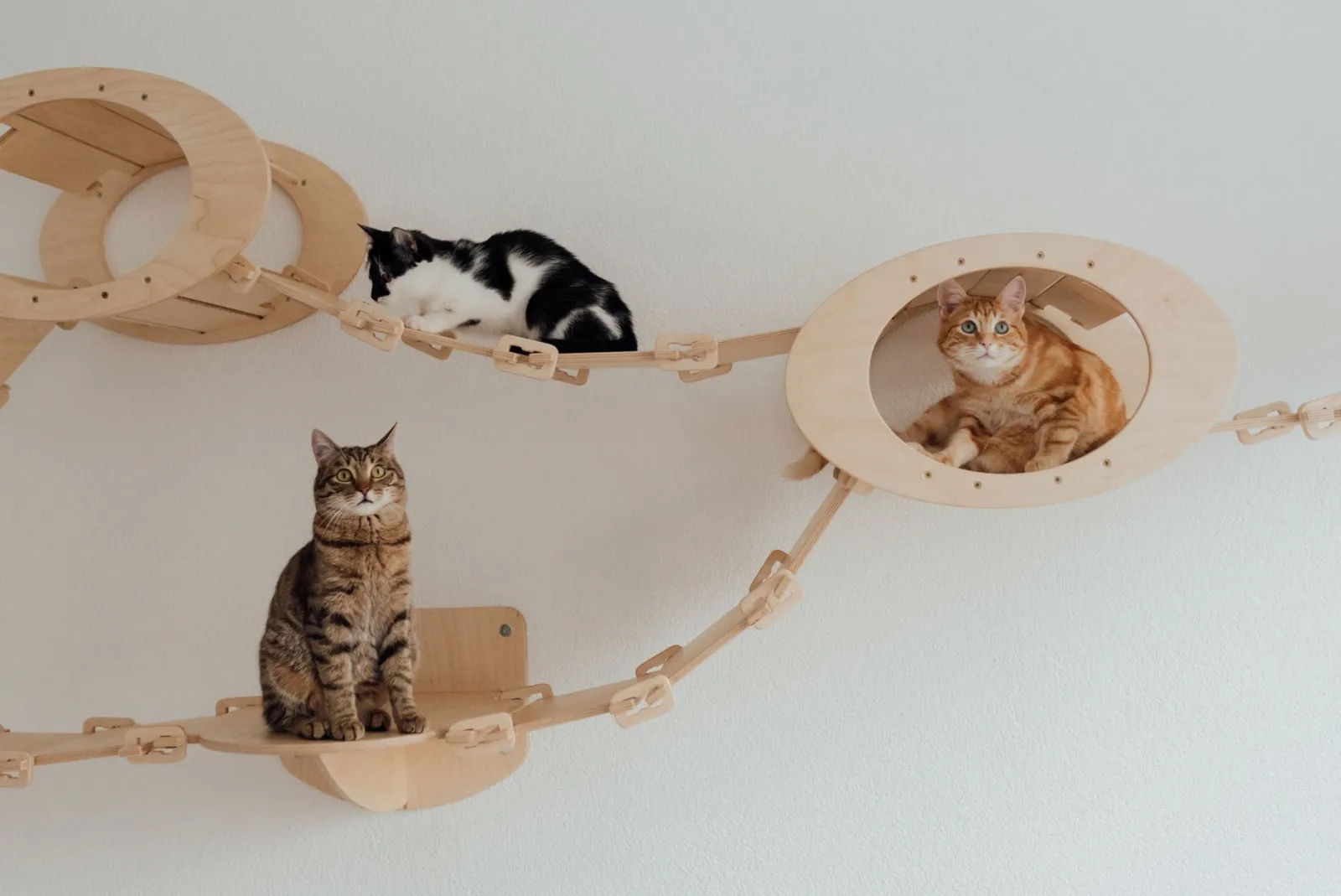
Height matters more than most owners expect. Cats are both predator and prey animals, and they feel most secure when they can observe a room from above. A tree that reaches roughly chest height gives a cat a usable lookout; a taller tree that approaches eye level or higher gives it a genuine retreat. In a multi-cat home, vertical space also reduces tension, because cats can occupy different levels instead of competing for the same patch of floor or sofa. Two cats that squabble over a windowsill often settle once each has its own platform at a different height.
Scratching is the second core function. Cats need to scratch to maintain their claws and to mark territory, and they do it whether or not a suitable surface is provided. A cat tree with sisal-wrapped posts and stable, tall scratching columns channels that behavior onto a designated object rather than the corner of a sofa or a door frame. The key is stability: a post that wobbles when a cat leans into it will be abandoned in favor of furniture that does not move. Sturdy construction and a broad base matter as much as the material itself.
Rest and hiding complete the picture. Cats alternate between active climbing and long periods of sleep, often several times a day, and they prefer to do both in elevated, enclosed spots. Cubby houses, baskets, and top perches on a cat tree give them places to curl up that are off the main traffic paths of the home. This is especially useful in busy households or apartments where a cat has limited quiet corners, and it gives shy cats a reliable place to withdraw without being cornered.
A cat tree also protects the home itself. When a cat has appropriate outlets for climbing and scratching, destructive behavior tends to decrease, and the furniture, curtains, and carpets around it last longer. For owners in flats without garden access, the tree effectively becomes part of the cat’s daily territory, compensating for the outdoor space it does not have. The practical takeaway is simple: a cat tree is not a luxury accessory but a piece of furniture that meets specific behavioral needs, and choosing one well depends on matching its height, stability, and surfaces to the cat and the room it lives in.
How to Assess Build Quality and Stability
Build quality is the factor that most directly determines whether a cat tree survives years of daily use or becomes a wobbly hazard within months. Start by looking at the base: a stable tree needs a wide, heavy platform relative to its height, because a tall unit with a narrow footprint will sway every time a cat lands on an upper perch. As a general rule, the taller the tree, the more the base should extend beyond the footprint of the scratching posts, and a low, solid base plate is preferable to a small one that relies on the wall for support.
Materials matter as much as dimensions. Dense particleboard or plywood covered in firmly bonded carpet or sisal holds screws far better than thin composite board, which tends to crumble around anchor points over time. Check how the posts attach to the platforms: hardware that passes through the board and is secured with a bolt and washer is more reliable than short screws driven directly into the surface. Where carpet wraps the platforms, it should be tightly glued and folded neatly around edges rather than stapled loosely, since loose covering is the first thing to peel and fray.
Stability under load is best judged by how the tree behaves when force is applied at the top. A well-built unit resists side-to-side movement when you press gently on the highest perch; noticeable flex or a rocking base signals trouble. Heavier trees with broad bases and thick posts generally feel more planted, while very light trees with slender posts are prone to tipping, especially in households with large or energetic cats that launch themselves onto the top level. If the tree includes a hammock or a high lookout, those are the points where instability shows up first.
Consider the intended use case. A compact tree for a single calm cat in a small apartment can be lighter and simpler, provided the base is still wide enough to prevent tipping. A multi-level tree shared by several cats, or one placed in a busy room where cats jump on and off frequently, needs sturdier posts, thicker platforms, and a heavier base. Wall-anchoring straps, where included, add security for tall units but should complement a solid base rather than compensate for a weak one.
Finally, inspect the joints and moving parts. Platforms that attach with metal brackets and through-bolts stay rigid longer than those joined with glue or thin dowels, and any dangling toys or hanging elements should attach with secure hardware rather than flimsy cord. A tree that feels solid when new is the best predictor of one that stays solid after repeated jumping, scratching, and the everyday wear of feline traffic.
Choosing the Right Height for Your Space
Height is the single most consequential dimension when matching a cat tree to a room, because it determines both how the tree functions for the cat and how it fits around your furniture and foot traffic. A very tall floor-to-ceiling tower suits a cat that wants vertical territory and a household willing to anchor it securely, while a low, wide model works better in a small apartment where a tall column would dominate the space or block a window. Before shopping, measure the ceiling height of the intended room and note any fixtures, ceiling fans, or sloped ceilings that would interfere with a tall unit.
For small rooms, compact multi-level trees in the range of roughly waist to chest height offer climbing and perching without overwhelming the floor plan. These models typically fit into a corner or beside a sofa and are easy to reposition. The trade-off is that a shorter tree gives a cat less separation from floor-level activity, so it suits confident cats in calm households more than nervous cats in busy ones. In these spaces, prioritize a stable base and a footprint that leaves walkways clear over sheer height.
In larger living areas, taller trees that reach well above head height make better use of the vertical space and give cats a genuine vantage point. A tall tower placed against a wall or in a corner creates a climbing route and a high resting spot that cats often prefer for watching a room. The practical constraint is stability: the taller the tree, the more important a broad, weighted base and, where the design allows, a wall anchor or ceiling brace. A tall unit on a narrow base in a high-traffic spot is a tipping risk, so position it where it cannot be knocked into people or fragile items.
Ceiling height and room proportions should guide the upper limit. A tree that nearly touches the ceiling can feel cramped in a low room and may be awkward to assemble or clean around, while a tree that stops far below the ceiling in a tall room can leave a cat without the high perch it naturally seeks. Match the top platform to a height the cat can reach comfortably from the next level down, and check that the highest resting spot sits where the cat can see out without being blocked by shelving or curtains.
Finally, consider the cats themselves. Kittens and older or less agile cats do better with shorter, closely spaced levels that are easy to climb, while active adults benefit from taller trees with more distance between platforms. Multi-cat households often need height plus width so several cats can occupy different levels at once. Measure first, weigh stability against height, and choose the tallest tree your space can safely accommodate.
Materials That Hold Up to Scratching and Climbing
The materials a cat tree is built from determine how long it survives daily scratching, jumping, and climbing. The two surfaces that matter most are the posts and the platforms. Sisal rope wrapped tightly around a sturdy post is the most reliable scratching surface; loose, thin wraps unravel quickly, while dense, evenly wound rope on a solid core lasts far longer. Carpet-covered posts are common and comfortable underfoot, but carpet fibers dull claws less effectively and can fray at the edges where cats dig in. For a household with an enthusiastic scratcher, sisal posts on the main scratching stations are worth prioritizing, with carpet reserved for platforms and resting areas.
The structural core behind the wrapping matters as much as the surface. Posts built around solid wood or thick cardboard tubes hold their shape when a cat launches upward; hollow or thin cores can wobble, crack, or split at the base over time. Platforms and perches should be thick enough not to flex under a cat’s weight, and joints should be reinforced rather than relying on staples alone. A tree that sways when climbed will be avoided by cautious cats and stressed by confident ones, so rigidity is a practical feature, not a luxury.
Consider how different cats use a tree. A heavy cat landing repeatedly on a top perch puts concentrated stress on the platform and its supports, so look for thicker boards and secure fastenings at the highest levels. A kitten or an agile climber tests the posts with constant vertical scrambling, which favors dense sisal and stable bases. Multi-cat homes see more simultaneous wear, so surfaces that resist fraying and joints that stay tight under repeated load pay off. Where scratching is intense, replaceable or re-wrappable posts extend the life of the whole unit.
Base materials and stability go together. A wide, heavy base in solid wood or dense board keeps the tree from tipping during a hard push-off, and non-slip feet protect floors while reducing movement. Fabric coverings on platforms should be tightly fitted and durable rather than plush and loose, since glued-on fleece or thin fabric tears at seams where claws catch. Easy-to-clean, tightly woven coverings also hold up better in busy homes.
Finally, inspect construction details that signal longevity: recessed hardware instead of exposed staples, posts that run continuously from base to top rather than short segments joined mid-height, and consistent wrapping tension. These cues separate furniture built to be climbed from decorative pieces that fail under real use. Matching material choices to your cat’s size, scratching habits, and the number of cats using the tree is the surest way to get years of service rather than months.
Platforms, Perches, and Resting Spots Explained
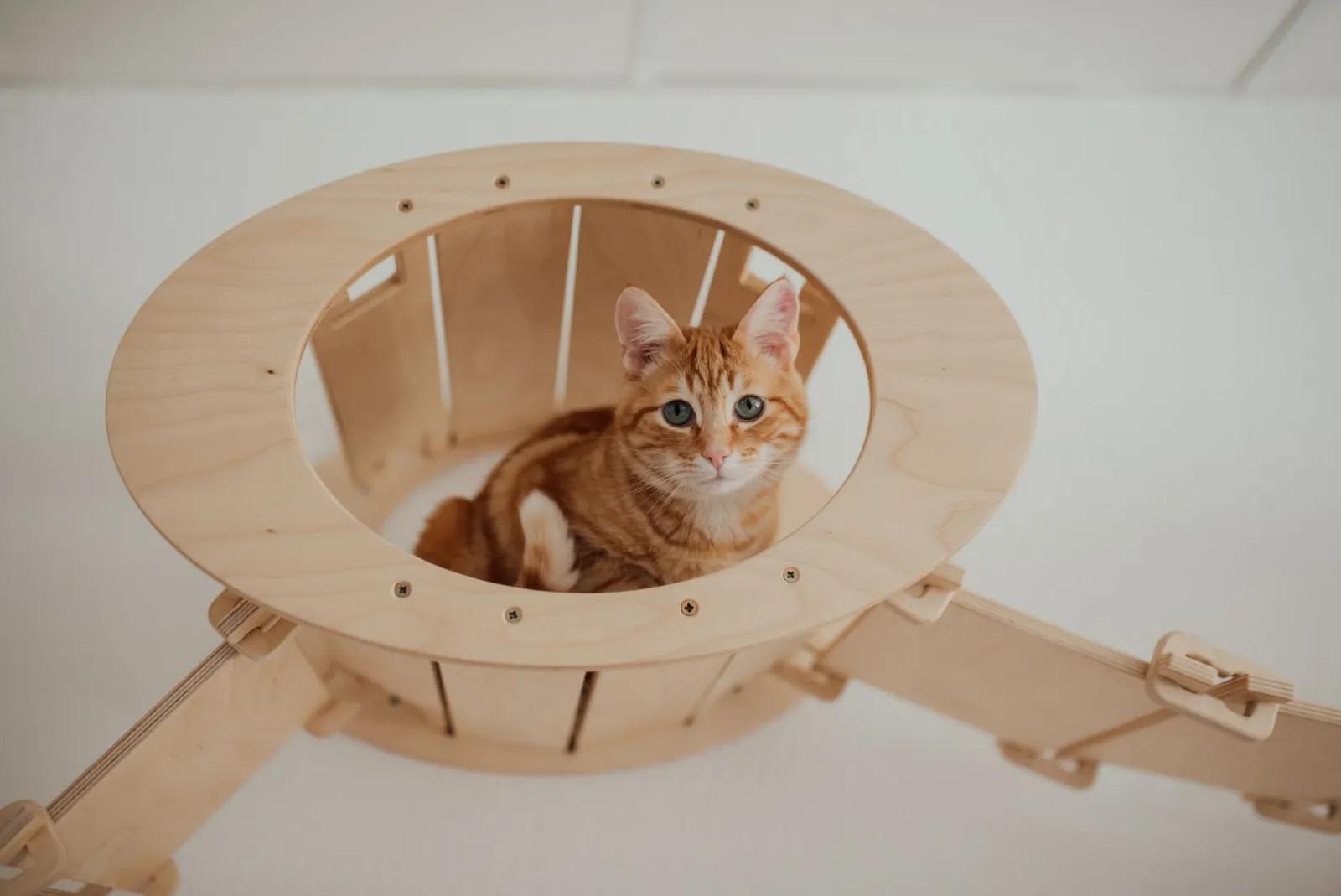
Platforms, perches, and resting spots are the parts of a cat tree a cat actually uses, so their size, shape, and placement matter more than the overall silhouette of the piece. A platform needs to be large enough for the cat to lie down fully stretched or curled without any part of the body hanging over the edge; a perch that only fits the paws forces the cat to balance and is quickly abandoned. As a working rule, the top resting spot should be the most generous surface on the tree, since cats gravitate upward and will compete for the highest comfortable place.
Shape determines how a spot gets used. Flat, broad platforms suit sprawlers and older, heavier cats that prefer stability, while cupped baskets and shallow bowls appeal to cats that like to tuck in and feel enclosed. Perches with a raised rim give a sense of security without fully enclosing the cat, and they work well in households where one cat wants to rest while still watching the room. A mix of flat and cupped surfaces on the same tree lets different cats, or the same cat on different days, choose according to mood.
Height and sightlines turn a platform into a lookout. Cats like resting spots that sit above the general traffic of the room, with a clear view of doorways and the areas where people move. Perches mounted on the outer edges of the tree serve this better than platforms tucked against a wall, because the cat can watch without turning its back on the room. For a multi-cat home, several elevated spots at similar heights reduce guarding of the single best position.
Surface material affects whether a resting spot gets used at all. Plush or fleece-covered platforms hold warmth and suit cats that sleep for long stretches, while carpeted surfaces offer grip for cats that launch themselves upward. Removable, washable covers are worth looking for on the spots a cat uses most, since those are the surfaces that collect the most fur. Edges should be finished and firm rather than soft and collapsing, so a cat stepping onto a perch feels solid support underfoot.
Finally, consider how the resting spots connect. A platform is only useful if the cat can reach it comfortably, so steps between levels should be spaced closely enough for an easy hop rather than a leap. For kittens, senior cats, or cats with limited mobility, a staircase of smaller, closely set platforms is more practical than a few tall jumps. Check that each perch has enough clearance above it for the cat to sit upright, and that the highest spot is stable enough not to sway when the cat jumps onto it.
Sisal vs. Carpet: Scratching Surface Options
When you compare cat trees, the material wrapped around the posts matters as much as the height or the number of platforms. Sisal and carpet are the two common options, and they behave very differently under a cat’s claws. Sisal is a woven plant fiber with a rough, fibrous texture that gives claws something to catch and pull against. Carpet is a soft fabric, often plush or looped, that feels good to lie on but offers little resistance to a scratching cat. Understanding this difference helps you match the tree to how your cat actually uses it.
Sisal rewards scratching in a way carpet rarely does. The fibers fray slightly as claws drag through them, which is exactly the sensation most cats seek when they scratch. A sisal-wrapped post tends to stay functional for a long time because the material is dense and abrasion-resistant; it wears gradually rather than shredding quickly. Carpet, by contrast, can snag, pill, or develop loose threads where claws catch, and looped carpet is especially prone to pulling. If your cat is a determined scratcher who goes at a post daily, sisal usually holds up better and keeps its appeal longer.
Carpet has its own place. Many cats prefer to sleep on soft surfaces, and a carpet-covered platform or condo makes a tree more inviting as a resting spot. Carpet also tends to be quieter underfoot and warmer to the touch, which suits cats that spend hours lounging. The trade-off is that carpet-covered posts are less effective as scratching targets, so a tree that is entirely carpet may get ignored at the posts and clawed elsewhere in the home. A practical compromise is a tree that pairs sisal posts for scratching with carpeted perches for resting.
Consider how your cat scratches before you choose. Cats that stretch tall and rake downward do well with a full-height sisal post they can grip from floor to shoulder. Cats that scratch horizontally or prefer to dig may use a sisal-covered incline or a low platform. If your cat has already shown a preference for fabric—clawing the sofa or a rug—a carpeted post may redirect that behavior more readily than sisal, at least at first. Matching the texture to the cat’s existing habit is more reliable than picking on looks alone.
Durability and maintenance round out the decision. Sisal sheds a little fiber over time and can look worn, but it generally keeps working until it is heavily frayed. Carpet collects hair and dust and may need vacuuming more often, and once it starts to unravel it loses its scratching value quickly. For a busy multi-cat household, sisal posts tend to be the more practical long-term choice, while carpet is best reserved for the surfaces cats rest on. Weigh scratching needs against lounging needs, and let the tree’s mix of materials reflect both.
Matching a Cat Tree to Your Cat’s Size and Age
A cat tree that suits a young, agile adult cat can be a poor fit for a heavy senior or a small kitten, and the mismatch usually shows up as disuse or instability rather than obvious failure. Matching the structure to the cat’s size and age is the single most practical filter you can apply before comparing platforms, materials, or configurations.
Start with weight and body length, because these determine whether a tree stays stable. A large, heavy adult needs a broad, low center of gravity: a wide base, thick posts, and perches sized so the cat can lie down without its body overhanging. A tree that looks generous on paper can still wobble if the base is narrow relative to the top platforms. For a small or average cat, a narrower footprint is fine, but the perches should still be wide enough for a full curl rather than a perched crouch. As a rule of thumb, the top perch should accommodate the cat’s length when stretched out, and the base should be visibly wider than the highest platform it supports.
Age changes what the tree needs to offer. Kittens and young cats climb, leap, and test edges, so they benefit from multiple levels, secure sisal posts they can grip, and platforms with raised edges or a slight bowl shape that catch an awkward landing. A very tall tree with widely spaced levels suits a confident jumper but can be intimidating or risky for a clumsy youngster still learning coordination. Senior cats, by contrast, tend to prefer lower, easier access: a short first step, closely spaced platforms, and a cozy resting spot near the ground. A ramp or a low step-up helps a cat that no longer jumps cleanly, and a stable base matters more than height.
Consider the cat’s build and habits as well. A long, lean cat stretches out on flat, open platforms, while a compact or stocky cat often prefers enclosed cubbies and hammock-style resting spots that feel secure. A cat that likes to observe from height will use the top perch; one that prefers to hide will use the enclosed sections. If you have more than one cat, the tree needs enough separate resting spots and levels that each cat can claim space without conflict, which usually means a taller, multi-platform design rather than a single compact tower.
Finally, match the tree to the cat’s life stage over time. A tree bought for a kitten should still be usable when the cat is grown, so favor sturdy posts and perches with room to spare rather than a tiny starter unit. For an older cat, prioritize low access and stability over dramatic height. When in doubt, choose the sturdier, slightly larger option: a stable tree that is a little roomy gets used, while an undersized or wobbly one tends to be ignored.
Placement Tips for Maximum Use
Placement decides whether a cat tree earns its keep. A well-built tower tucked into a dead corner will sit unused, while a modest one set in the right spot becomes the busiest object in the room. Before assembling anything, watch where your cat already spends time: the windowsill it patrols, the chair back it claims, the doorway it monitors. Those habits tell you where a tree will feel like an extension of territory rather than furniture.
Height and sightlines matter more than floor space. Cats want to survey a room from above, so a tall tree placed against a wall with a clear view of a doorway, hallway, or window will draw far more traffic than the same tree facing a blank wall. Position the highest perch at or near window height where possible, and keep the top platform from being blocked by curtains, shelving, or hanging plants. If the tree stands in the middle of open floor, cats often feel exposed and skip the upper levels entirely.
Stability is the other half of the equation. A tree that wobbles when a cat lands on it will be abandoned quickly, so press the base firmly against a wall or anchor it where the floor meets a corner, and tighten all hardware before first use. On carpet, the base tends to grip well; on hardwood or tile, a thin rug or anti-slip pad underneath prevents sliding during jumps. Check that the tree cannot tip when weight shifts to the highest platform, and reposition it if it does.
Think about traffic flow and daily routines. Place the tree near a favorite lounging spot rather than in an isolated room, and avoid blocking walkways that cats use to move between rooms. In multi-cat households, a single tree in a high-traffic zone can become a contested resource, so spreading trees across different rooms, or placing one where a cat can retreat and another near the main living area, reduces friction. Bedrooms and quiet corners suit shy cats; living rooms suit confident ones that want to be near people.
Finally, let the placement evolve. Cats change preferences with age, seasons, and household changes, so treat the first position as a starting point. If the top perch goes untouched for a couple of weeks, try rotating the tree slightly, moving it closer to a window, or shifting it a few feet away from a draft or a noisy appliance. Small adjustments often turn an ignored tree into a daily destination.
Easy Cleaning and Maintenance Habits
Cleaning a cat tree is less about deep scrubbing and more about small, regular habits that keep fabric, carpet, and perches from turning into a matted, odorous mess. The single most useful habit is a quick weekly pass with a rubber brush or a stiff-bristled hand brush over the platforms and the base. This lifts embedded hair before it works its way into the pile, which is what makes carpeted surfaces look worn and feel rough. A minute or two per level is usually enough; the goal is to disturb the fibers rather than soak them.
Loose hair is only half the problem. Dander, dust, and the fine grit cats track up from the floor settle into the fabric and the crevices between levels. A vacuum with a brush or upholstery attachment, run over the main surfaces every couple of weeks, pulls that layer out where a hand brush cannot reach. On taller trees, work top to bottom so debris does not fall back onto surfaces you have already cleaned. For the nooks around posts and the inside of cubbies, a crevice tool or a soft brush does more than a wide nozzle.
Accidents and hairballs happen, and how you respond matters more than the product you reach for. Blot rather than rub, because rubbing pushes moisture deeper into the pile and backing. A mild soap-and-water solution applied sparingly, then blotted dry, handles most everyday marks on fabric covers. Removable, machine-washable covers are the easiest trees to live with, since a cover can go straight into the wash while the frame stays put. If covers are not removable, spot cleaning with a damp cloth and letting the piece air-dry fully before the cat returns prevents trapped dampness and lingering odor.
Sisal posts deserve their own routine. They shed fibers naturally as cats scratch, so a light brush-down removes the loose strands that would otherwise scatter across the floor. Rotating the tree occasionally, or turning it so a worn scratching side faces a wall, spreads the wear and extends the post’s useful life. Check the posts and the joints where levels attach from time to time; a wobbling platform is a sign fasteners need tightening, and a stable tree is a cleaner one because it does not rock debris into corners.
Finally, place the tree where cleaning is easy to fit into your routine. A spot with a little clearance on all sides lets you vacuum underneath and behind without dragging furniture. Keeping a lint roller or rubber brush near the tree turns a chore into a thirty-second habit after play sessions. The trees that stay presentable longest are rarely the ones cleaned hardest; they are the ones cleaned often, in small, consistent passes.
Safety Checks Before and After Setup
Before a cat tree ever comes into the house, give it a hands-on inspection while it is still in the box or freshly assembled. Press down firmly on each platform and shelf to feel for flex; a well-built tree should resist a firm push with little give, while a wobbly platform signals undersized hardware or thin posts. Run a finger along every edge and corner to catch splinters, exposed staples, or rough-cut openings that could catch a claw or a paw. Check that all screws, bolts, and cam locks are present and that the hardware matches the thickness of the posts. If the tree uses wall-anchoring hardware, confirm the strap or bracket is included and that you have a suitable wall to attach it to, since tall trees and trees with high perches rely on that anchor for stability.
Placement matters as much as construction. Set the tree on a level, solid floor rather than on thick carpet or a rug that lets the base rock, and push it gently from several sides to see whether it tips or slides. A tree placed near a wall or in a corner gains lateral support, while a freestanding tree in the middle of a room needs a broader, heavier base to stay put. Keep the tree clear of furniture a cat might use as a launchpad and away from anything a leaping cat could knock over. If the tree sits near a window or a heat source, check that the materials and any fabrics are positioned so a cat resting on a high perch is not exposed to drafts or direct heat.
After assembly, do a full stability pass with the tree loaded as it will be used. Place a weight comparable to your cat on the highest perch and on the most cantilevered shelf, then watch for sway, creaking, or a base that lifts at one edge. Tug each dangling toy and check that the attachment point holds under repeated pulling, since toys are a common failure point. Confirm that any hiding cubby or house has ventilation openings and that a cat inside cannot become wedged. Walk the perimeter once more for loose hardware and re-tighten anything that shifted during the load test.
Safety checks do not end at setup. Cats are heavy users, and a tree that was solid on day one can loosen as jumping and scratching work the joints. Make a habit of pressing the platforms and checking the base and wall anchor periodically, and re-tighten fasteners as soon as you notice movement. Replace frayed sisal, dangling strings, or worn fabric before they become a hazard, and remove the tree from service if a post cracks or a platform no longer holds weight. In multi-cat households or homes with kittens and older cats, watch how the tree is used and adjust placement or anchoring if rough play or uncertain jumping makes tipping more likely.
Frequently asked questions
How tall should a cat tree be for an active cat?
An active cat benefits from a tree tall enough to let it climb and jump between levels with room to spare. Rather than chasing a specific number, match the height to your ceiling and the cat’s energy: a climber needs several stacked platforms and a high perch near the top. Make sure the base is wide and heavy enough that the taller structure stays stable when the cat leaps onto it.
What is the best material for scratching posts?
Sisal rope wrapped tightly around a sturdy post is the most reliable scratching surface because it shreds gradually and gives good resistance under claws. Carpet and soft fabric feel good to sit on but offer little traction for scratching, so cats often ignore them. Look for dense, evenly wound sisal with no loose gaps, and choose posts tall enough for the cat to stretch fully while scratching.
How do I stop a cat tree from wobbling?
Wobble usually comes from a light base or a loose assembly. Tighten every bolt and screw, then place the tree on a level floor and add a non-slip pad or rug underneath. If the base is small, position the tree against a wall or in a corner and use a wall strap or bracket for extra support. Heavier trees with wide bases wobble far less than tall, narrow ones.
Where should I place a cat tree in my home?
Put the tree where your cat already spends time and can watch the room, such as near a window or beside the sofa. Cats like height and a view, so a spot with sightlines to a doorway or garden works well. Keep it away from drafty doors, radiators and busy walkways, and avoid blocking your own path. A quiet corner with some activity nearby is often ideal.
How many resting platforms does a cat need?
One cat does fine with a tree that has a couple of resting spots at different heights, so it can choose a high lookout or a cozy lower bed. In a multi-cat home, provide more platforms than cats so each animal can claim space without competition. Platforms at varied levels matter more than sheer quantity, since cats like to move between perches and hideaways.
Are cat trees suitable for senior cats?
Yes, but choose one suited to reduced mobility. Look for low starting steps, wide platforms and short gaps between levels so your cat can climb without big jumps. Firm, padded resting spots and a stable base help older cats feel secure. Place the tree in a warm, quiet spot and keep essentials like food and litter within easy reach on the floor.
How do I clean a cat tree?
Vacuum the platforms, posts and hideaways regularly to lift loose hair and dust, using a brush attachment for carpeted surfaces. Wipe hard parts and sisal with a damp cloth, and spot-clean fabric with a mild pet-safe cleaner, letting it dry fully. Remove and wash any removable covers. Loose sisal strands should be trimmed so your cat does not chew or swallow them.
How often should I replace a cat tree?
Replace a cat tree when it becomes structurally unsafe or badly worn rather than on a fixed schedule. Warning signs include a wobbly frame, split or splintered posts, torn platforms, and sisal that is shredded down to the core. If repairs no longer hold or the tree smells despite cleaning, it is time for a new one. Regular tightening and cleaning extend its life.
Read next :Christmas Jumper for Dog: Buying Guide and Tips · Indoor Plant Varieties: A Complete Guide to Choosing · What are the home decor trends for 2026? · The Complete Guide to Dog Grooming · Coffee Machines for Home Use: How to Choose the Best
Work out your own case in 30 seconds:
Methodology
This calculator produces an indicative estimate based on the parameters you enter. The ranges used reflect typical market tiers in the pets space and are neither a commercial offer nor a guarantee. Prices and availability may vary.
Read next :King Size Duvets: A Complete Buying and Care Guide
Read next :Cat Litter Mat Guide: Keep Your Home Clean and Your Cat Happy
Read next :How much does dog teeth cleaning cost?
Read next :Cat Litter Wood Pellets: A Complete Buying Guide
Read next :Coffee Machine for a Cafe: A Practical Buying Guide for Home and Business
Full guide :Pets
More from this guide :
Was this guide helpful?
Share your experience with the WiseHomeGuides community.