This article contains Amazon affiliate links. As an Amazon Associate we earn from qualifying purchases.
Short answer : The best robot vacuum for hard floors combines strong suction with a brush system that lifts debris without scattering it, since hard surfaces leave nowhere for dust to hide. Look for a model with a mix of a rubber or bristle roller and a side brush that pulls dirt away from edges and corners, plus sealed suction that keeps fine dust from blowing back out. Mapping and navigation matter more on hard floors than on carpet, because a robot that follows a logical path covers tile and laminate evenly instead of wandering. Battery runtime should match the size of your open floor plan, and a low-profile body helps the robot slide under furniture where crumbs collect. Prioritize easy-to-empty bins, washable filters, and adjustable suction so you can switch between quick daily passes and deeper cleaning.
In short
- Choose a rubber or combo roller plus side brushes to sweep debris from edges without scattering it.
- Sealed suction and a washable filter keep fine dust from blowing back onto smooth surfaces.
- Mapping navigation covers tile and laminate in orderly passes rather than random wandering.
- A low-profile body reaches under cabinets and furniture where crumbs and hair gather.
- Match battery runtime to your open floor area and pick adjustable suction for daily versus deep cleaning.
Why Hard Floors Need a Different Kind of Robot Vacuum
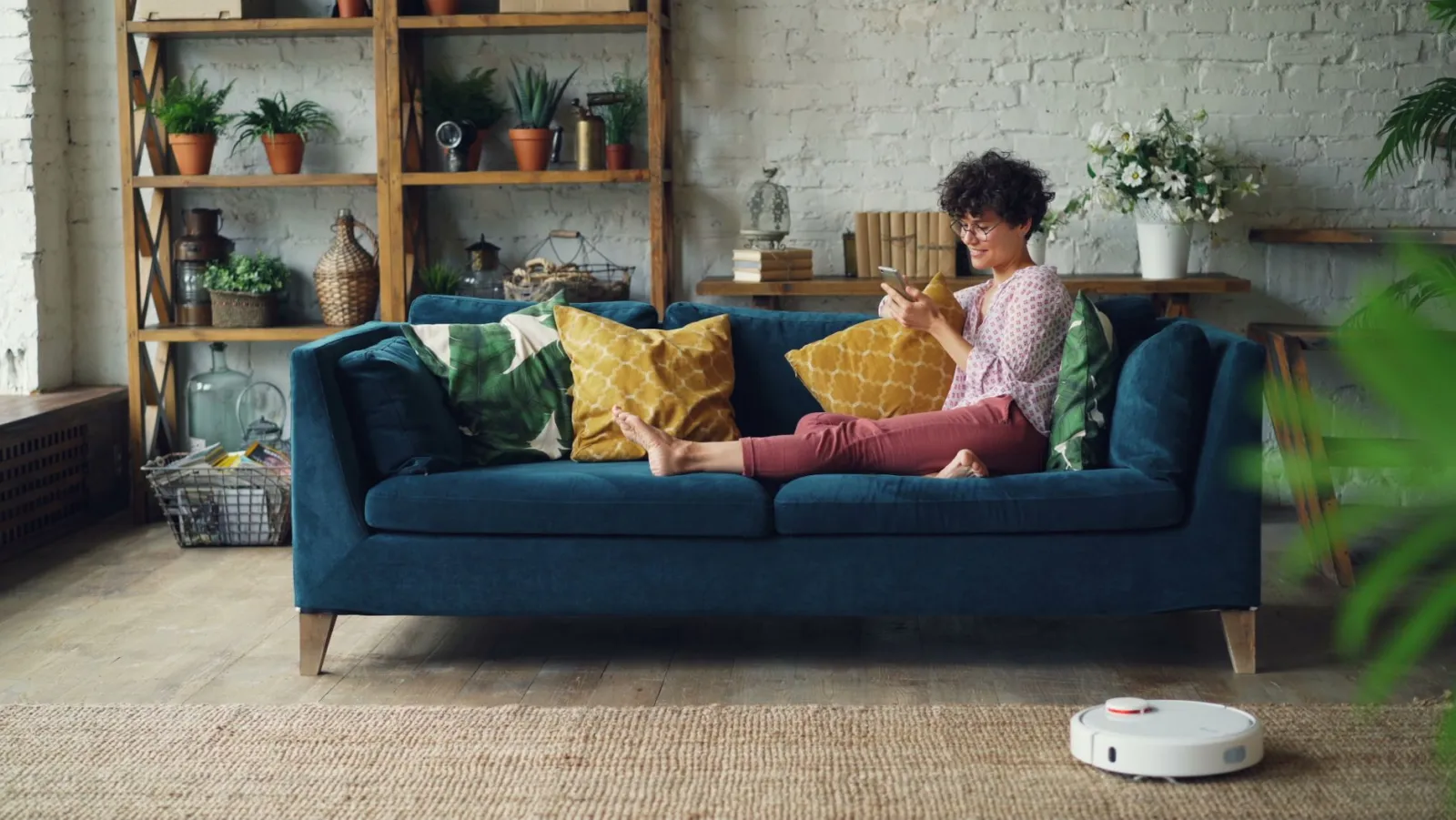
Hard floors change the physics of cleaning in ways that matter when you choose a robot vacuum. On carpet, fibers trap and hold debris, and a rotating brush can agitate dirt loose before suction lifts it away. On tile, hardwood, laminate, or vinyl, there is nothing to grip the dirt. Loose crumbs, sand, and dust sit on top of a smooth surface, and fine particles slide across it easily. Airflow from the robot itself can push lightweight debris ahead of the machine rather than into it. This is why a vacuum tuned mainly for carpet does not automatically perform well on hard surfaces, and why the best robot vacuum for hard floors is usually one designed with smooth-surface behavior in mind.
The single most important difference is the brush system. Stiff bristle brushes are effective at digging into carpet pile, but on hard floors they tend to scatter debris and can fling particles toward the edges of the room. Many robots built for hard floors rely on a combination of a soft, full-width roller and rubber or silicone extractors, which sweep and gather rather than flick. Side brushes matter too: they pull dirt out of corners and along baseboards, but a poorly tuned side brush can bat crumbs across the floor instead of guiding them into the intake. Edge and corner performance is a recurring weak point on hard floors, because the gap between the robot’s body and the wall is exactly where dust accumulates.
Suction alone is not the whole story. On smooth surfaces, the seal between the robot and the floor determines how much airflow actually reaches the debris. A machine with strong suction but a loose fit to the floor can leave a thin film of fine dust behind, which is far more visible on a dark hardwood or glossy tile than on a patterned carpet. Fine dust and pet hair are the two categories that expose this most clearly: hair tends to clump and wrap around brushes, while dust settles into a barely visible layer that shows up under low light or when the sun hits the floor.
Hard floors also raise the question of wet cleaning. A dry-only robot removes loose debris but does nothing about dried spills, sticky residue, or the faint haze that builds up over time. Combination robots that mop or wipe offer a way to handle both in one pass, though the quality of the mopping function varies widely, and some designs simply drag a damp cloth rather than applying consistent pressure. For homes with a mix of hard flooring and rugs, the robot’s ability to detect the surface and adjust its behavior, lifting or avoiding the mop where needed, becomes a practical concern rather than a marketing detail.
Finally, consider how the floor is laid out. Hard floors are often continuous, with thresholds between rooms, transitions to rugs, and furniture with low clearance. A robot that navigates these boundaries reliably and maps the space will cover more of the actual floor than one that bumps around and re-cleans the same patch. The right choice depends on whether your priority is fine-dust pickup, hair handling, edge reach, or combined dry and wet cleaning, and the sections that follow break down each of these criteria in turn.
How Robot Vacuums Handle Hardwood, Tile, and Laminate
Hard flooring looks simple to clean, but each surface type behaves differently under a robot vacuum. Hardwood rewards gentle, controlled suction and soft brushes, because grit dragged across a finished surface can dull it over time. Tile tolerates more aggressive agitation and often hides debris in grout lines and textured finishes, so brush design and edge reach matter more than raw power. Laminate sits somewhere in between: it is more scratch-resistant than hardwood but still vulnerable to standing water at the seams, which makes water control the deciding factor rather than suction strength.
On hardwood, the main risk is abrasion rather than poor pickup. A spinning side brush flicking loose grit against a baseboard, or a stiff main brush dragging sand across the finish, does more long-term damage than a missed crumb. Machines with a soft, rubberized or hybrid main brush and a side brush that slows or stops on contact tend to be kinder to delicate finishes. Suction can stay moderate; loose dust and hair on a smooth surface release easily, so brute force buys little and adds noise.
Tile changes the calculus. Grout channels trap fine dust that a single pass glides over, and textured or matte tiles hold debris that smooth surfaces shed. Here, agitation and repeated coverage help more than peak suction, and a brush that reaches into grout lines earns its keep. Edge and corner behavior also matters, since tile often runs wall to wall with tight margins where a round chassis struggles. Expect to run a second pass or a targeted spot cycle in kitchens and bathrooms rather than relying on one sweep.
Laminate is where moisture control becomes the priority. Standing water or a damp mop that leaves visible residue can seep into seams and cause swelling that no suction setting can undo. A mopping function with tightly controlled water flow, or a dry-only routine with a slightly damp cloth, is safer than a wet mop that floods the surface. For most laminate floors, vacuuming frequently and mopping sparingly is the more durable habit.
Across all three surfaces, the practical criteria are the same: brush type matched to finish, edge reach for wall-to-wall layouts, and water delivery you can dial down or switch off. Thresholds and transitions between rooms also test climbing ability, since a robot that stalls at a hardwood-to-tile strip leaves half the floor untouched. Match these traits to your dominant floor type rather than chasing the highest suction figure.
Suction Power and What It Means for Hard Floor Cleaning
Suction power is the specification shoppers notice first, yet on hard floors it matters less than most people assume. The reason is physical: sealed carpet cleaning depends on pulling air through fibres, so raw vacuum strength drives deep-down soil removal. A hard surface offers no fibres to draw air through. Once the brush or pad has loosened debris, the airflow mainly needs to lift and carry it into the bin. A modest, well-directed airflow is often enough, which is why many competent hard-floor robots sit in the middle of the range rather than at the top.
What actually separates strong from weak hard-floor performance is how the suction is applied. A concentrated, narrow pickup zone near the brush keeps airflow velocity high where it meets the floor, so fine dust and grit are captured before the robot passes on. A wide, diffuse intake spreads the same suction thinly and tends to push lightweight debris around instead of lifting it. Edge behaviour tells you a lot here: a machine that keeps meaningful airflow at the skirting board is doing more useful work than one whose maximum figure only applies mid-room.
The debris type you face should guide your expectations. Fine dust, flour, sugar and tracked-in grit reward consistent, well-channelled suction and a brush that agitates the surface. Heavier items such as cereal, pet kibble or small stones are more about the intake width and the brush’s ability to flick them upward than about peak power. Hair is a separate problem: on hard floors it tangles around brushes rather than being lifted by airflow, so brush design and anti-tangle features matter more than the suction rating. Liquid spills are outside suction’s remit entirely.
Higher suction also carries trade-offs on hard floors. More power usually means more noise and faster battery drain, so a robot running at maximum may clean less area per charge than one operating at a moderate, sustained level. Many models offer adjustable modes, and on sealed flooring a medium setting frequently delivers a clean result while extending runtime and keeping the household calmer. Reserve the top setting for heavy grit after messy entryway traffic or post-renovation dust.
Treat the quoted suction figure as one signal among several rather than the deciding one. Look instead at how the airflow is channelled at the pickup point, how the robot handles edges and corners, whether the brush suits your debris mix, and whether runtime at a practical setting covers your floor plan. A robot with moderate suction, a well-designed brush and reliable edge coverage will usually outperform a higher-rated machine whose power is spread too broadly to lift what lies in front of it.
Brush Types: Which Roller or Brush Works Best on Hard Surfaces
The brush system is the part of a robot vacuum that actually touches your hard floor, so its design matters more on tile, vinyl, laminate, and sealed wood than it does on carpet. On hard surfaces, the job is mostly about capturing loose debris and fine dust without scattering it or scratching the finish. The main choice is between a rubber roller and a bristle brush, and each behaves differently depending on what lands on your floor.
A full rubber roller is generally the safer pick for hard floors. Its continuous, squeegee-like edge sweeps crumbs, cereal, and pet hair into the intake in a single pass, and hair tends not to wrap tightly around it, which keeps maintenance simple. Because there are no stiff bristles, there is little risk of flicking grit across the floor or abrading a delicate finish. The trade-off is that a smooth roller can struggle with debris lodged in grout lines or fine dust sitting in textured tile, where a bit of agitation helps lift particles loose.
Bristle brushes, by contrast, agitate the surface and can reach into grooves, grout, and the seams between planks, which helps dislodge stuck-on dust and grit. The downside on hard floors is scatter: spinning bristles can throw lightweight debris ahead of the robot or sideways rather than into the bin, and stiff filaments can, over time, dull a soft wood finish or catch on rugs and tassels. Bristles also collect hair and fibers, which wrap around the brush and need regular cutting away.
Many current designs split the difference with a combination or hybrid brush, pairing rubber blades with tufts of bristles. This gives some agitation for grout and texture while keeping most of the hair-shedding benefit of rubber. For homes that are almost entirely hard flooring, a pure rubber roller is usually the most predictable choice; for mixed floors or heavily textured tile, a hybrid offers more flexibility. Whichever you choose, look for a brush that is easy to remove and clean, since hair and dust build-up is the most common reason cleaning performance drops off.
Finally, consider the edge and side brushes alongside the main roller. Side brushes sweep debris out of corners and along baseboards into the robot’s path, but stiff side bristles can fling dust on smooth floors, so softer filaments tend to suit hard surfaces better. A well-matched main brush plus gentle side brushes keeps dust moving toward the intake instead of across the room.
Mopping Features and When They Add Real Value
Mopping is the feature most likely to inflate a robot vacuum’s price without earning its keep, so it helps to separate what these systems actually do from what marketing implies. Most mopping robots fall into one of two camps: a vibrating or oscillating flat pad that drags across the floor, or a pair of rotating microfiber discs that scrub as the unit moves. Both are essentially surface-cleaning tools. They lift light dust, dried water spots, and the thin film that builds up on sealed hard floors, but they do not replace a mop for sticky spills, grease, or grout lines. The distinction matters because a flat-pad system that barely wets the floor behaves very differently from rotating discs with downward pressure, and neither is a substitute for a manual deep clean.
The real value of mopping appears when the floor is already swept. A robot that vacuums and mops in a single pass is convenient, but debris left on the floor turns into a muddy smear under a wet pad, so most effective routines run a vacuum cycle first and a mop cycle second, or use a model that lifts its pads during vacuuming. Look for pad-lifting or mop-lifting mechanisms if you have rugs and hard floors in the same space; without them, a wet pad will drag across carpet edges and leave damp patches. Water-tank capacity and adjustable flow rates are the other practical criteria. A small tank suits a single room or a quick refresh, while a larger tank covers a whole floor before needing a refill, and adjustable flow lets you use less water on laminate or sealed wood and more on tile.
Mopping adds genuine value in specific situations. Homes with mostly hard flooring, kitchens and entryways that collect light daily grime, and households that want a maintenance clean between manual mopping sessions are the clearest cases. It is also useful for pet owners dealing with drool marks and paw prints, provided the robot vacuums first. It adds much less value in homes that are mostly carpeted, in rooms with heavy soiling that needs scrubbing pressure, or where the floor is delicate natural stone or unsealed wood that should not stay wet. In those cases, the mopping hardware is cost and complexity you may never use.
Consider the maintenance burden before paying for mopping. Pads and discs need rinsing or replacing after use, tanks need filling and emptying, and dirty water left in a tank becomes a smell problem. Self-cleaning or self-emptying docks reduce that friction but add cost and footprint. A reasonable rule is to buy mopping only if you will actually run it several times a week; otherwise a strong vacuum-only robot paired with an occasional manual mop delivers better results for the money.
Navigation and Mapping for Efficient Hard Floor Coverage
Navigation and mapping determine whether a robot vacuum cleans your hard floors systematically or simply wanders until its battery runs down. On carpet, random bouncing can eventually cover most of a room; on hard floors, the stakes are higher because debris, dust, and pet hair stay visible in the open, and missed strips are immediately obvious. A robot that builds a reliable map cleans in predictable, overlapping passes, while a navigation-poor model leaves streaks of untouched floor along walls and between chair legs.
The core distinction is between camera-based navigation and laser-based mapping. Camera systems use a forward-facing sensor to recognize landmarks and ceilings, which works well in well-lit rooms but can struggle in dim hallways or when furniture is frequently rearranged. Laser mapping, often paired with a spinning turret on top of the robot, measures distances directly and builds a precise floor plan even in the dark. For homes with long corridors, open-plan living areas, or rooms that change layout often, laser-based mapping generally delivers more consistent coverage. Camera-only robots can still do a good job in compact, well-lit apartments.
Mapping quality shows up in features you can actually use. Room-by-room cleaning lets you send the robot to the kitchen after cooking without redoing the whole floor. No-go zones and invisible walls keep it away from pet bowls, cables, or a fragile rug edge. Multi-floor mapping matters if you have stairs, since the robot should recognize which level it is on rather than re-exploring from scratch. Look for the ability to save several maps and to edit them later; a map you cannot adjust becomes useless the moment you move a sofa.
Coverage efficiency also depends on how the robot plans its path. Systematic cleaning in parallel lanes covers a rectangular room faster and more evenly than random patterns, which matters on hard floors where a single missed pass is visible. Edge and corner behavior is worth checking too: side brushes should reach along baseboards, and the robot should slow down near walls rather than bump repeatedly. On large open floors, a robot that plans efficient routes finishes sooner and returns to its dock with battery to spare, which is useful if you schedule cleaning before guests arrive.
Practical use cases clarify the trade-offs. In a studio apartment with one main room, a simpler navigation system may be entirely sufficient. In a multi-room home with a hallway, an open kitchen, and a dining area under a table, precise mapping and room segmentation become close to essential. If you have pets that move bowls around or children who leave toys on the floor, reliable obstacle detection combined with saved no-go zones reduces the number of rescue missions. Match the navigation tier to the complexity of your floor plan rather than paying for mapping features your layout never demands.
Battery Life and Runtime for Larger Hard Floor Areas
Runtime is where hard-floor homes diverge most sharply from carpeted ones, because the cleaning load is different in kind. On hard floors the robot mostly needs sustained suction and brush agitation rather than deep carpet penetration, so the energy demand per square metre is often lower. The practical consequence is that a given battery capacity tends to cover more hard-floor area than the same capacity would cover in a carpeted home. What erodes that advantage is the number of transitions: moving between tile, wood, and rugs forces the robot to adjust suction and brush behaviour repeatedly, and those shifts add up over a full run.
The single most useful figure to compare is advertised maximum runtime, but treat it as a ceiling rather than an expectation. Manufacturers typically quote runtime at the lowest suction setting, often with the brush off or on a bare-floor profile. At the higher suction levels most people actually use for hard floors, real runtime is meaningfully shorter. A robot rated for a long maximum run may deliver only a fraction of that when set to a stronger mode, so the honest comparison is runtime at the setting you intend to use, not the headline number.
Area coverage follows from runtime and speed together. A robot that cleans slowly but thoroughly may cover less ground per charge than a faster one, even with identical batteries. As a working estimate, a mid-range runtime at a moderate suction setting is generally enough for a typical apartment or a single open-plan living area, while larger homes with multiple rooms and long corridors will benefit from either a longer-rated battery or a mid-run recharge feature. Homes with extensive hard flooring across several rooms are the clearest case for prioritising runtime over other specs.
Recharge-and-resume behaviour matters as much as raw capacity. Some robots return to the dock partway through, recharge, and pick up where they left off; others simply stop and require a fresh start, which can leave part of the floor untouched. For large hard-floor areas, resume capability effectively extends coverage without you intervening. Also consider whether the robot stores a map: with mapping, a second run after recharging can target only the remaining rooms rather than repeating the whole floor.
Finally, battery health declines gradually with age and with frequent full discharges. A robot that finishes your floor with capacity to spare today will have less headroom in a couple of years, so choosing a model with some margin over your current area is a sensible buffer. If your hard-floor area is near the edge of a robot’s rated coverage, expect to rely on resume behaviour or scheduled partial runs rather than a single uninterrupted pass.
Dealing with Pet Hair on Hard Floors
Pet hair on hard floors is a different problem from pet hair on carpet. On carpet, strands work their way down into the pile and can sit there until a deep clean. On tile, laminate, vinyl, or sealed wood, hair stays on the surface and tends to clump, drift, and redistribute the moment air moves across it. That makes hard floors both easier and trickier: a robot can lift the hair quickly, but it can also push a loose tumbleweed of fur from one end of the room to the other if the airflow and brush design are wrong.
The first thing to weigh is the brush type. Traditional bristle brushes are effective at agitating debris, but on hard floors they tend to fling hair outward and can wrap strands tightly around the roller. For pet households with mostly hard surfaces, a rubber or comb-style roller is usually the better match: hair collects on the surface of the roller and is scraped off into the bin rather than wound into the bristles, which means less manual cutting and fewer mid-run stalls. If the robot will also handle low-pile rugs, look for a brush that transitions between surfaces without dragging.
Suction matters, but airflow path matters just as much. Hair is light, so it lifts easily; the challenge is keeping it captured. A robot with a well-sealed dustbin and a filter that stays clear will hold onto what it picks up, while a clogged filter causes hair to be dropped behind the machine. Pet households generate fine dander alongside the hair, so a filter that clogs quickly will degrade pickup within a single run. Expect to check and clear the filter more often than in a non-pet home, and factor that maintenance rhythm into your routine.
Edge and corner behavior is where pet hair accumulates most visibly. Hair drifts against baseboards, under toe kicks, and into the corners where a round robot cannot reach with its main brush. A side brush helps sweep debris into the path, but stiff side brushes can also bat hair around rather than collect it. Look for side brushes that spin at a controlled speed and sit close to the floor, and consider whether the robot’s navigation lets it make a deliberate pass along walls rather than a single random sweep.
For multi-pet homes or heavy shedders, scheduling matters more than raw power. Running the robot daily on hard floors keeps hair from building into clumps that are harder to capture, and a robot that returns to its dock and empties itself reduces how often you handle a full bin. If hair is long, check that the roller and side brushes are designed to resist wrapping, since a tangled brush is the most common reason a hard-floor run ends early.
Noise Levels and Everyday Usability
Noise is one of the most underrated factors in choosing a robot vacuum for hard floors, because it determines when and how often you will actually run the machine. On tile, vinyl, or hardwood, there is no carpet pile to absorb vibration, so the sound of the drive motor, the suction fan, and debris rattling into the bin carries across open rooms and hard surfaces. Two robots with similar cleaning performance can feel very different in daily life if one runs at a low, steady hum and the other produces a sharp, high-pitched whine that travels through doorways and hallways.
Most robots offer several power modes, and noise scales with suction. A quiet or eco mode is typically gentle enough to run in the same room while you work, read, or take a call, though it sacrifices some pickup on fine dust and heavier debris. Maximum mode delivers the deepest clean on grout lines and textured tile but is loud enough that you would not want it running beside a conversation or a sleeping child. A practical approach is to schedule quiet passes for daily maintenance and reserve maximum power for occasional deep cleans when the house is empty. Models that let you set per-room or per-zone power levels make this easier, since you can send the robot through high-traffic kitchen areas at full power and keep bedrooms on a gentler setting.
The type of debris matters too. Hard floors collect crumbs, sand, and pet hair that rattle and ping inside the bin and dust path, adding percussive noise on top of the motor. A robot with a well-sealed bin and a smooth internal path tends to sound cleaner and less intrusive. Listen for whether the noise is broadband and steady or intermittent and sharp; the latter is more distracting even at the same overall level.
Everyday usability extends beyond decibels. Consider whether the robot can be scheduled during off-hours, whether it returns quietly to its dock, and whether app alerts are silent or audible. If you work from home or have light sleepers, prioritize low-noise modes and scheduling flexibility over raw suction. If your home is usually empty during the day, you can accept a louder maximum mode in exchange for stronger cleaning. Matching noise behavior to your household rhythm matters more than any single specification, because a robot you avoid running is a robot that never cleans your hard floors.
Maintenance, Filters, and Long-Term Costs
Maintenance is where the true cost of owning a robot vacuum on hard floors reveals itself. Hard flooring is generally forgiving: there is no carpet pile to trap grit deep in the fibers, and most debris sits on the surface where the vacuum can reach it. That said, hard floors expose the machine to a different mix of wear. Fine dust, hair, and grit are picked up efficiently, but they also load the filter and brush system quickly, and the edges and corners where walls meet the floor demand regular attention because that is where dust accumulates out of the main cleaning path.
The filter is the component that most directly affects long-term performance and cost. Most robot vacuums rely on a washable primary filter backed by a finer media, and the washable part needs rinsing on a regular cadence, typically every couple of weeks depending on how often the robot runs and how dusty the home is. Rinsing extends the interval between replacements, but washable filters still degrade over time as the media clogs and loses airflow, so replacement is an ongoing expense rather than a one-time purchase. Homes with pets or occupants with long hair will go through filters faster, because hair and fine dander load the media more aggressively. A clogged filter shows up as weaker suction and more dust left behind, so treating filter changes as routine rather than reactive keeps cleaning performance stable.
Brushes and the main brush roll are the second recurring cost. On hard floors, a combination brush with bristles and rubber blades works well, but hair wraps around the roll and must be cut away regularly. Rubber-only rollers shed hair more easily and last longer on hard surfaces, while bristle brushes tend to fray and splay. Side brushes wear down at the tips and lose their sweep, which matters more on hard floors where edge cleaning depends on them reaching into corners. Expect to replace side brushes periodically and the main brush less often, with the exact interval driven by hair volume and how much grit the robot encounters.
Beyond consumables, the long-term cost picture includes battery degradation and the wear on wheels and sensors. Batteries lose capacity over years of charging cycles, gradually shortening runtime, and replacement is a meaningful one-time expense when it comes. Wheels and the front caster pick up hair and grit and should be cleaned so the robot tracks straight and climbs thresholds reliably. Dustbin seals and the charging contacts also benefit from occasional wiping, since dust buildup there can cause charging faults. None of these are dramatic costs individually, but together they form a predictable maintenance budget that is worth factoring in before purchase. A robot with easily available, reasonably priced consumables and a design that makes the filter and brush accessible for cleaning will cost less to own over its life than one that is cheap upfront but awkward to maintain.
Frequently asked questions
Do robot vacuums work well on hardwood floors?
Yes, robot vacuums generally perform well on hardwood floors because smooth surfaces offer little resistance to airflow and debris. Loose dust, crumbs, and hair are picked up efficiently by the suction and brushes. The main caveats are scattered cords, small rugs, and thresholds, which can trap or redirect the robot. Sealed hardwood also benefits from the consistent, frequent passes a robot provides, since grit left sitting can dull a finish over time.
What should I look for in a robot vacuum for tile floors?
For tile, prioritize strong suction and a brush design that agitates grout lines without flinging debris. Look for adjustable suction or edge-cleaning behavior that reaches corners, and a dustbin large enough for the floor area you have. Tile often meets rugs and thresholds, so climbing ability and reliable cliff sensors matter. If grout collects fine dust, a model with a side brush and a washable filter helps maintain consistent pickup.
Is a spinning brush or a roller brush better for hard floors?
A spinning side brush is essential on hard floors for sweeping debris out of corners and along baseboards into the suction path. For the main cleaning head, a soft roller or a brushroll with stiff bristles works well on hard surfaces, while aggressive bristle brushes can scatter lightweight debris. Many robots combine a side brush with a roller or a suction-only head. The best choice depends on whether your floors are mostly bare or mixed with rugs.
Can a robot vacuum scratch my hardwood floors?
A robot vacuum can scratch hardwood if grit or debris gets trapped under the wheels or brush and is dragged across the surface. Regular cleaning of the brushes, wheels, and dustbin reduces this risk. Avoid running the robot over loose sand or small sharp objects, and check the underside for stuck material. Soft rollers and rubber wheels are gentler than stiff bristles. On sealed finishes, normal use is generally safe when the robot is kept clean.
Do I need a robot vacuum with a mopping function for hard floors?
A mopping function is useful but not essential for hard floors. It helps with light surface dust and sticky spots, but most robot mops are gentle and not a substitute for deeper cleaning. If your floors are mostly bare and you want maintenance between manual mopping, a combo unit adds convenience. If you have area rugs or delicate finishes, check that the mop can be lifted or the water flow controlled to avoid overwetting.
How often should I clean the brushes and filters on a robot vacuum?
Clean the brushes and filters regularly, and more often in homes with pets or heavy debris. Check the main brush and side brush for tangled hair and fibers after each run or every few runs, and clear them before they bind. Rinse or tap out the filter according to the manufacturer’s guidance, and let it dry fully before reinstalling. A clogged filter reduces suction, so keeping it clean preserves performance on hard floors.
Are robot vacuums good at picking up pet hair on hard floors?
Robot vacuums handle pet hair on hard floors reasonably well because hair sits on the surface rather than embedding in carpet. Suction lifts loose hair, and brushes help gather it, but long hair and fur can wrap around rollers and side brushes. Models with tangle-resistant brush designs or rubber rollers reduce wrapping. Empty the dustbin frequently and check the brush ends, since accumulated hair quickly cuts pickup efficiency.
How much suction power do I need for hard floors?
Hard floors need less suction than carpet because debris sits on the surface rather than deep in fibers. A moderate level is usually enough for dust, crumbs, and hair, and higher settings help with heavier debris or pet hair. Rather than chasing a single number, consider adjustable suction, a well-sealed brush head, and consistent airflow. A clean filter and empty dustbin matter as much as raw power for real-world pickup.
Read next :Best Cat Breeds for Your Home: A Practical Guide for Pet Owners · Solar Panels for Campervan: Complete Buyer’s Guide · DIY Kitchens UK: A Practical Planning Guide · Best Dog Tracker: How to Choose the Right GPS Collar · What Dog Breed Is Best for Me? A Guide for Your Home and Lifestyle
Work out your own case in 30 seconds:
Methodology
This calculator produces an indicative estimate based on the parameters you enter. The ranges used reflect typical market tiers in the eco and energy savings space and are neither a commercial offer nor a guarantee. Prices and availability may vary.
Read next :Best Lawn Mower Robot: A Complete Buying Guide for Homeowners
Full guide :Appliances
More from this guide :
Was this guide helpful?
Share your experience with the WiseHomeGuides community.