Short answer : Choosing dogs xmas jumpers comes down to fit, fabric and how easily the jumper goes on and off. Measure your dog’s chest girth and back length before buying, then compare those numbers with the size chart rather than guessing from breed labels. Look for soft, stretchy knits with a wide neck opening and adjustable fastenings so the jumper sits without pulling on the legs or bunching under the belly. Washability matters too, since festive knits pick up hair and outdoor dirt quickly. A well-fitting jumper should let your dog walk, sit and toilet normally, and it should be easy to remove after a winter walk.
In short
- Measure chest girth and back length first, then match those figures to the size chart.
- Pick stretchy knit fabric with a wide neck opening so the jumper slides on easily.
- Adjustable fastenings under the belly keep the jumper in place without restricting movement.
- Check that leg holes and hems leave room to walk, sit and toilet comfortably.
- Choose machine-washable yarns and wash on a gentle cycle to keep the knit shape.
Why a Christmas Jumper for Your Dog
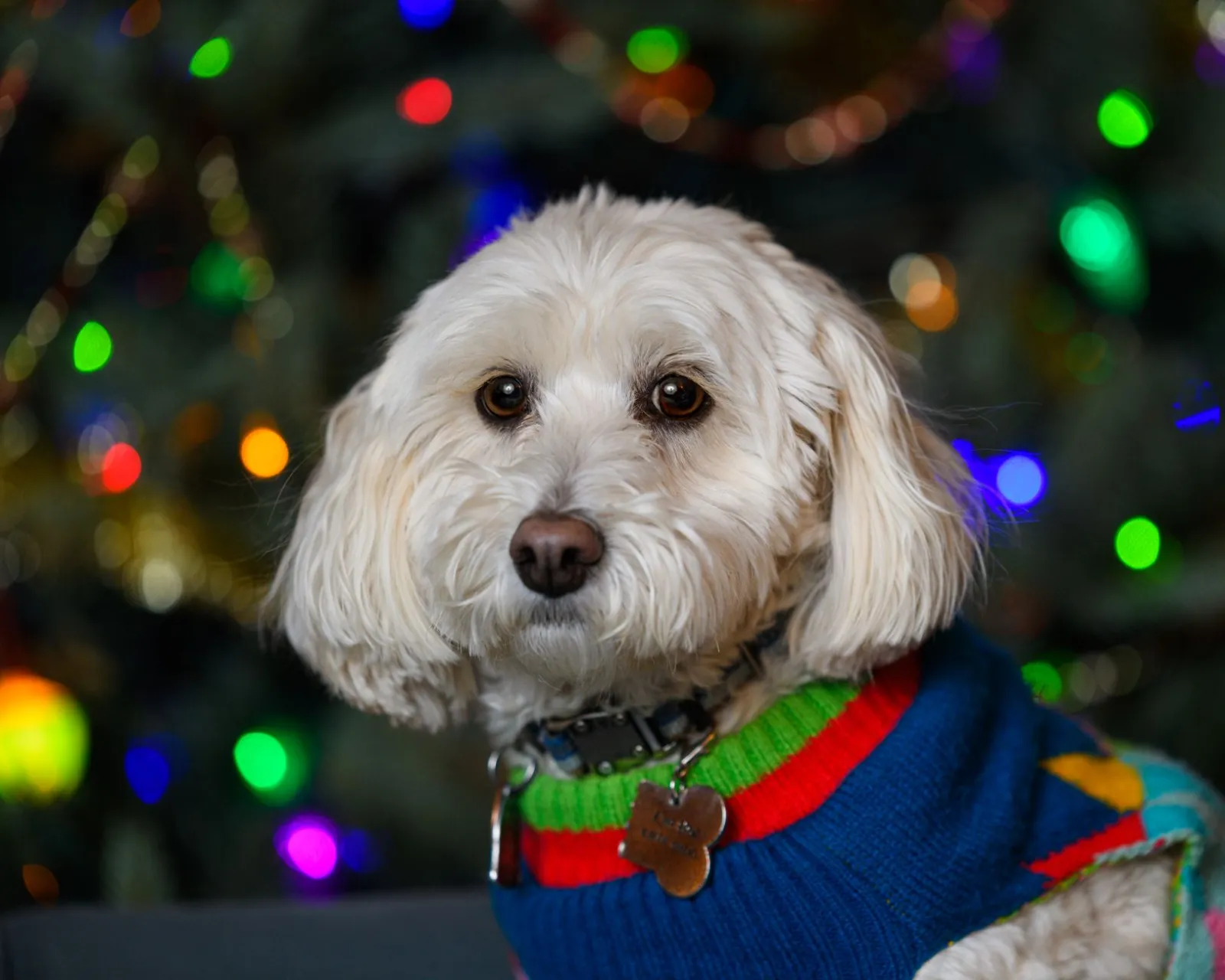
A Christmas jumper for a dog is first and foremost a piece of festive clothing, and it earns its place for reasons that are more practical than sentimental. The most immediate is warmth during the colder months. Short-coated breeds, small dogs, lean dogs and older dogs lose body heat faster than thick-coated working breeds, and a knitted or fleece-lined jumper gives them an extra layer on frosty morning walks, on draughty floors and during car journeys. The benefit is most obvious in the gap between indoor heating and outdoor cold, when a dog goes from a warm house into a sharp wind.
The second reason is occasion. Christmas jumpers turn a dog into part of the family photograph, the Christmas Eve walk and the visit to relatives. For households that already dress up, a jumper lets the dog join in without fuss. This matters for social dogs that tolerate clothing well and for owners who want a seasonal portrait or a matching family set. It is a light, low-commitment way to mark the season, and it gives a dog something to wear for a specific event rather than every day.
There is also a practical, mess-limiting case. A jumper covers the back and chest, which keeps mud, road salt and light rain off the coat on winter walks, and it reduces the amount of towel-drying and bathing a dog needs afterwards. For dogs that come home wet and dirty, a close-fitting layer can mean less cleaning of the dog and the car. It is not a substitute for a waterproof coat in heavy rain, but for dry cold and short trips it does useful work.
A jumper also helps in homes and venues where a dog might otherwise be underfoot or overlooked during festivities. A brightly coloured festive knit makes a small dog easier to spot in a crowded room, on a dark evening walk or in a busy hallway, which is a genuine safety benefit for tiny or dark-coated dogs. It signals to guests that the dog is part of the household and should be treated gently, and it can make a nervous dog feel more settled by providing gentle, even pressure across the back.
Finally, a jumper is a reasonable choice for dogs that dislike full coats. Some dogs object to the rustle and bulk of outdoor jackets but accept a soft knit that moves with them. The deciding factors are fit, fabric and how the dog reacts: a jumper should sit snug without restricting the shoulders or neck, allow full movement of the legs, and be easy to put on and take off. For a dog that tolerates clothing calmly, a Christmas jumper is a warm, cheerful and genuinely useful addition to the winter routine.
Choosing the Right Size and Fit
Sizing is where most Christmas jumper purchases go wrong, because festive knitwear sits somewhere between a coat and a T-shirt in the way it needs to fit. Start with the two measurements that matter most: the chest girth taken just behind the front legs, and the length from the base of the neck to the base of the tail. A jumper that fits well covers the back without dragging over the tail, and wraps the chest without pulling tight across the shoulders. If you only have a soft tape or a piece of string and a ruler, those two figures will get you further than any breed-based size chart, since body shapes vary enormously within the same breed.
Fit should be snug enough to stay in place during a walk but loose enough to slip two fingers under the hem at the neck and belly. A common mistake is sizing up “to be safe”: an oversized jumper sags at the belly, catches on the hind legs and can trip a dog on stairs or during a run in the garden. Equally, a jumper that is too tight will ride up at the back, bunch under the front legs and restrict the shoulder movement a dog needs to trot comfortably. The chest is usually the limiting measurement, so choose a size that matches the chest first and accept a slightly longer or shorter back if necessary.
Body shape changes the calculation. Sighthounds and other deep-chested, narrow-waisted dogs often need a jumper cut for a longer back and a slimmer middle, while stocky, broad-chested dogs may fit the chest of one size but need the shorter back of the size below. Small, fine-boned dogs such as puppies and toy breeds tend to feel the cold most and benefit from a closer fit with a higher neck, whereas thick-coated, heavily built dogs mainly need coverage over the back and kidneys rather than full insulation. Puppies present a particular case: they grow quickly, so a jumper bought in early December may be tight by Christmas Day, and a slightly roomier fit with an adjustable belly strap is often the more practical choice.
Think about how the jumper will be worn. For indoor wear around the house during the festive period, a closer, softer fit works well and layers easily under a coat for garden trips. For outdoor use in cold, wet weather, the jumper needs to sit smoothly under a harness or waterproof coat without bunching at the shoulders, so check that the leg openings and neckline do not interfere with harness straps. Dogs that wear a collar and lead on a collar rather than a harness need a neckline low enough not to rub, while those with a harness benefit from a jumper that leaves the leash attachment point accessible.
Finally, treat fit as something to verify on the dog rather than on the label. Once the jumper arrives, put it on, let the dog walk, sit and lie down, and watch for wrinkling along the back, gaping at the neck or tightness under the front legs. A well-fitting Christmas jumper should look neat standing still and stay put through a full circuit of the room, and if it fails either test, exchanging it for a different size is far better than persisting with a poor fit through the season.
Fabrics That Keep Dogs Comfortable
The fabric of a dog Christmas jumper matters more than the pattern. Dogs regulate heat differently from humans: they rely heavily on panting and have a coat that traps warmth, so a jumper that is too thick or too occlusive can leave a dog restless, scratching, or trying to wriggle out. The most comfortable options are usually knit fabrics with some natural fibre content, such as lambswool blends or cotton-rich knits, because they breathe and stretch with movement. A jumper should feel like a light extra layer, not a coat.
Stretch and recovery are the practical tests. A good knit should stretch easily over the head and chest and then return to shape rather than sagging at the belly. Ribbed cuffs and hems hold the jumper in place without tight elastic digging in. If the fabric feels stiff in your hands or crackles with static, it will likely feel stiff on the dog too. For dogs that wear a jumper for several hours at a time, a soft, flexible knit is far more forgiving than a dense, heavy weave.
Consider the dog’s coat and build. Short-coated, lean breeds feel the cold more and can wear a closer-fitting knit comfortably, while double-coated or stocky dogs overheat quickly and do better in a thin, breathable layer or none at all. Senior dogs and those with less padding along the spine benefit from a softer fabric and a cut that covers the back without pressing on the shoulders. Hairless or very fine-coated dogs need a jumper that sits smoothly against the skin, so a smooth-lined knit is kinder than a scratchy wool.
Watch for seams, trims, and embellishments. Tinsel, beads, and appliqués add festive charm but can rub under the legs or catch on furniture; flat seams and soft trims are safer for everyday wear. Fastenings should be simple and secure, such as a hook-and-loop strip or a few buttons along the back, so the jumper goes on and off without a struggle. Anything that tightens around the neck or restricts the front legs will be uncomfortable regardless of how soft the fabric is.
Finally, match the fabric to the care you are willing to give. Many festive knits need gentle washing and flat drying to keep their shape, and metallic threads or delicate trims may not survive a hot wash. If the jumper is for occasional photos and short outings, a slightly more decorative knit is fine; for regular winter walks and long evenings indoors, choose a machine-washable, hard-wearing knit that keeps its softness after repeated laundering.
How to Measure Your Dog Correctly
Getting the measurements right is the single most important step in buying a Christmas jumper that your dog will actually tolerate wearing. A jumper that is too tight restricts movement around the shoulders and chest, while one that is too loose slips sideways, bunches under the belly, and can catch on furniture or trip your dog on stairs. Because festive knits tend to have less stretch than everyday fleece, measuring accurately matters even more than usual. You need three core numbers: the neck circumference, the chest girth, and the back length.
The chest girth is the most critical measurement, taken at the widest part of the ribcage just behind the front legs. Run the tape all the way around the body at this point, keeping it snug but not compressing the fur or skin; you should be able to slide a finger or two underneath. For very fluffy or thick-coated breeds, measure close to the body rather than over the top of the coat, since a jumper that fits the fur will hang loose once the dog is clipped or when the coat is flattened by the knit. This girth figure usually determines which size you choose, so treat it as your anchor number.
Back length runs from the base of the neck, where a collar naturally sits, to the base of the tail. This tells you how far the jumper will cover along the spine. A short-backed dog in a long jumper will have fabric draping over the rear, which collects dirt and can be soiled easily on walks, while a long-backed breed in a short jumper leaves the lower back exposed. For dogs with a pronounced tuck-up, a jumper cut for a straight back may gap at the belly, so check how the garment is shaped rather than relying on length alone.
Neck measurement is taken around the base of the neck where the collar rests, not up near the ears. This matters for breeds with a thick neck or a heavy ruff, and for dogs that wear a harness underneath, since the jumper’s neck opening must clear the harness straps without choking. When a dog sits between two sizes, sizing up is usually the safer choice for a knit with limited give, provided the chest girth still fits; a jumper that is slightly roomy at the neck can often be adjusted, whereas one that is tight across the chest cannot.
Measure your dog standing squarely on a flat floor, not sitting or lying down, and take each reading two or three times to confirm consistency. Use a soft fabric tape rather than a rigid ruler, and have a second person steady the dog if it tends to wriggle. It also helps to measure just before you plan to dress the dog, so you know whether a thick winter coat or a recent grooming will change the fit. With reliable numbers in hand, you can compare them against a seller’s size chart and choose a Christmas jumper that stays in place through the festive season.
Styles and Designs for Festive Photos
When choosing a jumper for festive photos, the design should serve the picture rather than fight it. Motifs that read clearly at a distance work best: a single large reindeer, a bold snowflake, a Fair Isle band across the chest, or a simple “Santa” lettering. Fine, busy patterns tend to blur into texture on camera, especially against a Christmas tree or a patterned sofa. A good rule of thumb is that the design should still be recognisable when the photo is viewed as a thumbnail on a phone screen. Classic red, green, cream, and navy combinations photograph reliably, while very pale pastels can wash out under indoor lighting.
Colour contrast matters as much as the motif. A jumper that matches your dog’s coat too closely loses definition in the frame; a light cream jumper on a golden dog, or a deep green on a black dog, separates the silhouette nicely. If you plan to photograph several pets together, coordinating rather than matching outfits keeps each animal distinct. Think about the setting too: a red jumper against a red backdrop disappears, so a cream or grey knit often holds up better in front of a tree or fireplace.
Consider the cut and how it frames the face. A roll-neck or turtleneck style draws the eye upward toward the head, which suits portraits, while a crew neck with a small motif keeps attention on the dog’s expression. Jumpers with a harness opening or a leash hole are practical if you want to move between indoor and outdoor shots without undressing the dog. For full-body or action shots, a closer-fitting knit with a clean back reads better than a loose poncho, which can bunch and hide the shape of the dog.
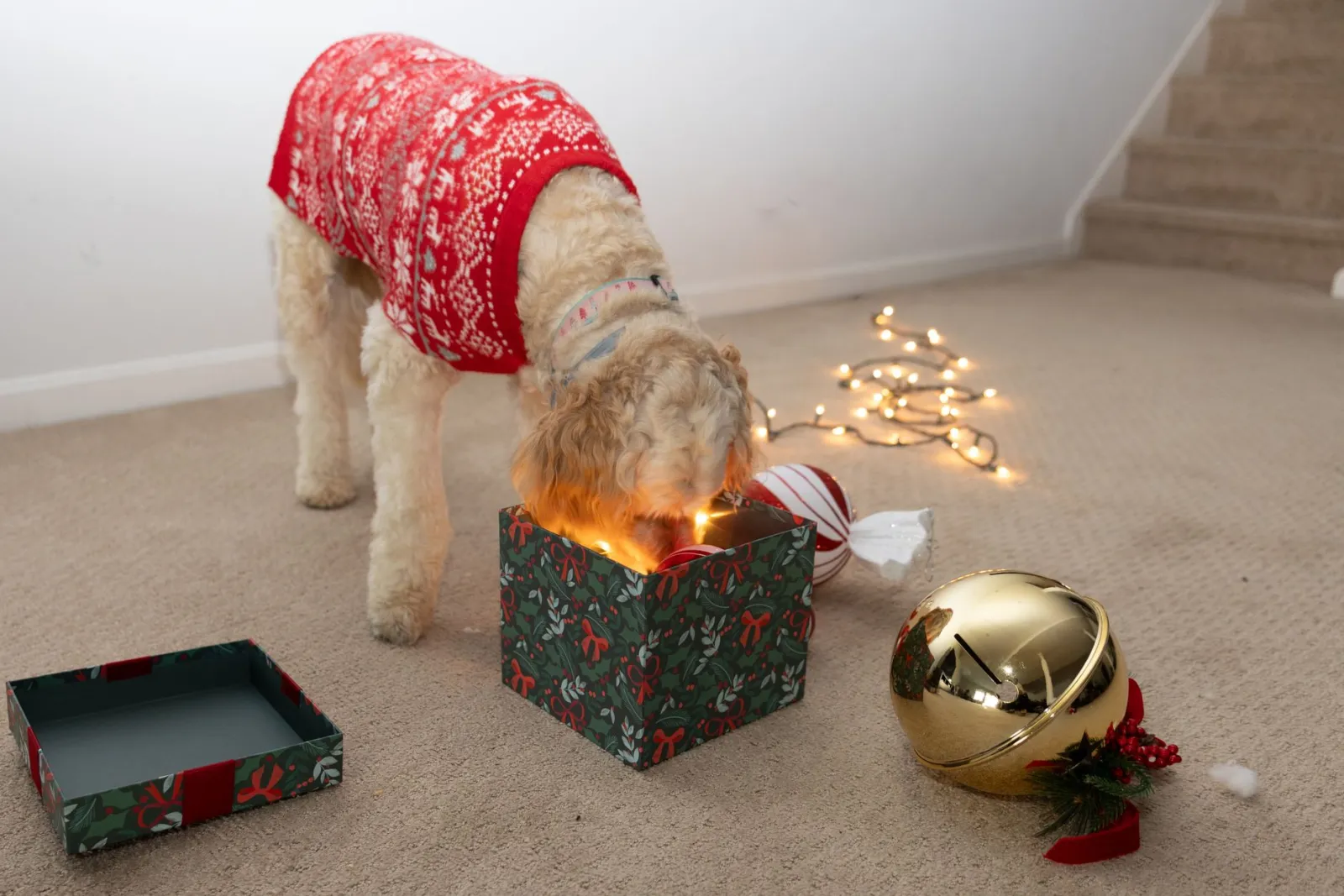
Think about the type of photo you actually want. For a formal seated portrait, a traditional Fair Isle or cable-knit style with a tidy collar gives a classic, timeless look. For candid shots of the dog opening presents or sniffing under the tree, a simpler design with a small repeating motif keeps the image from looking cluttered. If you plan a group shot with family members in their own festive knitwear, a jumper in a complementary solid colour with a single motif ties the picture together without competing.
Finally, match the design to how long the dog will wear it. A jumper chosen purely for a quick photo can be more decorative, while one worn through an afternoon of visiting and posing should be comfortable enough that the dog relaxes and holds a natural expression. A relaxed dog in a simple, well-fitted design almost always photographs better than a fidgeting one in an elaborate outfit.
Safety Checks Before First Wear
Before a Christmas jumper becomes part of your dog’s wardrobe, a short inspection routine saves a lot of trouble. Start with the fabric itself: turn the jumper inside out and run your fingers along every seam, hem and cuff. Loose threads, scratchy overlocked edges and stiff appliqué work are the usual culprits behind a dog that fidgets or tries to rub the garment off against furniture. Pay particular attention to the neckline and the armholes, since these sit against thinner skin and are the first places a poor finish will cause irritation.
Fit is the next check, and it matters more than the festive look. The jumper should slip over the head without force and sit close to the body without compressing it. A simple test is to slide two fingers flat under the chest band and the neck opening; if you cannot, the jumper is too tight, and if your whole hand passes easily, it is loose enough to ride up or twist during a walk. Watch how the dog moves in it indoors for a few minutes: a jumper that restricts the front legs usually shows up as a shortened stride or an unwillingness to climb stairs.
Hardware deserves its own pass. Zippers, snaps, buttons, bells, pom-poms and any dangling decoration are chew targets and snag hazards. Tug each attachment firmly to confirm it is secure, and consider removing anything small and detachable before the first wear rather than after it goes missing. On jumpers with a leash opening, check that the hole lines up with your dog’s harness attachment point, so the lead is not threading through fabric and pulling the garment sideways.
The first wear should be a supervised trial rather than a full-day event. Put the jumper on shortly before a familiar activity, such as a short walk or a training session, and keep the session brief. Signs that the jumper is not working include frequent scratching, rolling, freezing in place, or repeated attempts to bite at the fabric. If any of these appear, take it off and check the fit and seams again before trying once more.
Finally, think about where and when the jumper will be worn. Indoors and on short, dry walks it is straightforward, but in wet or muddy conditions a knitted jumper soaks up water and becomes heavy, and in deep snow the hem can collect clumps. Have a routine for removing it after outdoor use, and check the dog’s skin and coat under the jumper afterwards for anything caught in the knit. A jumper that passes these checks before the first wear is far more likely to stay on happily through the season.
Washing and Caring for Dog Jumpers
Washing and caring for dog jumpers comes down to three variables: the fibre, the trims, and how dirty the jumper actually gets. Most Christmas jumpers sold for dogs are built from acrylic or polyester knits, often blended with a little elastane for stretch, and these tolerate machine washing far better than wool or anything with a brushed fleece lining. Check the care label first and treat it as the deciding factor. If the label is missing or unreadable, assume the gentlest option: a cool hand wash or a cold, delicate machine cycle.
For machine-washable knits, turn the jumper inside out and fasten any Velcro straps or buckles so they don’t snag the knit or grab other items in the drum. A mesh laundry bag is worth using for small sizes and for jumpers with pom-poms, bells, or appliqué reindeer and snowflakes, since these decorations are usually stitched on rather than knitted in and are the first thing to loosen. Use a mild, neutral detergent and skip fabric softener, which coats synthetic fibres and can flatten the knit. A cold or cool cycle on a delicate setting is the safe default; hot water is the main cause of shrinking and colour bleeding in novelty knits.
Drying matters as much as washing. Shaped knitwear loses its fit when tumbled, so lay the jumper flat on a towel, reshape it while damp, and let it air dry away from direct heat. Radiators and tumble dryers can shrink acrylic and distort the neck and leg openings. If the jumper has a fleece lining, expect it to hold water longer, so allow extra drying time and check the inside seams before putting it back on your dog.
Frequency depends on use. A jumper worn for a photo and a short walk can often be aired and spot-cleaned rather than fully washed. Spot cleaning with a damp cloth and a drop of mild detergent handles mud on the belly and legs without stressing the whole garment. A jumper worn on daily winter walks, especially by a dog that likes to roll, will need a proper wash more often, but even then, washing after every wear shortens its life.
Between wears, store jumpers folded rather than hung, since hangers stretch the shoulders and neckline. Brush off loose hair and any dried mud before storage, and keep the jumper somewhere dry to avoid musty smells. If you rotate two or three jumpers through the season, each one gets a rest and a wash less often, which keeps the knit, the colour, and the trims in better shape for the following Christmas.
Common Mistakes When Buying Dog Jumpers
The most frequent mistake is buying for appearance rather than fit. A jumper that looks charming on a hanger can ride up the back, twist at the shoulders, or bunch under the belly once the dog moves. Christmas designs often run boxy and short in the body, so check that the garment covers the back without pulling at the neck, and that the leg openings sit clear of the armpits rather than digging into them. A jumper that restricts the front legs will be shrugged off, scratched at, or refused within minutes, however festive it looks.
Sizing by weight or by a single chest measurement is another common error. Dogs of the same weight vary enormously in shape: a deep-chested, narrow-waisted dog needs a different cut from a barrel-chested or long-bodied one. Measure length from the base of the neck to the tail, chest girth at the widest point behind the front legs, and neck circumference, then compare all three against the size chart rather than picking the size that matches weight alone. Where a dog falls between two sizes, a slightly roomier fit is usually kinder than a tight one, provided the neck opening still stays put.
Ignoring the dog’s coat and tolerance for clothing leads to jumpers that are too warm or simply unwearable. Thick-coated breeds may overheat indoors in a bulky knit, while short-coated, lean dogs feel the cold more and benefit from fuller coverage. Consider the intended use: a jumper worn mainly indoors or in a car needs to be light and easy to remove, whereas one for outdoor winter walks should cover more of the body and stay in place on a lead. Buying a single heavy jumper for every situation often means it is either too much or not enough.
Overlooking practical details causes daily friction. High necklines can rub or obstruct movement, fastenings under the belly are easier to put on than pull-over styles for wriggly dogs, and smooth, slippery linings help the jumper slide on without tugging ears or legs. Check that the closures are secure but not stiff, that the fabric allows a full stride and a comfortable squat, and that there is enough give at the shoulders. A jumper that takes two people to wrestle on will rarely be used.
Finally, many buyers forget care before purchase. Festive knits and novelty fabrics can shrink, pill, or lose shape, and trims such as pom-poms or appliqués may loosen and become a chewing hazard. Look for washable, hard-wearing materials and simple constructions that survive regular laundering, and keep a spare so one can dry while the other is worn. Buying one delicate, hand-wash-only jumper for a busy winter household is a reliable route to a garment that stays in the cupboard.
Budgeting for a Festive Dog Wardrobe
Budgeting for a festive dog wardrobe starts with an honest look at how many jumpers your dog will actually wear between late November and early January. A single well-chosen jumper that fits properly and suits your climate will usually outperform three cheap ones that bunch at the chest or ride up the back. Before spending anything, decide whether you need one “occasion” jumper for photos and visits, a rotation of two or three for everyday walks in cold weather, or a layered setup for a dog that spends long periods outdoors. That decision, more than any price tag, determines what a sensible budget looks like.
Think in terms of cost per wear rather than sticker price. A jumper worn twice a season is expensive no matter how little it cost, while a plain, well-constructed knit worn on every cold morning walk quickly justifies a higher upfront outlay. Households that dress the dog mainly for a single Christmas morning photo are best served by one affordable novelty piece, accepting that it may only appear once. Households with a dog that shivers on daily walks, or that accompanies children to and from school through winter, should redirect budget toward durability: reinforced seams, a harness opening, and a fabric that survives washing. Matching family sets are a common temptation; treat them as a separate line item so they don’t crowd out the practical jumper your dog will actually live in.
Fit is where budgets quietly leak. A jumper bought without measuring the chest girth and back length is the most common reason people buy twice, and returns or replacements double the effective cost. Set aside a small allowance for alteration if your dog sits between sizes, and favour designs with adjustable closures over stretch-only necks. For growing puppies, plan on outgrowing at least one jumper mid-season, so buy one size up or choose a cut with room to spare rather than investing heavily in a perfect fit that lasts weeks.
Care costs belong in the budget too. Festive knits often carry appliqué, sequins, or pom-poms that demand hand washing or a mesh laundry bag, and a jumper that pills or felts after one wash is a false economy. Factor in gentle detergent and the time to air-dry flat, and prefer machine-washable constructions if your dog is active and muddy. A cheap jumper that must be replaced after two washes costs more across the season than a mid-range one that survives to next December.
Finally, build in a contingency for the unpredictable: a cold snap that arrives early, a dog that chews through a strap, or a second dog added to the household. A modest reserve, roughly the cost of one additional jumper, absorbs these without derailing the plan. The goal is a small, coherent wardrobe where every piece earns its place, not a pile of novelty knits that spend eleven months in a drawer.
Storing Jumpers Until Next Christmas
Storing a dog’s Christmas jumper well is mostly about preventing two things: moths and moisture. Wool and wool-blend knits are the most vulnerable, and a jumper that has been worn against a dog’s coat will carry skin flakes, hair and natural oils that attract clothes moths. Before anything goes into storage, wash or hand-wash the jumper according to its care label and let it dry completely. A jumper that feels even slightly damp when folded will develop a musty smell and, in a sealed box, can grow mildew over the summer months. Give it a full day of air drying in a well-ventilated room rather than packing it away the evening after washing.
Folding is better than hanging for almost all dog jumpers. A knitted jumper on a hanger stretches at the shoulders and loses its shape, and small jumpers sized for a dog distort quickly under their own weight. Fold arms inward, then fold the body in half or thirds so the jumper sits flat. If you have several jumpers, store the heaviest at the bottom of the pile and the lightest on top to avoid compressing delicate knits. For a single jumper, a breathable cotton or canvas bag is ideal; for a collection, a lidded storage box kept in a dry cupboard works well. Avoid vacuum-sealed bags for wool, as long-term compression can flatten the fibres and leave creases that are hard to relax out.
Where you store the box matters as much as how you pack it. Lofts and garages swing between damp cold and dry heat, which is hard on natural fibres, while a spare-room wardrobe or the top shelf of a hallway cupboard stays more stable. Keep the box off a concrete floor, which wicks moisture upward, and away from exterior walls that can condense. If you use a cedar block or lavender sachet, place it in the box rather than directly against the knit, and refresh it before the next season. Check stored jumpers once or twice during the year, ideally in late spring and again in early autumn, unfolding them briefly to let air circulate and looking for any sign of moth damage before it spreads.
Label the box clearly so next December you know what is inside without unpacking everything. A note listing each jumper and its size saves time when a dog has grown or when you are deciding what still fits. When Christmas comes around again, unpack the jumpers a few days ahead rather than on the morning itself. Shake each one out, let it hang briefly in a warm room to relax creases, and check the fit before the dog wears it for any length of time. A jumper that has been stored flat and dry will look and feel much closer to new than one pulled straight from a cramped bag.
Frequently asked questions
How do I measure my dog for a jumper?
Use a soft tape measure and take three readings: the neck circumference where a collar sits, the chest girth at the widest point just behind the front legs, and the back length from the base of the neck to the start of the tail. Keep the tape snug but not tight, and write the numbers down. Compare them with the size chart of the jumper you are considering, and size up if your dog falls between two sizes or has a thick coat.
What fabric is best for a dog Christmas jumper?
Look for soft knit fabrics such as acrylic or a cotton-blend knit that stretch with movement and feel gentle against the coat. Avoid stiff, scratchy wool that can irritate skin and felt quickly. A smooth knit lining helps prevent matting on long-haired dogs. Choose a jumper with a bit of stretch so it slips on easily and does not restrict the shoulders, and check that any decorative trims are securely attached.
How tight should a dog jumper fit?
A jumper should sit close enough to stay in place but loose enough that you can slide two fingers under the neck and chest edges. Your dog should be able to walk, sit, and lie down without the fabric pulling or bunching. Watch for rubbing under the front legs and check that the back hem does not cover the tail. If the jumper rides up or twists when your dog moves, it is either too tight or the wrong shape.
Can my dog wear a jumper all day?
Short periods are usually fine, such as during a walk, a photo session, or a chilly evening indoors. For all-day wear, check the jumper regularly for twisting, rubbing, or overheating, and remove it if your dog seems restless, pants, or tries to scratch it off. Never leave a dressed dog unattended, and take the jumper off before bedtime or when your dog is left alone, so it cannot get caught on anything.
How do I wash a dog Christmas jumper?
Follow the care label first. Most knitted dog jumpers do well on a gentle cycle in cool water with a mild detergent, turned inside out and fastened in a mesh bag to protect trims. Skip fabric softener, which can reduce stretch and leave residue. Reshape the jumper while damp and dry it flat away from direct heat, because hanging or tumble drying can stretch or shrink the knit.
Are Christmas jumpers safe for small dogs?
Small dogs can wear jumpers safely if the fit is right and the design is simple. Avoid long dangling ties, pom-poms, bells, or beads that a small dog could chew off and swallow. Check that leg holes and neck openings are not too tight, and remove the jumper if your dog seems uncomfortable. Supervise wear, especially around other pets and children, and never leave a small dog dressed and unattended.
How do I stop my dog chewing the jumper?
Start with short, supervised sessions and reward your dog for leaving the jumper alone. Redirect chewing to an appropriate toy and remove the jumper if your dog keeps nibbling at it. Choose a jumper without loose trims that invite tugging, and make sure the fit is comfortable, since a tight or itchy jumper often triggers chewing. Store the jumper out of reach when it is not being worn.
When should I buy a dog Christmas jumper?
Shop early in the season, before festive ranges sell out and while size choices are widest. Buying ahead also gives you time to try the jumper on, check the fit, and exchange it if needed before the holidays. Measure your dog first so you can compare sizes accurately. If you plan matching family photos or a Christmas walk, buy a few weeks in advance rather than in the last-minute rush.
Put it into practice : How do I measure my dog’s bowl height?
Work out your own case in 30 seconds:
Methodology
This calculator produces an indicative estimate based on the parameters you enter. The ranges used reflect typical market tiers in the pets space and are neither a commercial offer nor a guarantee. Prices and availability may vary.
Read next :Watering System for Garden: A Complete Guide to Keeping Plants Hydrated
Read next :How Much Dog Insurance Really Costs and Why
Full guide :Pets
More from this guide :
Was this guide helpful?
Share your experience with the WiseHomeGuides community.