This article contains Amazon affiliate links. As an Amazon Associate we earn from qualifying purchases.
Short answer : Finding the best dog walks near you starts with matching the route to your dog’s energy level and the environment you have locally. Short, flat loops around residential blocks suit older or smaller dogs, while longer trail routes with varied terrain work better for high-energy breeds that need mental stimulation as well as exercise. Before you commit to a regular route, check local rules on leads, seasonal restrictions, and whether paths are shared with cyclists or livestock, since these details shape how enjoyable a walk is for both of you. Building a small rotation of two or three nearby routes also helps you avoid boredom and adapt when weather or closures affect one location.
In short
- Match route length and terrain to your dog’s age, size, and daily energy needs.
- Check local lead rules, seasonal closures, and shared-path etiquette before making a route routine.
- Rotate two or three nearby walks to keep variety and adapt to weather or closures.
- Look for shade, water access, and safe crossing points on longer summer routes.
- Walk the route without your dog first to spot hazards like broken glass or busy junctions.
How to Find Great Dog Walks Close to Home
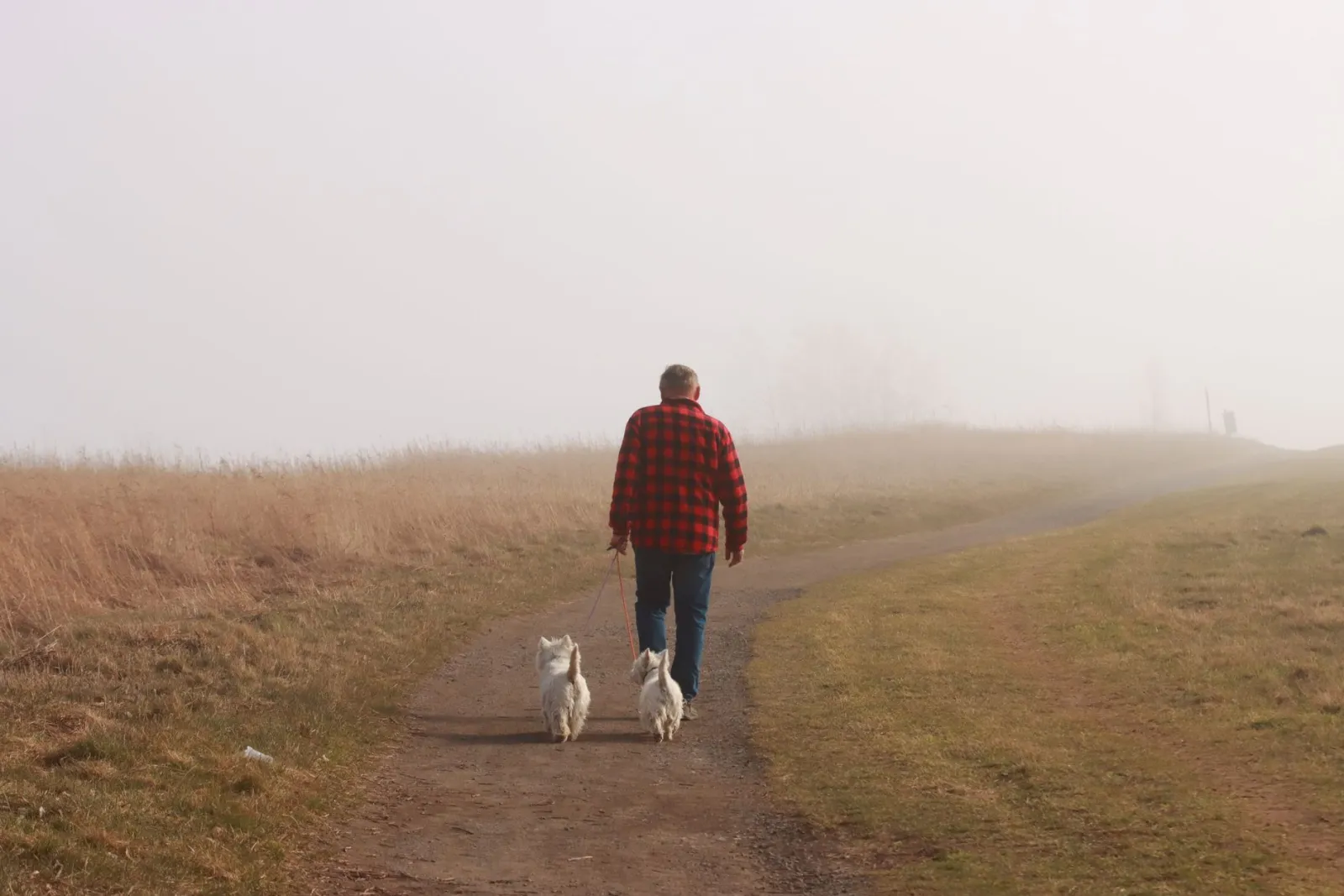
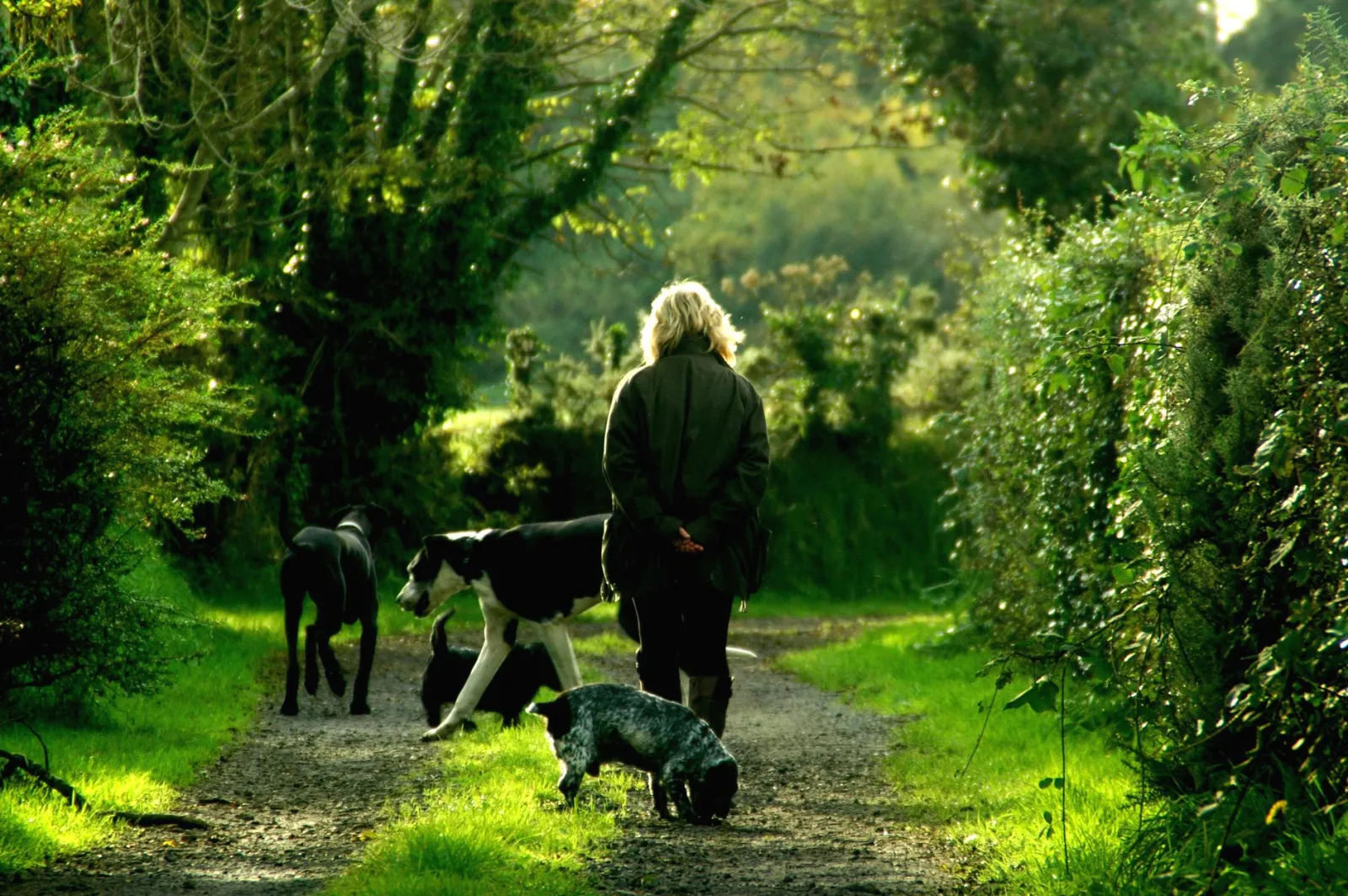
Finding a genuinely good dog walk close to home starts with changing how you look at your own neighbourhood. Most owners default to the same loop every day, but a little deliberate scouting reveals options they have walked past for years. Begin by mapping what sits within a comfortable radius of your door: a short drive or a ten-to-fifteen-minute walk to a starting point keeps the outing realistic on busy days, while a slightly longer trip is worth saving for weekends. Think in terms of time rather than distance, because a slow-sniffing dog covers far less ground than a human stride suggests.
The single most important filter is what the ground is made of and how busy it gets. Paved paths and packed gravel suit older dogs, small paws, and wet weather, while grass, woodland trails, and softer earth are kinder to joints on longer outings but turn muddy and slippery after rain. Match the surface to your dog’s age, size, and energy rather than to what looks scenic in a photo. A shaded loop through a park can be ideal on a warm afternoon, whereas an open field with little cover is better saved for cooler mornings.
Access and safety details decide whether a walk becomes a habit. Check whether the route is fully enclosed or borders roads, livestock fields, or water, and whether there are gates, stiles, or narrow passages that a large or nervous dog might struggle with. Look for somewhere to park without blocking residents, and note whether bins, water, and benches are available. A route that requires no lead-off risk and has an easy turnaround point is far more useful day to day than a spectacular trail you can only manage occasionally.
Variety matters as much as convenience. Dogs benefit from a mix of familiar, low-stress routes for quick daily outings and more stimulating ones with new smells, different terrain, and space to explore. Rotate two or three nearby options so neither of you gets bored, and keep one short, reliable loop in reserve for dark evenings or bad weather. Quiet times of day, often early morning or mid-afternoon, make popular spots feel far more relaxed for dogs who find crowds or other dogs overwhelming.
Finally, use the tools already around you. Local council and park websites usually list official walking areas and any seasonal rules, neighbourhood groups and dog-owner communities share practical tips about parking and busy periods, and a simple map app helps you spot green spaces, footpaths, and connecting routes you had not noticed. Combine that with a trial walk at different times, and you will quickly build a short list of reliable local walks tailored to your dog.
What Makes a Walk Dog-Friendly: Surfaces, Shade and Space
A dog-friendly walk is less about scenery and more about what’s underfoot, overhead, and within reach. The surface is the first thing to assess. Firm, even ground such as packed dirt, short grass, or well-maintained gravel paths lets a dog move naturally and keeps paws comfortable over distance. Loose sand, deep mud, and polished stone or wet boardwalk planks demand more effort and can cause slipping, especially for older dogs or those with short legs. Sharp gravel and hot asphalt are worth avoiding on warm days, since paws absorb heat quickly. A path that mixes surfaces is fine as long as the rougher stretches are short and the dog can choose where to step.
Shade matters more than many walkers expect. A route with intermittent tree cover gives dogs places to pause and cool down, which is useful on longer outings and for thick-coated or flat-faced breeds that tire in warmth. Look for stretches where canopy meets ground rather than a single isolated tree, since a continuous shaded corridor keeps the walk comfortable between rest points. Open, unshaded paths are better suited to cool mornings or overcast days than to midday summer walks.
Space shapes the experience as much as the surface. Wide paths and open verges let dogs sniff, circle, and investigate without crowding other walkers, while narrow single-track trails force constant close passes that can be stressful for reactive or nervous dogs. A good route offers room to step aside, pass politely, and let a dog decompress after an encounter. Areas with a mix of open ground and edges to explore tend to hold a dog’s interest longer than a straight, featureless corridor.
Obstacles and hazards deserve a quick mental scan before setting out. Broken glass, discarded food, and litter concentrate near car parks and picnic spots, so those stretches warrant closer attention. Steep drops, stiles, and narrow bridges may be fine for agile dogs but awkward for seniors or those carried over rough ground. Water features are appealing but call for caution around fast currents and steep banks.
Finally, consider how the route fits the dog’s age and energy. A short, shaded loop on even ground suits a puppy or an older dog far better than a long exposed trail, while a high-energy dog benefits from a route with varied terrain and room to move. Matching the walk to the dog, rather than the other way round, is what makes a route genuinely dog-friendly.
Checking Local Rules Before You Set Off
Before you clip on a lead and head out, it pays to know what the land under your feet actually permits. Dog access rules in the UK and similar countries are rarely uniform: a path that welcomes dogs off-lead can turn into a strict on-lead corridor a few hundred metres later, often at a parish or property boundary that isn’t obvious from the trail itself. The safest habit is to check the specific destination rather than the general area, because a single walk can cross land managed by a council, a national park authority, a private estate, and a conservation charity, each with its own expectations.
Start with the landowner or managing body. Local council websites usually publish dog control orders or public space protection orders that set out where leads are mandatory, where dogs are excluded entirely, and whether there are seasonal restrictions. Nature reserves and sites managed for wildlife frequently ask for dogs to be kept on lead year-round or during nesting and breeding seasons, and some exclude dogs from particular fields or shorelines altogether. Farmland is its own case: footpaths crossing working farmland typically require dogs to be under close control around livestock, and a lead is the practical answer whenever animals are present.
Coastal and countryside designations add another layer. Beaches are a common source of confusion, since many restrict dog access during the busier summer months and reopen to dogs afterwards, so a walk that works in winter may not work in July. National parks and areas of outstanding natural beauty generally welcome dogs but often publish seasonal guidance on leads around grazing livestock and ground-nesting birds. If your route passes through land owned by a conservation charity, check its visitor page directly, as blanket assumptions about “open countryside” can be wrong.
Practical timing matters as much as the rules themselves. Livestock grazing periods, breeding seasons, and the presence of young animals all shift what’s expected of you, so a route you know well in one month can carry different obligations the next. If you walk the same loop regularly, it’s worth revisiting the local authority page once a season rather than relying on memory.
Finally, match the rules to the dog in front of you. A reliable recall makes shared spaces easier, but a lead requirement is a legal condition, not a suggestion, and busy car parks, cafes, and trailheads often have their own signage. Reading the notices at the entrance takes a minute and tells you more than any general guide can.
Preparing Your Dog for a New Walking Route
Before you introduce a new walking route, spend a few short sessions on the familiar one to confirm your dog’s baseline. A dog that already walks calmly on a loose lead at home will adapt faster to unfamiliar ground than one that is still learning basic lead manners. If your usual walk is full of pulling or reactive barking, a new environment will amplify those habits rather than fix them, so it pays to get the basics reasonably settled first. Think of the new route as an extension of skills your dog already has, not a training ground for problems you haven’t addressed.
Start with a partial trial rather than the full loop. Walk the first stretch of the new route, then turn back the way you came. This gives your dog a chance to absorb new smells, sounds and surfaces without the pressure of completing an unfamiliar distance. On the next outing, extend a little further. Repeating a route in short, successful increments builds confidence far more reliably than a single long excursion, and it lets you spot trouble points, such as a blind corner, a narrow pavement or a gate that swings, before you commit to the whole walk.
Timing and conditions matter more than most owners expect. A route that feels calm at mid-morning may be crowded with school traffic, delivery vans or other walkers at other hours. Try your new route at a quiet time of day first, and note how your dog responds to the ambient noise, the footing and the presence of other people and dogs. If your dog is easily startled, a route with wide verges and good sightlines will be easier than one hemmed in by hedges and parked cars. Weather also changes the picture: a path that is firm and dry in summer can turn muddy and slippery after rain, so check the surface before you rely on it.
Equipment should be chosen for the specific demands of the route. A route with livestock, wildlife or busy roads calls for a secure lead and a reliable collar or harness fit, checked before you set out. For longer or more remote walks, carry water and a means of cleaning up after your dog, and consider whether the terrain suits your dog’s age and fitness. Older dogs and very young puppies tire faster on unfamiliar ground, so keep early attempts short and build up gradually rather than matching the distance of your established walks straight away.
Finally, build in a decompression period. After a new route, give your dog time to settle at home and watch for signs of overstimulation, such as restlessness or difficulty settling. A short, sniff-heavy walk on familiar ground the following day can help balance a more demanding outing. Keep a simple mental note of what worked and what didn’t, and adjust the route or the timing accordingly. The goal is a walk your dog can complete calmly and repeat comfortably, so treat each new route as a gradual introduction rather than a one-off adventure.
Essential Gear for Everyday Walks
The gear you carry on a daily walk should be chosen around the route, not around the shop shelf. A short loop through the neighbourhood calls for very little: a well-fitted collar or harness, a lead you trust in your hand, and a few bags. A longer ramble across fields or woods asks for more, because the consequences of a small failure are larger when you are an hour from the car. The useful question is not what a walker could own, but what this particular walk genuinely requires.
Fit matters more than features. A harness should sit clear of the shoulder joint so the dog can stride without restriction, and it should not rub behind the front legs or under the chest after a few minutes of trotting. Check by watching the dog move rather than by tugging at the straps while standing still. A collar should be snug enough that it cannot slip over the head but loose enough to slide a couple of fingers underneath. Leads vary in length and material for good reason: a short, fixed lead gives close control on pavements and around traffic, while a longer line suits open ground where you want the dog to range a little. Retractable leads are convenient on quiet paths but awkward to manage in crowded places, so many walkers keep a fixed lead for street sections.
For everyday walks, a treat pouch or a pocket of small, high-value rewards does more for training than any gadget. Loose-lead manners, recalls past distractions, and calm behaviour at kerbs are all built on frequent, quick rewards during ordinary outings. Carry water on warm days and on routes without a reliable stream, and bring a collapsible bowl rather than expecting the dog to drink from a bottle. In wet weather, a towel left by the door and a drying coat for longer-haired dogs save a great deal of mud in the hallway.
Weather and light change the kit list more than distance does. On dark mornings and evenings, high-visibility items on the dog and a light for yourself make you easier to see at junctions and on shared paths. In summer, consider the surface underfoot: tarmac and sand can become uncomfortably hot, and a shaded route is often a better choice than a shorter sunny one. In winter, a lead that stays manageable when wet and gloves that let you handle treats and bags are small things that make a daily habit sustainable.
Finally, keep the everyday kit in one place and check it before you leave. A lead with a frayed seam, a harness clip that has worked loose, or a bag dispenser that is empty turns a routine walk into a nuisance. The best setup is the one you can pick up without thinking, that fits the dog comfortably, and that you would be content to rely on for the whole of the route you have planned.
Reading Your Dog’s Body Language on the Walk
Reading your dog’s body language on a walk is less about spotting one obvious signal and more about noticing clusters of small changes that add up to a clear message. A relaxed dog on a familiar route tends to move in a loose, flowing way: the tail carriage sits at its natural height for the breed, the ears rest in their default position, and the mouth may be slightly open in a soft, relaxed pant. The gait is the giveaway. A dog that keeps stopping, lagging, or swinging its head toward you is often asking a question rather than simply being stubborn.
Watch the whole body rather than fixating on the tail alone, since tail height and movement vary enormously between breeds and even between individual dogs. A high, stiff, fast-vibrating tail tells a very different story from a broad, sweeping wag that carries through the whole rear end. Similarly, a closed mouth in a dog that was panting a moment ago, combined with a forward-leaning posture and a hard stare, is a classic sign that something ahead has its full attention and that it may be weighing up a reaction.
Stress signals tend to appear in sequence, and catching the early ones gives you room to act before the walk deteriorates. Lip licking when there is no food around, a sudden yawn, shaking off as if wet when the coat is dry, and repeated glancing away are all low-level signs that a dog is uncomfortable with something in the environment. If these escalate into tucked tail, lowered head, ears pinned back, or a body that turns away from the trigger, your dog is telling you plainly that it wants more distance. Increasing the gap, changing direction, or putting a parked car or hedge between your dog and the trigger is usually enough to reset the walk.
Leash behaviour is part of the picture too. A leash that suddenly goes tight while the dog’s weight shifts backward is a brake, not disobedience. A dog that pulls forward with a low, rigid neck and a closed mouth is often in a more aroused state than one that pulls with a loose, bouncy stride. Loose-leash check-ins, where the dog glances back at you without being asked, are a reliable sign that it feels safe enough to divide its attention.
Context matters as much as the signals themselves. A dog that slows down and sniffs intensively on a quiet lane is engaged and content, while the same behaviour on a busy pavement may be displacement. Learn your dog’s baseline on routes it knows well, then treat any departure from that baseline as information worth reading.
Seasonal Safety: Heat, Cold and Wet Weather
Seasonal conditions change what a walk demands of both you and your dog, and the same route can be pleasant in spring and hazardous in high summer. Heat is the most common risk, and the pavement is where it shows first. Asphalt and dark paving absorb sunlight and can become far hotter than the surrounding air, so a simple test with the back of your hand held against the surface for a few seconds tells you whether paws can tolerate it. If it feels uncomfortably hot to you, it will be worse for a dog walking barefoot. Time walks for early morning or late evening, favour shaded paths, woodland trails and routes beside water, and carry water for longer outings. Flat-faced and heavy-coated dogs overheat sooner, so shorten their routes rather than pushing through the same distance.
Cold weather shifts the priorities toward grip and visibility. Frosted paths, wet leaves and packed snow all reduce traction, and older dogs or those with stiff joints benefit from shorter, flatter routes on cleared ground. Ice-melting grit and salt can irritate paws, so rinsing feet after a walk on treated pavements is a sensible habit. In snow, keep to familiar routes where the ground beneath is predictable, since drifts can hide kerbs, holes and debris. Daylight is short in winter, so choose well-lit paths or carry a light and wear something reflective if your walk edges into dusk.
Wet weather brings its own set of decisions. Saturated ground turns familiar trails muddy and slippery, and riverbanks, boardwalks and steep grassy slopes become genuinely risky. After heavy rain, low-lying paths and ford crossings may be impassable, so have a drier alternative in mind before you set out. Towelling a wet dog down after the walk protects your home as much as the dog, and a drying coat helps a wet-coated dog stay warm on the way back.
Wind is worth factoring in alongside rain, particularly on exposed ridges, coastal paths and open moorland, where gusts can be strong enough to unnerve a nervous dog. Tree cover offers shelter but also brings the risk of falling branches after storms, so avoid woodland routes in the days following high winds.
The practical thread running through all of this is to match the walk to the day rather than sticking rigidly to a favourite route. Keep a short, shaded summer loop and a sheltered, well-drained winter loop in mind for the same neighbourhood, and check the forecast before choosing between them. A walk that suits the conditions is one your dog will actually enjoy.
Walking Etiquette Around Other Dogs and People
Walking etiquette around other dogs and people starts with reading the situation before your dog does. On a shared path, the practical default is a short lead and your dog kept close on the side away from oncoming traffic, cyclists, and other walkers. A lead that lets your dog drift several body lengths ahead gives you no room to react when someone rounds a blind corner. The test is simple: if you cannot bring your dog to your side within a couple of steps, the lead is too long for that path. Busy trailheads, narrow bridges, stiles, and gateways are the places where this matters most, because they force close passes whether anyone wants one or not.
Recall reliability decides where a dog can safely be off lead. A dog that comes back the first time you call, even with another dog in sight, can be off lead in open ground with good sightlines. A dog that hesitates, or only returns once the other dog has been greeted, should stay on the lead anywhere you might meet people or dogs unexpectedly. Open fields, wide beaches at low traffic times, and quiet woodland tracks are reasonable places to practise; car parks, picnic areas, and paths beside roads are not. If you are unsure how your dog will react, keep the lead on and treat the walk as training rather than free running.
The lead itself is a communication tool. A dog on a short, close lead is signalling that it needs space, and other owners generally read that correctly. A long line or a trailing lead reads as “approachable,” which is why it pays to shorten up and step to the side when you see another dog coming. Ask before letting dogs meet rather than assuming a greeting is welcome; “Is yours friendly?” is a normal question on a shared path, and “Mine needs space” is a complete answer that requires no explanation. Give other walkers a wide berth where the ground allows, and use your body to block a direct line between the two dogs if you are passing closely.
Around people without dogs, the same principles apply with a little more care. Joggers, cyclists, horse riders, and children can appear quickly and may not expect a dog to be loose. On shared-use paths, keep your dog to one side, shorten the lead as they pass, and call your dog in before a cyclist rings a bell rather than after. Horse riders in particular need a wide, slow pass, and a dog that barks or lunges at a horse creates a genuine hazard for everyone. Children are unpredictable and often want to stroke a dog; a calm “not today, thanks” is better than a stressful interaction, and teaching your dog to sit and watch you while people pass builds the habit that makes busy paths manageable.
Finally, etiquette extends to the ground you leave behind. Carry bags on every walk, including short ones, and pick up even when no bin is nearby. Stick to marked paths where they exist, especially through farmland and wildlife areas, and close gates behind you. Keeping your dog out of long grass and away from livestock is both courteous and sensible, and it keeps access to popular walking routes open for everyone who uses them.
Building a Consistent Daily Walking Routine
A consistent walking routine is less about willpower and more about design. The most reliable routines are anchored to events that already happen every day, such as waking up, a morning coffee, the end of the workday, or the last trip outside before bed. When a walk is tied to a fixed trigger rather than a vague intention, it stops being a decision and becomes part of the day’s structure. Most owners find that two shorter walks plus one longer outing fit naturally into this pattern, while a single very long walk tends to collapse on busy days.
Timing matters as much as frequency. A brisk walk in the morning helps a dog settle for the rest of the day, while a sniff-heavy walk in the evening gives them a chance to decompress. Dogs benefit from variety in pace and terrain: a steady trot along a path, a slow amble through grass where they can track scents, and a few minutes of focused heel work on a quiet stretch all serve different purposes. Rotating between two or three nearby routes keeps the routine fresh without adding travel time, and it gives you a fallback when one route is muddy, crowded, or closed.
The practical details are what keep a routine alive. Keep the leash, bags, and treats by the door so there is no friction at departure. Choose routes with predictable surfaces and lighting for early mornings and dark evenings, and save unfamiliar or busier trails for days when you have more time to manage surprises. For dogs who pull or get overexcited at the start, a short warm-up on a quiet street before reaching the main path makes the whole walk calmer. In poor weather, a shorter loop still counts; consistency of habit matters more than distance covered.
Build the routine gradually rather than all at once. Start with one walk at a fixed time each day and hold it for a couple of weeks before adding a second. Track nothing complicated: a simple note of which route you took and whether the walk went smoothly is enough to spot what works. If a walk is consistently skipped, the trigger is usually wrong rather than the dog being unwilling, so move it to a different part of the day. Over time, the routine becomes self-reinforcing, and the dog’s anticipation at the door does much of the reminding for you.
Keeping Your Home and Garden Dog-Friendly After Walks
The walk ends at the front door, and that is where most of the mess and wear begins. A simple routine at the threshold makes the biggest difference: a mat with some texture just inside the door encourages paws to shed grit and grass before they reach the carpet, and a towel kept within arm’s reach lets you wipe down muddy pads and the underside of the belly on wet days. In practice, a quick two-step habit, wipe then step onto the mat, keeps most of the outdoor debris in one small zone you can clean easily rather than tracking it through the whole house.
Flooring choices and placement matter more than most owners expect. Hard floors and tightly woven rugs cope well with damp paws and occasional mud, while deep-pile carpet and pale upholstery show every mark and hold onto grit. If your dog tends to come home wet, consider keeping a washable runner along the main route from the door to wherever the dog dries off, and reserve the most delicate rugs for rooms the dog rarely enters. The goal is not a show home but a layout that tolerates a bit of dirt without constant deep cleaning.
In the garden, the pattern of walks shapes wear. Repeated routes along the same fence line or patio edge turn into muddy tracks, and a dog that runs to the gate after every walk will gradually compact and scuff that patch. Rotating where you enter and exit, and giving high-traffic corners a hard surface such as gravel or paving, reduces the mud that gets carried back inside. Pay attention to the areas your dog naturally patrols after a walk, since these are the spots that need the most durable ground cover.
Water and drying are the other half of the job. A dog that has been through wet grass or shallow water needs somewhere sensible to dry, ideally a spot with a washable surface and good airflow rather than a closed room where damp lingers. Keep a dedicated drying area near the entrance so wet fur is dealt with before the dog settles on furniture or bedding. In colder months, drying paws and the coat promptly after a walk also keeps the house from collecting a trail of damp prints across every room.
Finally, think about storage and access so the routine actually holds up. A hook or basket by the door for leads, towels, and waste bags means you are not searching for them with a muddy dog waiting, and a lidded bin nearby keeps used bags out of reach. Small, consistent setups like this make the transition from walk to home quick and calm, and they protect both your floors and your dog’s comfort as the seasons change.
Frequently asked questions
How do I find dog walks near my home?
Start by mapping what is within a short walk of your door: quiet residential streets, public footpaths, and open green spaces. Local council websites and community noticeboards often list parks and rights of way where dogs are allowed. Walking apps and neighbourhood groups can show routes other owners use. Check signage at each entrance for leash rules and any seasonal restrictions before you make a route part of your routine.
How long should a daily dog walk be?
Match the walk to your dog’s age, breed, energy level, and current fitness rather than a fixed number. Puppies and senior dogs usually do better with several shorter outings, while high-energy breeds often need longer, more active sessions. Watch for signs of fatigue such as lagging behind, heavy panting, or reluctance to continue, and adjust the route accordingly. Consistency matters more than distance, so build duration gradually as your dog’s stamina improves.
Are all local parks suitable for dogs?
No. Suitability varies by park, so check the rules posted at entrances and on the council website. Some green spaces ban dogs entirely, others require leashes throughout, and some allow off-leash exercise only in fenced areas. Also consider practical factors like busy sports pitches, children’s play areas, livestock, and whether the ground stays muddy or flooded. Choosing the right park for your dog’s temperament and training level keeps everyone comfortable.
What should I bring on a dog walk?
Carry a sturdy leash, a collar or harness that fits well, and identification tags with current contact details. Bring waste bags and something to carry them in, plus water for longer or warmer walks. Treats help with recall and rewarding good behaviour around distractions. A towel is useful for muddy paws, and a basic first-aid kit in your bag or car covers minor scrapes. Keep your phone charged in case you need help.
How can I tell if my dog is enjoying the walk?
A relaxed dog usually has a loose, wagging tail, soft ears, and an easy gait, and may pause to sniff enthusiastically. Signs of stress include tucked tail, flattened ears, yawning, lip licking, pulling away, or refusing to move forward. If your dog keeps trying to turn back or freezes near certain triggers, change direction or end the walk. Letting your dog sniff and explore at its own pace often makes the outing more rewarding.
How do I handle meeting other dogs on a walk?
Ask the other owner before letting dogs greet, and respect a refusal. Keep your leash loose to avoid tension, and give both dogs space to approach or pass. Watch body language: stiff posture, staring, or raised hackles suggest you should create distance. If your dog is reactive, practice turning away and rewarding calm behaviour. Not every encounter needs to become a greeting, and a simple, controlled pass-by is often the safest choice.
Should I walk my dog in very hot or cold weather?
Adjust rather than skip. In heat, walk early or late when surfaces are cooler, choose shaded routes, and check pavement temperature with your hand before setting out. In cold, shorten walks, avoid icy paths, and watch for signs of discomfort such as shivering or lifting paws. Very young, elderly, or short-coated dogs need extra care. When conditions are extreme, indoor play and short garden breaks can replace a full walk.
How do I keep my home clean after muddy walks?
Set up a small cleaning station by the door with a towel, a shallow basin, and a mat for wet paws. Wipe paws and underbelly before your dog comes inside, and keep an old towel handy for drying. Wash muddy harnesses and leashes regularly, and store them where drips won’t damage floors. A washable runner along the entry path and a basket for dirty gear make cleanup quicker and keep mud from spreading through the house.
Read next :Best Cat Breeds for Your Home: A Practical Guide for Pet Owners · Solar Panels for Campervan: Complete Buyer’s Guide · DIY Kitchens UK: A Practical Planning Guide · Best Dog Tracker: How to Choose the Right GPS Collar · What Dog Breed Is Best for Me? A Guide for Your Home and Lifestyle
Work out your own case in 30 seconds:
Methodology
This calculator produces an indicative estimate based on the parameters you enter. The ranges used reflect typical market tiers in the pets space and are neither a commercial offer nor a guarantee. Prices and availability may vary.
Full guide :Pets
More from this guide :
Was this guide helpful?
Share your experience with the WiseHomeGuides community.