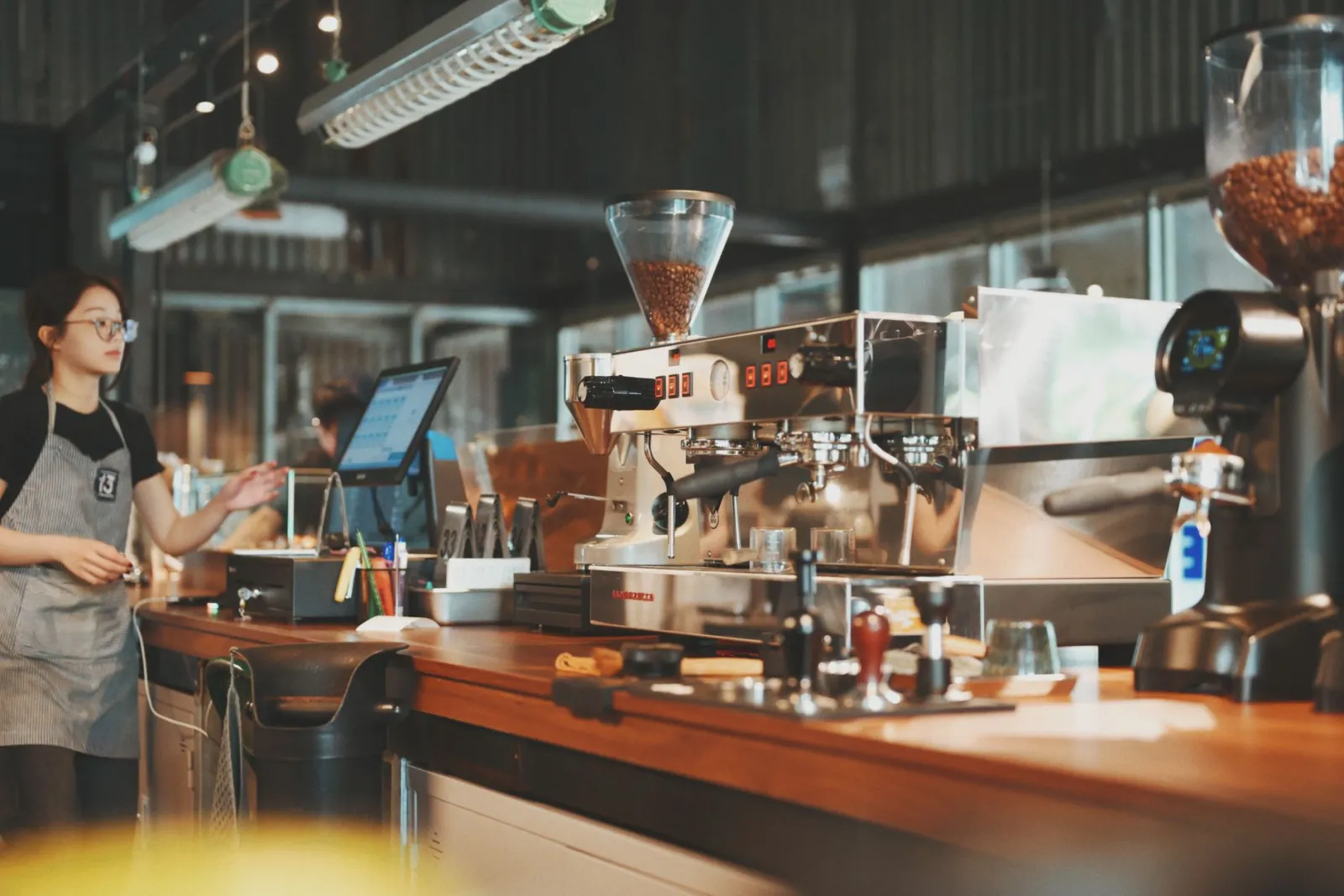
Short answer : Choosing a coffee machine for a cafe means matching the equipment to your volume, menu, and space rather than chasing the most complex option. For a home setup used occasionally for guests, a reliable pump-driven espresso machine with a steam wand covers espresso and milk drinks without requiring plumbing or a dedicated grinder. For a small business or busy home bar, prioritize consistent temperature control, a built-in or paired burr grinder, and easy cleaning so drinks stay repeatable during rush periods. Decide early whether you want manual control for craft espresso or automatic operation for speed, then confirm the machine fits your counter footprint, power supply, and water setup before buying.
In short
- Match machine type to daily volume: manual or semi-automatic for low use, automatic for steady demand.
- Pair with a quality burr grinder; grind consistency affects extraction more than many machine features.
- Check counter footprint, clearance for cups, and access to a nearby power outlet and water source.
- Prioritize easy cleaning, accessible brew group, and removable drip tray for daily maintenance.
- Confirm steam wand capacity if milk drinks dominate your menu, and verify parts availability.
Why a Cafe-Style Coffee Machine Belongs in Your Home Setup
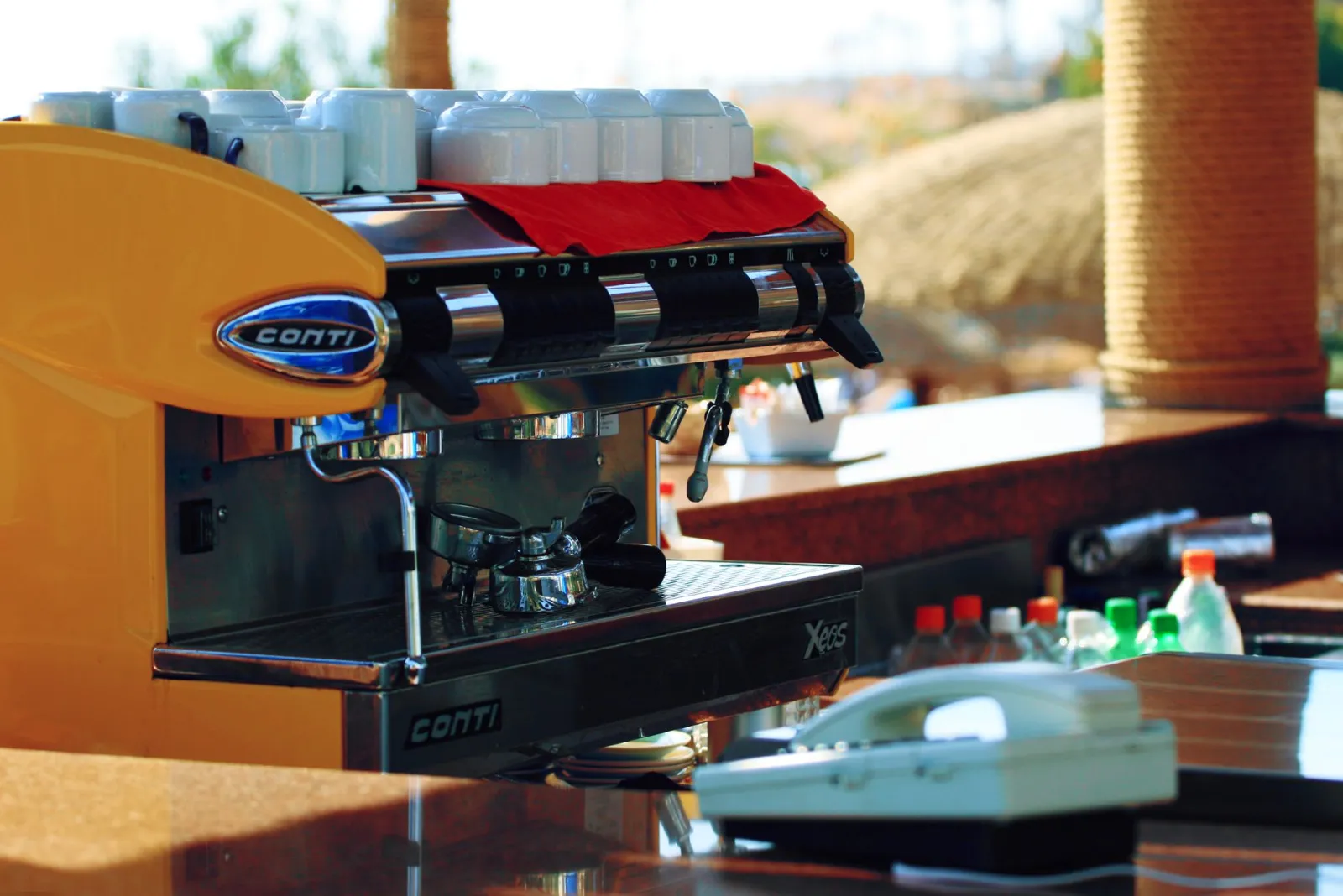
The gap between what a home espresso setup produces and what a good cafe serves usually comes down to one piece of equipment: the machine. A cafe-style coffee machine—whether a heat-exchanger, dual-boiler, or a capable single-boiler with a PID controller—is built around the same variables a barista manages all day: stable brew temperature, controlled pressure, and enough steam power to texture milk properly. Bringing that class of machine home changes the quality ceiling of what you can make, not just the convenience of making it.
The most tangible difference is temperature stability. Entry-level machines often swing several degrees between the start and end of a shot, which shows up as sourness on the front end and bitterness on the back. Machines designed for cafe use hold brew temperature within a narrow band shot after shot, so a recipe you dial in on Monday still tastes right on Friday. That consistency is what lets you actually learn from your adjustments instead of chasing random variation.
Steam performance is the second dividing line. Frothing milk for one cappuccino is easy on almost anything; producing silky microfoam for two or three drinks in a row, without waiting for the boiler to recover, is where cafe-oriented machines earn their place. If your household regularly makes milk drinks for several people at breakfast, or you host friends who all want flat whites, the steam capacity alone justifies stepping up. A machine that stalls mid-service turns a pleasant ritual into a queue.
There is also a workflow argument. Cafe machines typically offer better group head access, standard portafilter sizes that accept a wide range of baskets and accessories, and drip trays and cup warmers sized for real use rather than demonstration. These details matter more over years of daily use than any single specification. A machine with a 58 mm group and room to work lets you upgrade your grinder, baskets, and puck prep over time without replacing the machine itself.
Finally, consider where you are on the learning curve. A cafe-style machine rewards attention to grind, dose, and distribution, and it will expose weak points in your technique that a pressurized basket hides. For someone who wants to understand espresso rather than just drink it, that transparency is the point. For a household that wants one-button coffee, a simpler machine may genuinely suit better—so be honest about which user you are before spending on capability you won’t use.
Espresso Machines vs Bean-to-Cup: Understanding the Main Types
When you set out to choose a coffee machine for a cafe, the first decision is really about how much control you want over the finished cup. Espresso machines and bean-to-cup machines sit at opposite ends of that spectrum. A traditional espresso machine gives the operator direct command of grinding, dosing, tamping, and extraction, which is why professional baristas favour it. A bean-to-cup machine automates those steps, trading some of that control for speed and consistency.
Espresso machines come in two broad families. Manual and semi-automatic models rely on the operator to grind and dose the coffee and to start and stop the shot, while automatic versions handle dosing and timing internally. In all cases the quality of the result depends heavily on the grinder, the freshness of the beans, and the skill of the person at the group head. This makes them well suited to a cafe where espresso-based drinks dominate the menu and where staff are willing to be trained. The trade-off is that a poorly dialled-in espresso machine produces inconsistent shots, and the learning curve is real.
Bean-to-cup machines, by contrast, grind, dose, tamp, and brew at the push of a button. They are appealing for home use, small offices, and cafes where speed and repeatability matter more than fine-tuning. Because the process is enclosed, they are easier for untrained staff to operate and tend to deliver a consistent cup from the first drink to the last. The limitation is flexibility: adjusting the recipe, experimenting with different beans, or producing a truly distinctive espresso is harder, and the built-in grinder and brew unit constrain how far you can push quality.
The practical choice often comes down to volume and menu. A busy cafe serving mostly milk-based drinks and espresso benefits from the responsiveness and control of an espresso machine, provided someone on shift can maintain and adjust it. A lower-volume setting, a home kitchen, or a workplace where anyone might make a coffee leans toward bean-to-cup for its simplicity and reliability. Many small businesses end up combining the two, using a bean-to-cup machine for everyday service and an espresso machine for customers who want a more crafted shot.
Whichever type you consider, weigh the same concrete factors: how often the machine will be used, who will operate it, how much maintenance you can realistically commit to, and how important recipe flexibility is to your menu. These questions matter more than any single specification and will point you toward the type that fits your actual routine rather than the one that looks most impressive on paper.
Key Specifications to Compare Before You Buy
When comparing coffee machines for a cafe, the first specification to pin down is the brewing technology, because it shapes everything else. Manual and semi-automatic machines give the operator direct control over extraction, which suits a venue where staff are willing to dial in a grinder and adjust throughout the day. Fully automatic machines trade some of that control for consistency and speed, making them a better fit for high-turnover settings where staff rotate frequently or where a single person handles both counter service and coffee. Super-automatic models with built-in grinders reduce steps further but narrow the range of styles you can produce.
Output capacity and recovery time matter more than a headline number of cups per hour. A machine that can brew back-to-back shots for a morning rush but needs a long cooldown between steam cycles will bottleneck you the moment someone orders several milk drinks in a row. Look at how many group heads the machine has, the size of the boilers, and whether it can steam and brew simultaneously. For a small cafe serving a steady trickle of customers, a single-group machine with a modest boiler is often enough; for a busy location with peaks, dual boilers and multiple groups earn their keep.
Water handling is an underrated specification. Machines differ in whether they take water from a plumbed line or a refillable tank, and in what filtration they expect upstream. Plumbed-in models suit fixed counters and high volume, while tank-fed machines offer placement flexibility but require someone to monitor and refill. Consider the local water hardness and whether the machine’s boiler and group design tolerate scale; this affects maintenance frequency and long-term reliability far more than glossy features.
Milk system design is another dividing line. Manual steam wands demand skill and give texture control, while automatic milk frothers produce consistent results with less training but add cleaning steps and parts to maintain. For a cafe whose menu leans heavily on lattes and cappuccinos, the milk system’s throughput and ease of cleaning deserve as much attention as the espresso side. Finally, weigh build quality and serviceability: commercial-grade components, accessible group seals, and a clear descaling routine separate machines that survive daily use from those that frustrate within months. Match these specifications to your actual menu, staffing, and customer flow rather than to the largest numbers on a spec sheet.
How Many Group Heads and Portafilters Do You Need?
The number of group heads is the single most consequential specification when choosing a coffee machine for a cafe, because it determines how many drinks you can produce at peak and how gracefully the machine handles a rush. A single-group machine suits a low-volume setting: a small specialty bar, a bakery counter, an office, or a home setup where espresso is occasional. Its limitation is not quality but throughput and recovery—one group means one drink at a time, and the boiler refills and reheats between shots, so a queue builds quickly once orders overlap.
Two groups are the practical minimum for most cafes that serve a steady stream of customers. Two group heads let one barista pull shots on one group while steaming milk or preparing the next order on the other, and they give redundancy: if one group needs a backflush or a gasket change, the machine keeps working. This is the configuration most independent coffee shops settle on, balancing counter footprint and cost against the ability to serve several customers in quick succession without long waits.
Three or more groups belong to high-volume environments—busy city cafes, drive-throughs, or locations with a dedicated barista per group. The gain is parallel production: multiple baristas can work side by side without colliding, and the machine absorbs sustained demand without the recovery pauses that slow a smaller unit. The trade-off is space, utility requirements, and the need for enough trained staff to keep every group busy; an underused three-group machine wastes counter space and heats water for nothing.
Portafilters deserve equal attention, because the count should match the groups and the workflow. Most machines ship with one portafilter per group, but many baristas keep a spare basket or a second portafilter for a different dose so they can switch between single and double shots without re-basketing mid-rush. Consider whether the machine uses standard 58 mm baskets or a proprietary size, since standard baskets make it easier to source precision baskets, tampers, and distribution tools later.
Finally, think about the portafilter type in relation to your menu. If you serve mostly milk drinks, double baskets and a consistent dose matter more than single-shot flexibility; if you offer both, having a dedicated single and double setup speeds service. Match the group and portafilter count to your realistic peak—not your average—and leave a little headroom so the machine is never the bottleneck when the line is longest.
Milk Frothing Options: Steam Wands, Automatic Frothers, and Pitchers
Milk frothing is where a cafe machine’s spec sheet and its real-world workflow diverge most sharply, so it deserves its own decision criteria. The three approaches — a steam wand, an automatic frother, and a pitcher-based workflow — are not interchangeable, and the right choice depends on your drink mix, your volume, and who is operating the machine.
A steam wand is the traditional option and the most flexible. It gives the operator direct control over aeration and texturing, so the same wand can produce a thin, glossy microfoam for a flat white or a denser, wetter foam for a cappuccino. The trade-off is skill and time: a well-textured pitcher takes practice to learn and a consistent technique to repeat under pressure. On a busy bar, wand quality matters — a wand with adequate steam pressure and a well-positioned tip recovers faster between pitchers. For a home setup or a low-volume cafe where the person steaming is the same person every shift, a steam wand is usually the most cost-effective path to good milk.
Automatic frothers remove the technique variable. They draw milk from a container, aerate and heat it to a set temperature, and dispense it with a consistent texture. That consistency is their main selling point: staff turnover, training time, and drink-to-drink variation all shrink. The cost is flexibility — an automatic frother produces the texture it is set to produce, and switching between a dry cappuccino foam and a wet latte texture may mean changing settings or using a separate program. They also add cleaning routines, since milk residue in internal lines is a maintenance issue rather than a cosmetic one.
Pitchers sit between the two. A pitcher is the vessel that makes steam-wand work possible, and pitcher size should match drink volume: an oversized pitcher with a small quantity of milk is hard to texture well, while an undersized one limits how many drinks you can steam at once. Many cafes keep two or three pitcher sizes on the bar so a single operator can steam for one drink or several without switching equipment. For automatic frothers, the equivalent decision is whether the machine’s milk container capacity matches your busiest period.
The practical question is throughput versus control. If your menu is built on milk drinks and your volume is high with rotating staff, an automatic frother protects consistency. If your menu emphasizes texture-sensitive drinks and you have a stable, trained barista, a steam wand with well-chosen pitchers gives more range for less equipment complexity. A hybrid — steam wand as primary, automatic frother as backup for peak periods — is common in cafes that want both.
Water Quality, Filtration, and Descaling for Long Machine Life
Water is the largest ingredient in every cup you serve, and it is also the single biggest determinant of how long a coffee machine lasts. Before choosing a filtration setup, find out what your local water actually contains. A simple hardness test strip or a report from your water supplier tells you whether you are dealing with soft water, which is generally gentle on boilers, or hard water rich in calcium and magnesium that will scale heating elements and clog narrow passages over time. Scale acts as an insulator, forcing the machine to work harder and hotter for the same result, and in severe cases it can block flow entirely. Knowing your starting point lets you match filtration to the real problem rather than guessing.
For a home setup, the practical options range from a simple inline filter cartridge fitted to the water line to a jug filter or a small under-sink softener. A cartridge filter is the most convenient because it treats every litre the machine draws, and many are rated to reduce both hardness and chlorine, which also protects aroma. If your machine has a removable water tank, a compact filter that sits inside the tank is an easy retrofit. The key criterion is matching the filter’s rated capacity to your daily volume: a busy household pulling several espressos and milk drinks a day will exhaust a cartridge far faster than an occasional user, so plan replacement intervals around actual consumption rather than the calendar alone.
In a cafe, water treatment becomes operational rather than optional. Commercial machines run continuously, so scale accumulates quickly and a single neglected boiler can mean an expensive service call and lost trading hours. A dedicated filtration system on the mains supply, often combining a sediment stage with a carbon block and a softening or reverse-osmosis stage, is the usual approach. The choice depends on your water analysis: very hard water may call for softening, while water high in chlorides needs different handling to avoid corrosion. Carbon filtration is valuable in both settings because it removes chlorine and off-flavours that would otherwise flatten the coffee.
Descaling is the maintenance counterpart to filtration, and it should follow the machine maker’s schedule rather than a fixed habit. Machines with built-in descaling programmes will prompt you based on volume or hardness settings you enter, and it pays to set those correctly so the reminder is meaningful. Use only the descaling product specified for your machine, run the full rinse cycle, and never descale a hot boiler unnecessarily. In hard-water areas, descaling may be needed noticeably more often than in soft-water areas, which is exactly why filtration upstream reduces the frequency and cost of this task.
Finally, treat water quality as a habit rather than a one-off decision. Change filter cartridges on schedule, keep the water tank clean and free of standing water, and recheck hardness if your supply changes. For a cafe, log filter changes and descaling dates so nothing is missed during busy periods. Good water protects the boiler, keeps temperature stable, and preserves the flavour clarity you paid for in the machine itself, making it one of the cheapest forms of insurance for long machine life.
Grinder Pairing: Why the Right Mill Matters as Much as the Machine
A coffee machine can only extract what the grinder gives it. If the mill produces an uneven particle distribution—some boulders, some dust—the machine will over-extract the fine particles and under-extract the coarse ones at the same time, and no adjustment to dose, temperature, or pressure will fully correct that. This is why the grinder deserves as much of the budget and attention as the espresso machine itself, whether the setup is a home kitchen or a small café counter.
The first criterion is burr type and consistency. Flat and conical burrs both produce a more uniform grind than blade grinders, which chop rather than crush and are unsuitable for any machine relying on controlled extraction. For a café setting, the grinder must hold its setting across dozens of shots per day without drifting; for home use, a stable stepped or stepless adjustment is enough. Stepless adjustment gives finer control over the narrow window between sour and bitter, which matters most with light roasts and single-origin beans.
Throughput and duty cycle follow directly from the use case. A home setup pulling a few shots in the morning can use a smaller grinder with a modest motor, while a café serving a morning rush needs a grinder rated for continuous operation, with burrs that stay cool and a hopper large enough to avoid constant refilling. Consider how often staff will switch between decaf and regular, or between espresso and filter settings—a grinder that requires a full purge between changes wastes coffee and time.
Match the grind range to the brewing method. Espresso demands a fine, tightly controlled grind; filter and pour-over need a coarser, more even one. If the café offers both espresso drinks and batch brew, either choose a grinder with a wide, repeatable range or dedicate separate mills to each method, since constantly swinging one grinder between extremes accelerates wear and makes dialing in harder.
Finally, weigh workflow and maintenance. Look for easy access to the burrs for cleaning, a dosing mechanism that doesn’t leave stale grounds in the chute, and a design that lets a barista adjust the grind while pulling shots. Burrs wear over time and need replacement, so factor that ongoing cost into the buying decision. A modest machine paired with a capable grinder will outperform an expensive machine fed by an inadequate mill almost every time.
Space, Power, and Plumbing Requirements for Larger Machines
Before committing to a larger machine, measure the space it will actually occupy rather than the footprint on the spec sheet. Commercial-style machines need clearance on every side: room above the cup warmer and around the group heads for locking in the portafilter, side clearance for steam wand movement, and enough depth in front for the drip tray to slide out for emptying. A machine that fits the counter but leaves no room to work becomes a daily frustration. Also account for the height of the tallest cups you plan to use under the spouts, and confirm the counter can carry the machine’s loaded weight, including a full water reservoir or boiler.
Power is the constraint most often underestimated. Larger machines, especially those with multiple group heads and high-wattage boilers, typically draw more current than a standard household circuit comfortably supplies, and many are designed for a dedicated circuit. Check the machine’s electrical rating against your available supply and whether it requires a specific outlet type or hardwiring. In a home setting, this may mean having an electrician add a circuit; in a café, it belongs in the fit-out planning. Running a high-draw machine on a shared circuit invites tripped breakers and, worse, unstable performance.
Plumbing separates true café machines from prosumer models. Machines plumbed directly to a water line avoid refilling reservoirs mid-service and support continuous use, but they require a nearby supply, a shut-off valve, and usually a filtration setup to protect the boiler from scale. Drain plumbed to waste is equally valuable, since emptying a drip tray by hand during a busy period is impractical. If plumbing isn’t feasible, a machine with a large reservoir and a rotary pump can still work, but you’ll trade convenience for manual refills and tray management.
Think in terms of your real workflow. A home setup making a few drinks at a time tolerates a reservoir machine on a standard circuit. A small café serving a steady queue needs the machine plumbed, drained, and on its own power, with counter space laid out so staff can move between grinder, machine, and serving area without collisions. Plan the surrounding zone, not just the machine: clearance for the grinder, a knock box, cups, and a clear path for service matter as much as the unit’s dimensions.
Finally, verify these requirements before purchase, not after delivery. Confirm the electrical supply, water access, drain option, counter strength, and clearances against the machine’s documented specifications, and factor in any installation work such as an electrician or plumber. Getting these fundamentals right up front is what lets a larger machine deliver the capacity and consistency you bought it for.
Cleaning and Maintenance Routines That Protect Your Investment
Cleaning and maintenance are where a coffee machine either earns back its cost over years or quietly degrades into inconsistent shots and costly repairs. The routines that matter most are the ones you can repeat daily without friction, so build them around the machine’s own prompts and the volume of coffee you actually produce. In a home setting, a few minutes a day is usually enough; in a cafe, the same tasks happen many times over a shift and need to be assigned to specific people rather than left to whoever notices.
Daily care centers on the parts that touch coffee and milk. Backflush the brew group at the end of service if your machine supports it, purge and rinse steam wands immediately after each milk drink so residue doesn’t bake onto the tip, and empty and rinse drip trays before grounds and liquid accumulate. For bean-to-cup machines, check the grounds bin and water tank each morning, and run the automatic rinse cycle at start-up and shutdown. Milk systems deserve particular attention: poorly rinsed milk lines sour quickly and taint every subsequent drink, so a dedicated rinse after the last milk order of the day is non-negotiable.
Weekly and monthly tasks protect the internals. Descale on the schedule your water hardness demands rather than on a fixed calendar guess; hard water scales faster, and a machine that’s never descaled loses temperature stability and flow long before it fails outright. Clean and soak removable components such as portafilter baskets, shower screens, and milk frothers, and replace water filters as recommended. On machines with a grinder, brush out the burr chamber periodically so stale oils don’t dull the grind.
The consumables and habits that quietly extend life are easy to overlook. Use filtered water where possible, avoid leaving water sitting in the tank for long periods, and never let coffee oils accumulate on group heads or screens. Keep the machine’s software updated if it offers guided maintenance, since prompts often catch tasks before they become problems. In a busy cafe, a simple log or checklist near the machine keeps the routine visible across staff changes.
Finally, match the maintenance burden to the machine you buy. Models with automated cleaning and descaling programs reduce the labor a cafe needs to budget for, while simpler machines demand more hands-on attention. Whichever you choose, treat cleaning as part of the cost of ownership: consistent, modest effort preserves shot quality, protects the warranty, and delays the day you need to replace the machine.
Budget Planning: Balancing Upfront Cost and Running Costs
Budget planning for a coffee machine is not simply a matter of comparing sticker prices. The upfront cost is only one part of the equation; the running costs that accumulate over months and years often outweigh the initial outlay, especially in a business setting where the machine operates daily. A sensible approach is to estimate total cost of ownership over a realistic horizon, then weigh that figure against the volume and type of coffee you actually intend to produce.
On the upfront side, the main decision is between a simpler manual or semi-automatic machine and a more automated model with built-in grinding, dosing, and sometimes milk handling. Manual machines cost less to acquire but demand more operator skill and time per drink, which matters if you serve customers during busy periods. Automated machines reduce labour per cup and improve consistency, but they carry a higher purchase price and typically require more expensive servicing. For a home setup with a few drinks a day, a modest machine is usually the rational choice; for a cafe with steady footfall, the labour savings of automation can justify the higher entry cost.
Running costs deserve equal attention. Coffee itself is the largest recurring expense in most setups, and consumption scales directly with the number of drinks served. Beyond beans, consider water treatment, cleaning supplies, replacement parts such as gaskets and filters, and electricity, which is higher for machines that keep a large boiler heated all day. Servicing intervals and the availability of local technicians also affect the long-term budget: a machine that is cheap to buy but hard to service can become costly through downtime and emergency repairs. Descaler, group head brushes, and filter cartridges are small line items individually but add up over a year of regular use.
A useful way to structure the decision is to separate fixed costs from variable costs. Fixed costs include the machine, any installation work, and accessories such as a grinder, tamper, and scale. Variable costs include beans, water filters, cleaning products, and servicing. For a home user, variable costs stay low because volume is low; for a cafe, variable costs dominate and should be projected against expected daily cup counts. If the machine is intended for light commercial use, confirm that its duty cycle matches the planned volume, since an undersized machine will wear out faster and drive up repair costs.
Finally, build in a contingency for the unexpected: a breakdown during a busy week, a part that needs replacing sooner than planned, or a change in the menu that requires different equipment. A budget that accounts only for the purchase price leaves no room for these realities. The balanced approach is to choose a machine whose upfront cost fits your means while its running costs and serviceability fit your expected usage, so that the total outlay remains predictable over the life of the equipment.
Frequently asked questions
What is the difference between an espresso machine and a bean-to-cup machine for a cafe?
An espresso machine gives you direct control over grinding, dosing, tamping, and extraction, so a skilled operator can dial in each shot and steam milk on a dedicated wand. A bean-to-cup machine grinds and brews automatically at the press of a button, which speeds service and reduces training, but limits fine adjustment. Espresso machines suit cafes chasing craft quality, while bean-to-cup units favor consistency and volume with less operator skill.
How much counter space does a cafe-style coffee machine typically require?
Plan for a footprint that accommodates the machine body plus clearance for the portafilter, cups, and steam wand movement. A commercial-style espresso machine usually needs a deep, sturdy counter rather than a narrow shelf, and you should leave room beside it for a grinder, knock box, and tamping station. Measure your available depth and height before buying, and confirm the machine fits under any overhead cabinets or shelving.
Do I need a separate grinder if I buy an espresso machine?
Most espresso machines do not include a grinder, so you will need a separate burr grinder dedicated to espresso. Freshly ground coffee is essential for proper extraction, and a grinder matched to espresso fineness gives you the control to adjust the shot. If you choose a bean-to-cup machine instead, the grinder is built in, but you lose the ability to swap beans and grind settings as freely.
How often should a cafe coffee machine be descaled and cleaned?
Daily cleaning matters most: backflush the group head, rinse the steam wand after every use, and empty and wash the drip tray. Descale on the schedule your water hardness and manufacturer recommend, since hard water scales faster. Use filtered water to slow buildup, and follow the machine’s own descaling prompts or indicator. Regular cleaning protects flavor and extends the life of pumps, boilers, and valves.
Can a home electrical circuit handle a commercial-style coffee machine?
Not always. Commercial-style machines often draw more power than a standard home circuit supplies, and some require a dedicated circuit or a different outlet type. Check the machine’s rated wattage and voltage against your circuit’s capacity, and consult a qualified electrician before installing anything demanding. A machine that trips breakers or shares a circuit with other appliances will perform poorly and may be unsafe.
What milk frothing option is best for making cappuccinos and lattes?
A steam wand gives the most control and produces the microfoam that defines good cappuccinos and lattes, but it takes practice. Automatic milk frothers are more consistent and faster for busy service, while built-in milk systems on bean-to-cup machines simplify cleanup. Choose a steam wand if quality and flexibility matter most, and an automatic frother if speed and repeatability matter more.
How long does a cafe coffee machine usually last with regular maintenance?
Lifespan depends heavily on build quality, usage volume, water quality, and how faithfully you clean and descale. Machines kept on a strict cleaning routine and fed filtered water generally outlast neglected ones by a wide margin. Commercial-style machines are built for heavier duty than home models, but pumps, seals, and boilers still wear. Budget for periodic servicing and replacement parts rather than expecting indefinite use.
Is a dual-boiler machine worth it compared to a single-boiler model?
A dual-boiler machine lets you brew espresso and steam milk at the same time, which speeds service and keeps temperatures stable during busy periods. A single-boiler machine must switch between brewing and steaming, slowing you down and causing temperature swings. For a cafe serving milk drinks steadily, the dual boiler is usually worth the higher cost; for light home use, a single boiler may be sufficient.
Read next :Fridge Magnets: Practical Guide for a Home Full of Pets · Best Lawn Mowers 2026: A Complete Buying Guide · Best Compost Bins for a Cleaner Home and Garden · Fish Tanks and Stands: A Complete Guide to Choosing and Setting Up · Compost Near Me: A Practical Home and Pet Owner’s Guide
Put it into practice : How do you clean a Smeg coffee machine?
Work out your own case in 30 seconds:
Methodology
This calculator produces an indicative estimate based on the parameters you enter. The ranges used reflect typical market tiers in the eco and energy savings space and are neither a commercial offer nor a guarantee. Prices and availability may vary.
Full guide :Appliances
More from this guide :
Was this guide helpful?
Share your experience with the WiseHomeGuides community.