The cost of dog grooming depends mainly on the dog’s size, coat type and condition, the services requested, the groomer’s location and experience, and whether the dog needs sedation or a veterinary referral. A short-coated small dog needing a bath and nail trim sits at the low end; a large, matted, double-coated dog needing a full hand-strip or dematting sits at the high end.
Grooming bills rarely surprise owners as much as the reasons behind them do. Two dogs of the same breed can walk into the same salon and leave with very different invoices — not because one groomer is greedy, but because the work is genuinely different. Understanding what drives the total makes it easier to budget, to ask the right questions before booking, and to avoid paying for problems that could have been prevented at home.
How does a dog’s size and coat change the grooming bill?
Size and coat are the two biggest levers on grooming cost, because they determine how much time, product and physical effort the job requires. A Chihuahua bath-and-brush can be finished in twenty minutes; a large, thick-coated breed can take two hours or more, often with two people handling the dog.
Coat type matters even more than weight. Short, smooth coats need little more than washing and a quick once-over. Double coats — the kind that blow out twice a year — demand deshedding work, high-velocity drying and often extra time to clear the undercoat without damaging the topcoat. Curly or woolly coats that don’t shed need regular clipping and can mat close to the skin if brushing lapses, which turns a routine appointment into a lengthy dematting session.
Concrete example: the matted doodle
Picture a medium curly-coated dog whose owner has skipped brushing for six weeks. The groomer faces a choice: spend an extra hour working through tight mats with conditioner and a comb, or clip the coat very short to relieve the dog. Both options cost more than a tidy-up on a well-maintained coat — the first in labour time, the second in a drastic change the owner may not have wanted. Regular ten-minute brushing sessions at home are the cheapest grooming investment an owner can make.
What actually adds time in the salon
- Drying: thick or double coats take far longer to dry properly, and skimping on drying causes skin problems.
- Handling: nervous, wriggly or reactive dogs need slower, calmer handling and sometimes a second pair of hands.
- Detangling: every mat removed by hand is time the groomer can’t spend on another dog.
- Scissor work: shaping legs, feet and faces by hand is skilled, slow work compared with running clippers over the body.
Which grooming services are included — and which cost extra?
A standard grooming appointment usually bundles a bath, blow-dry, brush-out, nail trim, ear clean and a hygiene trim; anything beyond that is typically priced as an add-on. Knowing what’s in the base service prevents awkward surprises at pickup.
Full body clipping, breed-specific styling, hand-stripping (for certain terriers), teeth brushing, anal gland expression (often best left to a vet) and flea or tick treatments are commonly charged separately. So is dematting, which many groomers price by the half-hour or decline outright when the mats are severe, because working them out can hurt the dog and damage the coat.
Concrete example: the “just a bath” request
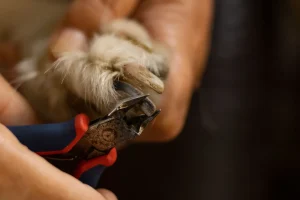
An owner books a bath for a short-coated dog and arrives with a dog whose nails have curled into the pads and whose ears are waxy. The groomer adds a nail trim and ear clean — small extras that reflect real time. Asking for a full breakdown when booking, rather than assuming the bath covers everything, keeps the final bill predictable.
How do location and groomer experience affect what you pay?
Grooming is a local, labour-intensive service, so geography and skill level shape the bill as much as the dog does. Urban areas with higher rents and wages generally command more than rural ones, and an experienced groomer who handles difficult coats and nervous dogs safely can reasonably charge more than a newcomer.
Experience isn’t just about speed. Mobile groomers who come to your home carry the cost of a fitted van and travel time, which shows up in the rate. Salon-based grooming spreads overheads across several dogs at once, which usually makes it the more economical option.
Concrete example: the same breed, two settings
A large double-coated dog groomed at a busy high-street salon and the same dog groomed by a mobile van in a rural area will see noticeably different totals — not because one is better, but because the cost structures differ. Neither is automatically the right choice; what matters is that the groomer can handle the coat and the dog comfortably.
When does a dog’s health or behaviour push the cost up?
Health and behaviour issues raise grooming costs because they slow the work and sometimes require a vet’s involvement.
Some groomers won’t take on dogs with severe matting, open sores or a history of biting, and will refer you to a vet instead — a sensible safety call. Sedation for grooming is a veterinary decision, not a groomer’s, and adds a vet visit to the bill. If your dog is elderly or unwell, a quick conversation with the groomer before booking saves everyone time and money.
An older dog who can no longer stand for long periods needs a groomer willing to work in shorter bursts, use supportive positioning, and skip uncomfortable handling. That extra care and time is reflected in the price — and it’s money well spent compared with the stress of forcing a stiff dog through a rushed appointment.
How often should grooming be booked to keep costs down?
Regular appointments cost less per visit than occasional rescue missions, because a maintained coat takes less time to finish. A dog groomed every six to eight weeks rarely needs dematting; one groomed twice a year often does.
Between appointments, small habits pay off: brushing a few minutes a day, checking ears and nails weekly, and bathing only when needed. Owners who keep on top of coat care typically find their groomer’s base rate covers everything, with no add-ons for tangles or overgrown nails.
Frequently asked questions
Is it cheaper to groom my dog at home?
Home grooming saves money on labour but requires clippers, brushes, shampoo and, above all, practice. It works well for short coats and simple baths; it’s riskier for complex clips, double coats and anxious dogs, where a bad home job can cost more to fix than a professional appointment would have.
Why do groomers charge extra for dematting?
Dematting is slow, physical work that can hurt the dog and damage the coat if rushed. Many groomers price it by time or refuse severe cases, recommending a short clip instead. Preventing mats with regular brushing is far cheaper than removing them.
Does a nervous dog cost more to groom?
Often, yes — nervous or reactive dogs need slower handling, more breaks and sometimes a second person, all of which take time. Letting the groomer know in advance helps them plan the appointment and quote accurately.
The bottom line
The cost of dog grooming comes down to size, coat, condition, services, location and the dog’s health or temperament — not a single fixed rate. Ask for a breakdown when booking, keep up with brushing between visits, and flag any health or behaviour issues early. For a broader look at grooming routines and coat care across a dog’s life, a more complete guide on the main theme is worth reading next.
Read next
Full guide :Pets
More from this guide :
Was this guide helpful?
Share your experience with the WiseHomeGuides community.