
This article contains Amazon affiliate links. As an Amazon Associate we earn from qualifying purchases.
Short answer : The best dishwasher pods are the ones that match your water hardness, your typical load size, and how much pre-rinsing you already do. Look for pods with a balanced mix of enzymes, a built-in rinse aid, and a dissolvable film that opens reliably in short cycles, since a pod that fails to dissolve leaves residue on glassware and clogs spray arms. Match the pod to the cycle you actually run: heavy-duty formulas suit baked-on grease, while lighter all-in-one pods work well for daily mixed loads and delicate items. Store pods sealed and dry, because moisture makes the film sticky and causes pods to fuse together in the tub.
In short
- Check water hardness first: hard water needs a pod with a built-in softening or rinse-aid component to prevent film.
- Choose pods sized for your loads; oversized pods waste detergent on small, lightly soiled cycles.
- Confirm the film dissolves in short or eco cycles, or pods may leave grit on glasses and cutlery.
- Skip pre-rinsing with enzyme pods, since enzymes need food residue to work and rinsing reduces their effect.
- Keep pods in a sealed, dry container; humidity fuses them together and weakens the outer film.
What Are Dishwasher Pods and How Do They Work?
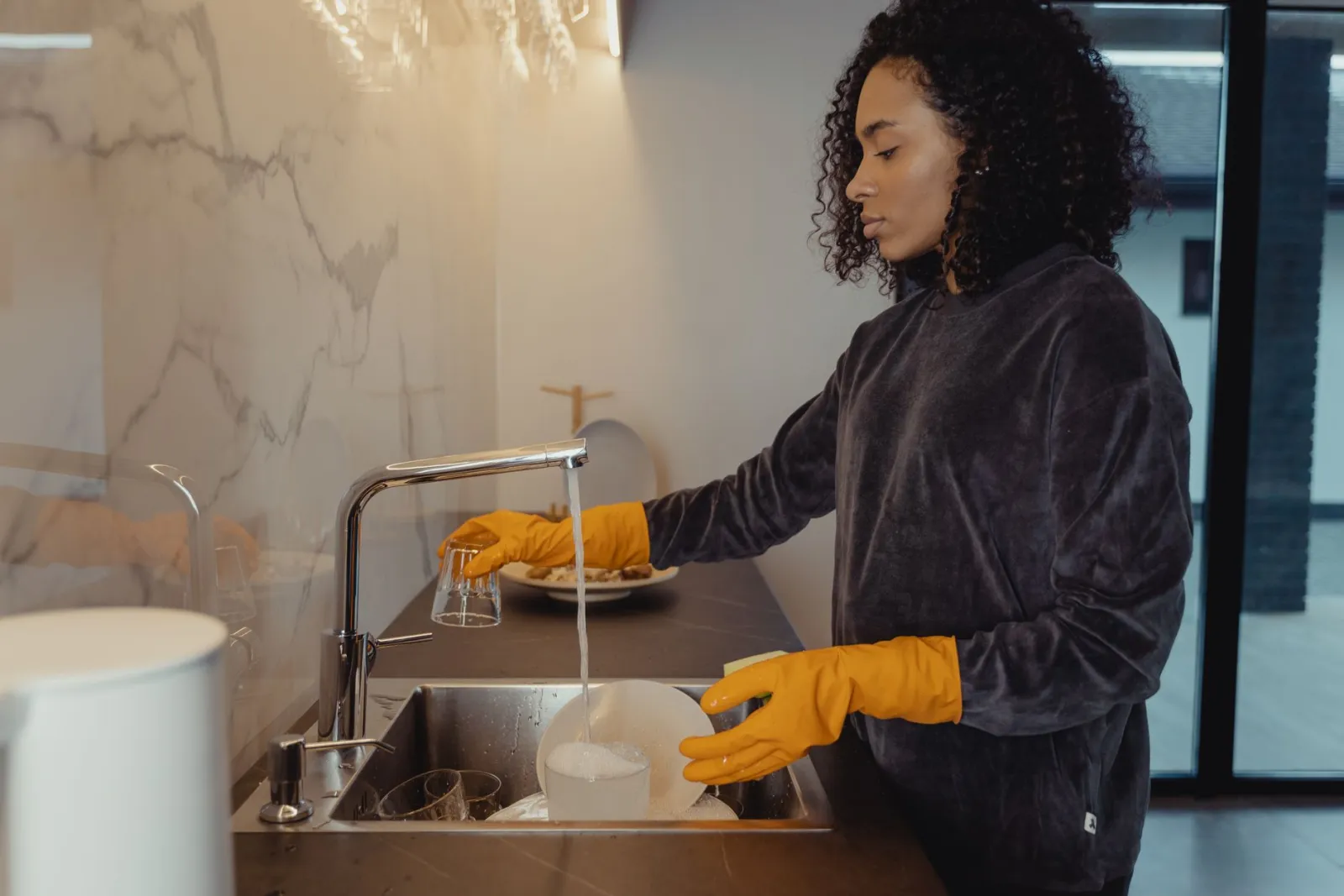
Dishwasher pods are single-use, pre-measured packets of detergent designed to replace loose powder or liquid in a dishwasher. Each pod bundles the cleaning agents a wash cycle needs into one compact unit, so you drop it in and start the machine rather than measuring scoops or pouring liquid into a dispenser. They are typically small, water-soluble pouches that may contain a single compartment or several, and they are intended for use in automatic dishwashers only, not for hand washing.
The way a pod works comes down to how its outer film behaves once the wash begins. The pouch is made of a water-soluble material that dissolves when it meets the hot water in the tub, releasing the detergent inside at the start of the cycle. Many pods are built with more than one chamber, which lets ingredients that don’t store well together stay separated until they are needed. A common arrangement is a main detergent chamber plus a smaller section for a rinse aid or a booster, so the pod can contribute to both cleaning and drying in a single step. Because the film dissolves on contact with water, pods are best placed where they will be hit by the spray arm rather than tucked into a closed dispenser that may not open until later in the cycle.
Compared with loose detergent, the main practical difference is dosing consistency. A pod delivers the same amount every time, which removes the guesswork of filling a cup and reduces the risk of using too little for a full load or too much for a light one. That consistency is useful in households where several people load the machine and no one wants to think about measuring. The trade-off is flexibility: you cannot easily adjust the dose for a half-empty load or a very lightly soiled cycle, and pods are generally formulated for a standard wash rather than a delicate or quick program.
Pods suit most everyday situations, including mixed loads of plates, glasses, and cutlery, and they are convenient for busy kitchens where speed matters. They tend to perform best in a normal or heavy cycle with adequately hot water, since the film needs to dissolve fully and the detergent needs time to work. In a short or cold cycle, or when a pod is placed in a spot with poor water contact, it may not break down completely. For very greasy pots or baked-on residue, a pod combined with a proper pre-rinse and a full load is usually the more reliable choice than a pod alone in a rushed cycle.
Key Factors to Consider When Choosing Dishwasher Pods
The first factor that separates a pod that works from one that disappoints is how it handles water hardness. In soft water, an overly aggressive formula can etch glassware and dull silverware over time, while in hard water a mild pod simply cannot lift mineral film. If you know your water runs hard, look for pods that pair enzymes with a built-in water softener or chelating agent; if your supply is soft, a gentler enzyme-forward pod protects your glassware. Households on a water softener can usually choose freely, but those without one should treat hardness as the deciding criterion rather than an afterthought.
Detergent strength should match your actual soil level, not the worst-case scenario. A pod built for baked-on casseroles and greasy pans is wasted on a load of lightly used coffee cups, and the extra alkalinity can leave residue on delicate items. Conversely, a gentle everyday pod will struggle with roasted pans and dried egg. Think about what your typical load looks like across a week: a household that cooks from scratch daily needs more cleaning power than one that mostly reheats. Matching the pod to your real habits saves rewashing and protects your dishes.
How a pod dissolves matters as much as what is inside it. Pods wrapped in a water-soluble film need enough water contact to break down fully, so they perform best in the main wash compartment rather than tossed loose in the cutlery basket, where they can get trapped and leave a sticky residue. Short cycles and eco programs run cooler and use less water, which some pods handle well and others do not; if you rely heavily on quick washes, favor pods formulated to activate in cooler, lower-water conditions.
Consider what the pod does beyond cleaning: rinse aid and salt functions, odor control, and protection for specific materials. Many pods combine detergent with a rinse aid to reduce spotting and speed drying, which helps on glass and stainless steel. If your machine has a separate salt reservoir for hard water, a pod with softening agents can complement it rather than replace it. For households with delicate china, crystal, or hand-me-down silverware, check that the formula is described as suitable for those materials before committing to a large box.
Finally, weigh convenience against cost and storage. Pods are pre-measured and mess-free, which suits busy households and anyone tired of guessing scoop sizes, but they cost more per load than powder or gel and must be kept dry so the film does not stick together. Buying in larger boxes lowers the per-load cost but only makes sense once you have confirmed the formula suits your water and washing habits.
Pod vs. Powder vs. Gel: Which Is Right for You?
Dishwasher detergent comes in three main formats, and the right choice depends less on marketing claims than on your water, your habits, and how much effort you want to invest per load. Pods are pre-measured units that combine detergent with a built-in rinse aid and, in many cases, a water-softening agent. They remove the guesswork: you drop one in the dispenser, close the door, and the machine handles the rest. That convenience comes with a trade-off in flexibility, since you cannot adjust the dose for a lightly soiled load or a heavily crusted casserole.
Powder is the most adjustable option. You scoop the amount you need, which lets you scale up for baked-on residue or scale down for a quick rinse of glasses and plates. Because powder dissolves readily in the main wash and can be portioned into the pre-wash compartment, it suits households with hard water that benefit from extra detergent in the first cycle. The downside is handling: powder clumps in humid storage, can leave a gritty residue if under-dosed, and requires a scoop and a bit of judgment every time.
Gel is the simplest to store and pour, and it dissolves cleanly without the risk of undissolved granules clinging to glassware. It is a reasonable fit for soft water and lightly soiled everyday loads, but gels generally carry less cleaning power against stubborn, dried-on food and contain little to no built-in water softening. For greasy pots or starchy baked dishes, gel alone often needs a boost from a separate rinse aid or a pre-rinse.
A practical way to decide is to match the format to your routine. If your household runs the dishwasher daily with mixed loads and you value speed over fine-tuning, pods deliver consistent results with minimal thought. If you have hard water, run smaller or partial loads, or regularly face tough baked-on messes, powder gives you the control to adapt each cycle. Gel fits households with soft water, mostly light soil, and a preference for simple dosing. Many people keep pods as the default and a tub of powder on hand for the occasional heavy load, blending convenience with flexibility. Whichever you choose, store detergent dry and sealed, and load the dispenser just before starting so the unit stays fresh.
Enzyme-based dishwasher pods rely on biological catalysts rather than brute chemical force to break down food residue. The most common enzymes in these formulas are proteases, which target protein-based soils like egg, dairy, and meat, and amylases, which go after starches such as pasta, rice, and potato. Because enzymes work by dissolving specific soil types at a molecular level, they tend to perform well on dried-on food that has sat on plates overnight, and they generally operate effectively at the moderate water temperatures typical of eco and quick cycles. The practical takeaway is that an enzyme-forward pod rewards you for scraping rather than pre-rinsing: leaving some residue gives the enzymes something to act on, while heavy rinsing wastes water without improving results.
Phosphate-free matters because phosphates were historically added to soften water and suspend food particles, but they contribute to nutrient runoff in waterways; modern builders and chelating agents replace that function. Concentrated pods also mean less water is shipped and less plastic is used per load. None of this guarantees cleaning power on its own, so treat eco claims as one factor among several rather than a proxy for performance.
The main trade-off with enzyme-based and eco formulas is performance on heavy, greasy, baked-on soils. Fats and burnt-on residues respond better to alkaline builders and higher-temperature washes than to enzymes alone, so a household that regularly cooks with heavy oils, roasts, or bakes casseroles may find a standard pod more reliable on those loads. Enzyme formulas shine in mixed everyday loads, delicate items, and households running shorter or cooler cycles to save energy. A sensible approach for many kitchens is to keep an enzyme-based pod for daily mixed loads and reserve a stronger conventional pod for the occasional heavy bakeware load, rather than expecting one formula to cover every scenario.
Water hardness is the variable most often overlooked. In hard-water areas, mineral deposits can blunt enzyme activity and leave filming on glassware, so look for a pod that includes a built-in water softener or chelating agent in its ingredient list, and consider a rinse aid alongside it. In soft water, enzyme pods often perform at their best and may allow you to skip rinse aid entirely. Matching the pod to your water and your typical soil level does more for results than chasing the most heavily marketed eco claim, and it keeps you from overpaying for performance you do not need.
How to Use Dishwasher Pods for Optimal Results
Getting the most from dishwasher pods comes down to placement, loading, and cycle choice rather than the pod itself. Place the pod in the detergent dispenser whenever your machine has one, and close the lid fully. The dispenser releases at the right moment in the cycle, so the pod dissolves in the main wash rather than being flushed away during the pre-rinse. If your dishwasher has no dispenser, or you are running a quick cycle that skips the dispenser release, drop the pod into the bottom rack before starting. Never put a pod in the cutlery basket or loose among the dishes, where it can get trapped under a pot and dissolve without reaching the water flow.
Loading matters as much as dosing. Keep large items such as sheet pans, stockpots, and cutting boards away from the dispenser door so it can open freely. Face dirty surfaces toward the center spray arms, and avoid nesting bowls tightly together, since water needs to reach every surface for the pod’s enzymes and surfactants to work. A loosely packed load cleans better than an overcrowded one, and overloading is one of the most common reasons people conclude a pod “doesn’t work.”
Choose the cycle to match the soil level. For everyday plates and glasses with light grease, a normal or eco cycle is usually enough, and the longer wash time gives the pod more contact with the water. For baked-on casseroles, dried oatmeal, or greasy roasting trays, select a heavy or pots-and-pans cycle with a heated wash and a hot rinse. Quick or express cycles are convenient but often too short for a pod to fully dissolve and act, especially in cold inlet water, so reserve them for lightly soiled loads.
Water temperature and hardness affect performance. Pods are formulated to dissolve in the main wash, and most dishwashers heat water during the cycle, but if your supply runs very cold, a cycle with a preheat or a hot start helps the film break down fully. In hard-water areas, a rinse aid is worth adding to the dispenser to prevent spotting and film on glassware, since the pod handles cleaning but not always drying and sheeting. Run the hot tap briefly before starting if your dishwasher draws from a long pipe run.
Finally, store pods sealed in a dry place. Moisture can make the film stick together or partially dissolve before use, which wastes product and leaves residue. Keep the container closed, away from the sink and steam, and load the pod with dry hands. Pair these habits with regular filter cleaning and a monthly hot cycle, and pods will deliver consistent results load after load.
Common Mistakes to Avoid with Dishwasher Pods
Even the best dishwasher pods can underperform if they are used incorrectly, and most problems people blame on the product actually come down to technique. The single most common mistake is overloading the detergent compartment or adding a pod on top of loose powder or gel. Pods are pre-measured, so stacking them with other detergent doesn’t make dishes cleaner; it can create excess suds that interfere with the wash action, leave a film on glassware, and stress the pump over time. One pod per cycle is the intended dose, and in most machines that is all a normal load needs.
Placement matters more than many people realize. Dropping a pod loose into the bottom of the tub is a frequent error: it can land in a corner, get trapped under a rack, or dissolve too early during the pre-rinse, so the main wash runs with weakened detergent. The pod belongs in the detergent dispenser with the compartment closed, or in the designated basket if your machine has one. Keep the dispenser dry before loading, because a damp compartment can start dissolving the film prematurely. Also resist the urge to wedge the pod among dishes, where it may be punctured or blocked by a plate.
Loading habits undermine pod performance in subtler ways. Placing large pots, sheet pans, or cutting boards directly in front of the dispenser door prevents it from opening, so the pod never releases at the right moment. Similarly, nesting bowls face-to-face or overcrowding the racks restricts water and spray-arm rotation, which matters more with pods because the concentrated detergent needs water to distribute it. Scrape off heavy food residue but don’t pre-rinse everything: modern pods are formulated to work with some soil, and rinsing away all food can leave the detergent with nothing to act on, sometimes contributing to etching on glass.
Choosing the wrong cycle is another frequent misstep. Running a quick or light cycle with a pod designed for a full wash may not give the film enough time and water to dissolve completely, leaving residue on dishes or a partially intact pod at the end. Conversely, using the heavy or pots-and-pans cycle for a lightly soiled load wastes energy and can be harsher on delicate items. Match the cycle to the load, and if your machine has a short-wash setting, save pods for the longer programs where they perform as intended.
Finally, storage and machine condition are easy to overlook. Pods kept in a humid spot, such as under the sink near a leak or in a hot garage, can clump or soften, and a pod that has absorbed moisture may not dissolve cleanly. Keep them sealed and dry. A dirty filter, clogged spray arms, or a rinse-aid reservoir that has run empty will also make any pod look ineffective, so a quick check of those parts before blaming the detergent saves a lot of frustration.
Pod Performance in Hard Water vs. Soft Water
Water hardness changes how a dishwasher pod behaves, and understanding that difference helps you get consistent results from any product you buy. Hard water carries dissolved minerals, primarily calcium and magnesium, that interfere with the cleaning process. These minerals can bind with the detergent ingredients in a pod, reducing the amount available to lift food soil from dishes. They also leave behind the familiar white film or spotting on glassware and can gradually scale heating elements and spray arms. Soft water, by contrast, contains few of these minerals, so the pod’s ingredients stay fully available to do their job. The practical consequence is that the same pod can perform noticeably better in one home than another, which is why reviews sometimes seem contradictory.
In hard water, the most useful feature a pod can offer is built-in water softening capacity. Many pods include a sequestrant or builder that captures calcium and magnesium so they cannot interfere with surfactants and enzymes. Pods formulated with this in mind tend to dissolve into clearer wash water and leave less film on glass. If your water is very hard, you may notice that even good pods struggle with cloudiness on glassware over time, and a rinse aid becomes close to essential rather than optional. You may also need to adjust expectations: a pod that works flawlessly in soft water might need help from a higher-temperature cycle or a pre-rinse in hard water.
Soft water presents a different set of considerations. Because there are fewer minerals to buffer the wash, some pods can feel almost too aggressive, and over time the combination of soft water and a strong alkaline detergent can dull certain finishes or etch glass if the dosage is more than the water needs. In soft-water households, a pod with a gentler, more balanced formula often performs just as well and is kinder to delicate items. The upside is that soft water usually means fewer spots, brighter glass, and more forgiving results even on a normal cycle without extra rinse aid.
The most reliable way to judge how a pod will behave in your kitchen is to know your water. A simple hardness test strip or a look at your municipal water report tells you whether you are dealing with soft, moderately hard, or very hard water. From there, match the pod to the condition: choose one with strong mineral-binding ingredients for hard water, and a balanced formula for soft water. Pay attention to how glassware looks after several washes rather than a single cycle, since film and etching build up gradually. If spotting persists despite a good pod, a rinse aid and the correct salt setting on a water softener will often solve more than switching products.
Cost Per Load: Is It Worth the Convenience?
Cost per load is the number that turns a shelf full of tempting tubs into a rational decision. The math is simple: divide the price of the package by the number of pods it contains, then compare that figure against what you’d spend on loose powder or gel for the same wash. Pods almost always land at the higher end of that comparison, because you’re paying for pre-measured dosing, the water-soluble film, and the convenience of not scooping. Whether that premium is worth it depends less on the pods themselves and more on how you actually run your kitchen.
The first thing to weigh is dosing accuracy. With loose detergent, it’s easy to overfill the cup “just to be safe,” and that habit quietly inflates your real cost per load while adding nothing to cleaning performance. A pod removes that decision entirely: one pod, one wash, no waste from guesswork. If you know you tend to over-pour, the sticker price gap between pods and powder narrows considerably once you account for how much loose detergent you’d otherwise burn through. For households where several people load the machine differently, pods also standardize the dose so results stay consistent regardless of who filled the basket.
Cycle length and load size matter just as much. A pod is designed for a full, normally soiled load; running a light or half-empty cycle with a whole pod spends detergent you didn’t need. If your routine includes frequent small washes, quick rinses, or pre-rinsing dishes before they go in, the effective cost per pod rises because each pod covers less real cleaning work. Conversely, if you run one full, heavily loaded cycle a day, the per-load cost of a pod is spread across more dishes and the convenience premium looks modest.
Water hardness is the quiet cost multiplier. In hard-water areas, detergent has to work against mineral buildup, and some users find they need a rinse aid or a booster to get the results they expect. That’s an added expense layered on top of the pod price, and it applies whether you use pods or loose detergent, so factor it into the total rather than judging the pod alone. Soft-water households often get full performance from a single pod with nothing extra, which keeps the all-in cost closer to the sticker math.
The practical verdict comes down to your priorities. If your main frustrations are messy scoops, inconsistent results, and family members guessing at doses, the convenience premium is easy to justify as a small per-load surcharge for reliability. If you’re optimizing purely on cost and don’t mind measuring, loose detergent will usually win on price. A sensible middle path is to keep pods for everyday full loads and reserve them for the washes where their consistency actually pays off, rather than treating every cycle as a pod cycle by default.
Storage and Safety Tips for Dishwasher Pods
Dishwasher pods are concentrated cleaning products, and they stay effective only when they are stored correctly. The main enemies are moisture and heat. A pod’s outer film is designed to dissolve on contact with water, which means a single damp hand, a steamy laundry room, or a humid cabinet under the sink can begin breaking down the coating before the pod ever reaches the dishwasher. Store pods in a cool, dry place, ideally in a closed cabinet away from the sink, the stove, and any appliance that releases steam. A dedicated shelf in a pantry or an upper cabinet works well; a spot directly above a running dishwasher or beside a kettle does not.
Keep the pods in their original container with the lid firmly closed. The packaging is built to keep humidity out and to hold the product safely, and transferring pods into an open jar or a decorative basket removes that protection. If the container has a child-resistant latch, engage it every time. Resist the urge to pre-load pods into the detergent dispenser hours ahead of a cycle, because the dispenser can collect residual moisture and soften the film prematurely. Load the pod just before you start the machine.
Treat pods as you would any household chemical. They look like small candies or toys to young children, and their bright colors and soft texture invite handling. Keep the container out of reach, preferably locked or on a high shelf, and never leave a pod loose on a countertop or in an open dishwasher door where a child or pet could reach it. If you drop a pod, pick it up immediately and wash your hands afterward, since the concentrated detergent can irritate skin and eyes. Store pods away from food items so there is no confusion between a pod and something edible.
Watch for signs that your storage method is failing. Pods that feel sticky, look swollen, or have begun to clump together have absorbed moisture and may not dissolve cleanly, leaving residue on dishes or a film inside the dispenser. If you notice this, discard the affected pods rather than trying to dry them out, and move the remaining supply to a drier location. In very humid climates or during summer months, a sealed container stored in an air-conditioned room will outperform an open box in a garage or utility closet.
Finally, keep the storage area tidy and rotate your stock. Buy a quantity you will use within a reasonable time rather than stockpiling, so the pods stay fresh and the container does not sit open and half-empty for months. A simple habit of closing the lid, returning the container to its shelf, and checking the supply for stickiness each time you load the dishwasher keeps pods performing as intended and keeps the household safe.
Making the Switch: Transitioning from Traditional Detergents
Switching from a traditional loose detergent to pods is less about a dramatic change and more about adjusting a few habits. The most important shift is how you load the machine. With powder or gel, you can dose partially and place detergent in the pre-wash compartment as well as the main one; with pods, the whole dose sits in a single unit, so you need to place it correctly for it to dissolve fully. Put the pod in the main detergent compartment, or in the tub if your machine has no dispenser, and never in the cutlery basket where it can get trapped under utensils. Keep the pod dry until the cycle starts, because a damp pod can stick to the dispenser and leave residue.
The second adjustment concerns cycle choice. Pods are formulated to release their ingredients in stages, and this depends on the water temperature and cycle length they were designed for. Short or eco cycles on some machines may not fully dissolve the pod’s outer film, particularly in cold-fill situations, so if you notice film residue on glasses or a chalky feel after a quick wash, try a standard or normal cycle first. Most households find that a normal cycle with a pod gives consistent results, and the convenience of skipping the measuring step is the main reason people stay with pods once they switch.
Water hardness is worth thinking about during the transition. If you previously used a powder that already contained a built-in softener and your water is hard, moving to a pod may change how your dishes and machine interior look over time. Many pods include some water-softening components, but if you live in a hard-water area, check whether your pod covers this or whether you should keep using a separate rinse aid and salt. Signs to watch for are cloudy glassware and white scale on heating elements; these usually mean the water treatment side needs attention rather than the pod itself.
Loading habits also matter more than people expect. Pods work best when dishes are arranged so water can reach the dispenser and the pod is not blocked by large items like baking sheets or chopping boards. Leave space around the dispenser door so it can open during the cycle. Overloading, which loose detergent can sometimes compensate for, tends to show up faster with pods as poorly cleaned patches or undissolved residue.
Finally, consider the transition in terms of storage and routine. Pods need to stay dry and out of reach of children, and they take up less space than a box of powder plus a bottle of gel, which suits smaller kitchens. If you run several small loads a week rather than one large one, note that each pod is a fixed dose, so a half-load still uses a full pod; some households keep a small amount of powder on hand for those light washes. Start with a normal cycle, check your rinse aid and salt, and adjust from there.
Frequently asked questions
Do dishwasher pods work in all dishwasher models?
Pods work in most modern dishwashers, but very old or compact models may struggle because the pod needs enough water and time to dissolve fully. Models with short cycles, weak pumps, or small detergent compartments can leave part of the pod undissolved. Check your manual for guidance on detergent type. If your machine predates pods or has a quick-wash-only setting, powder or gel may perform more reliably.
Can I use dishwasher pods with a pre-rinse cycle?
Yes, but placement matters. If you put the pod in the main detergent compartment, a pre-rinse cycle may flush it away before the main wash, wasting it. Many dishwashers release the compartment door only during the main wash, which protects the pod. If your machine opens the dispenser early, place the pod directly in the tub or cutlery basket so it survives the pre-rinse and dissolves during the main cycle.
Are dishwasher pods safe for septic systems?
Most pods are formulated to break down in wastewater systems, but formulas vary. Avoid pods with added bleach or strong solvents if you rely on a septic tank, and choose products labeled septic-safe where available. Because pods deliver a concentrated dose in one shot, use only one per load and avoid extra rinse aids. Regular septic maintenance matters more than the detergent type alone.
How should I store dishwasher pods to keep them effective?
Keep pods in their original sealed container or a tightly closed airtight tub, away from moisture and humidity. Store them in a dry cupboard rather than under the sink, where leaks and damp air can cause the film to stick together or dissolve prematurely. Avoid extreme heat and direct sunlight. Handle with dry hands, since wet fingers can start breaking down the water-soluble coating before the pod reaches the machine.
Do I need to unwrap dishwasher pods before use?
No. Quality pods are wrapped in a water-soluble film designed to dissolve during the wash cycle, so you place the whole pod in the dispenser as is. Do not pierce, cut, or peel the film, and do not remove it by hand. If the pod feels stuck together or the film is damaged from moisture, discard it, because a compromised coating may not dissolve properly and can leave residue on dishes.
Can dishwasher pods be used for hand washing dishes?
No. Pods are formulated for the enclosed, high-temperature environment of a dishwasher and produce too much foam in a sink. The concentrated formula and foaming agents are hard to rinse away by hand, and the film may not dissolve properly in standing water. For hand washing, use liquid dish soap designed for sinks. Reserve pods for the machine to get clean results and avoid wasted product.
Why do my dishes sometimes come out with residue after using pods?
Residue usually points to a loading or water issue rather than the pod itself. Overloading blocks water spray, and placing items that trap water can leave film behind. Hard water, a clogged filter, or a rinse aid setting that is too low can also cause spotting. Try running a hotter cycle, using rinse aid, cleaning the filter, and loading dishes so water reaches every surface.
Are there dishwasher pods specifically designed for hard water?
Some pods are marketed for hard water and include built-in water softeners or extra chelating agents to reduce mineral spotting. These can help if you notice white film or scale on glassware. However, a whole-house or built-in softener and regular rinse aid often make a bigger difference. If hard water is severe, combining appropriate pods with a softener gives the most consistent results.
Read next :Christmas Jumper for Dog: Buying Guide and Tips · Indoor Plant Varieties: A Complete Guide to Choosing · What are the home decor trends for 2026? · The Complete Guide to Dog Grooming · Coffee Machines for Home Use: How to Choose the Best
Work out your own case in 30 seconds:
Methodology
This calculator produces an indicative estimate based on the parameters you enter. The ranges used reflect typical market tiers in the eco and energy savings space and are neither a commercial offer nor a guarantee. Prices and availability may vary.
Read next :Solar Panel Price Guide for Homeowners and Pet Owners
Read next :Dogs Xmas Jumpers: A Practical Buying and Care Guide
Read next :Watering System for Garden: A Complete Guide to Keeping Plants Hydrated
Read next :How Much Dog Insurance Really Costs and Why
Full guide :Appliances
More from this guide :
Was this guide helpful?
Share your experience with the WiseHomeGuides community.