This article contains Amazon affiliate links. As an Amazon Associate we earn from qualifying purchases.
Short answer : Drying towels for dogs are absorbent fabrics designed to remove moisture from a dog’s coat after a bath, a rainy walk, or a swim, helping keep both the animal and your floors drier. They work best when matched to your dog’s coat type and size: microfiber options soak up water quickly and tend to dry fast between uses, while larger towels suit bigger breeds and thicker coats. Used consistently, a good towel reduces dripping through the house and makes grooming routines easier to manage.
In short
- Choose towel size based on your dog’s body length and coat thickness so the fabric wraps fully around the torso.
- Microfiber towels absorb water efficiently and usually dry faster than thick cotton options between washes.
- Pat and squeeze the coat rather than rubbing hard, which lifts moisture without tangling longer fur.
- Keep a dedicated towel near the door for wet walks so muddy paws and damp fur are handled immediately.
- Wash towels separately from everyday laundry and dry them fully to keep them absorbent and fresh.
Why Every Dog Owner Needs a Dedicated Drying Towel
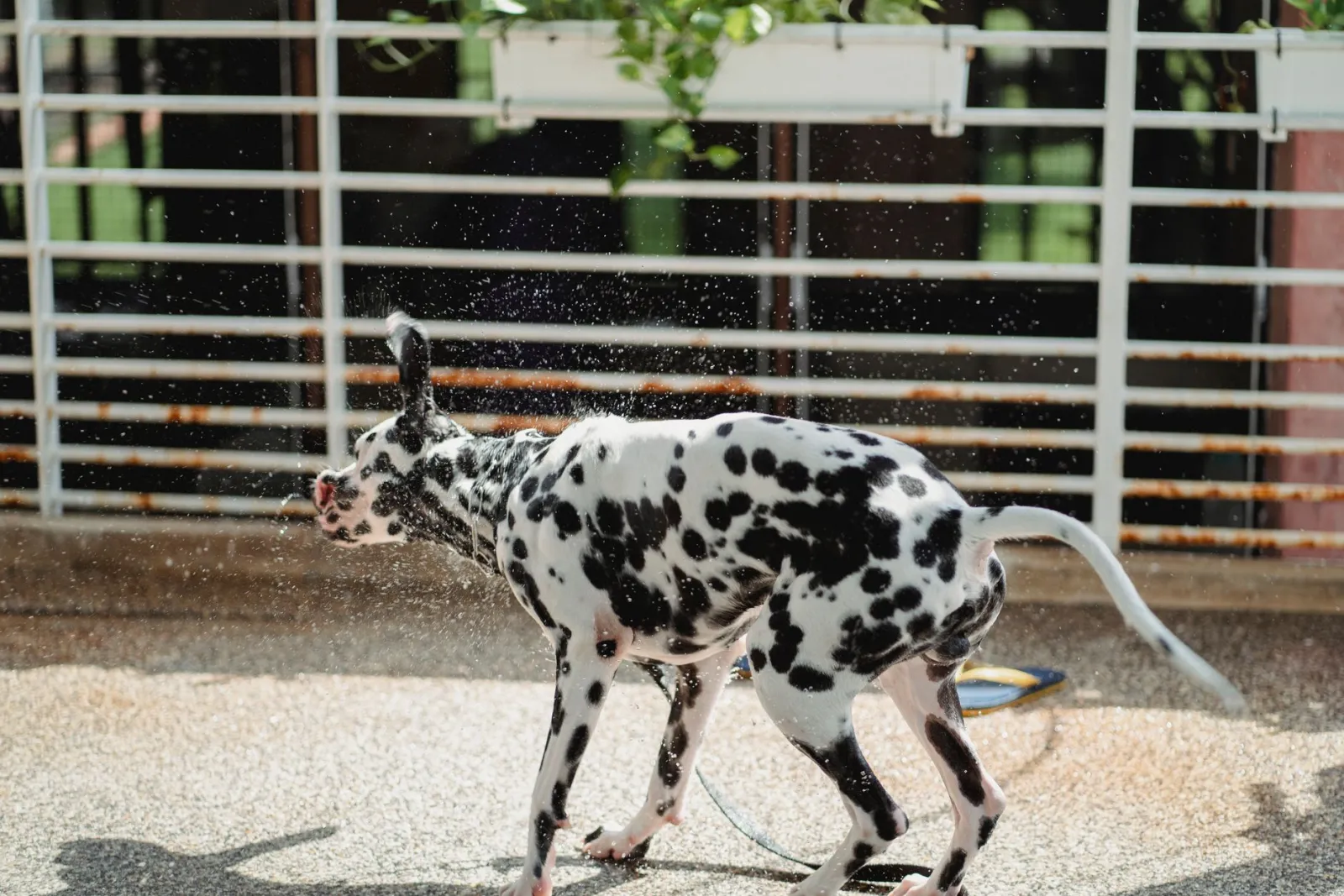
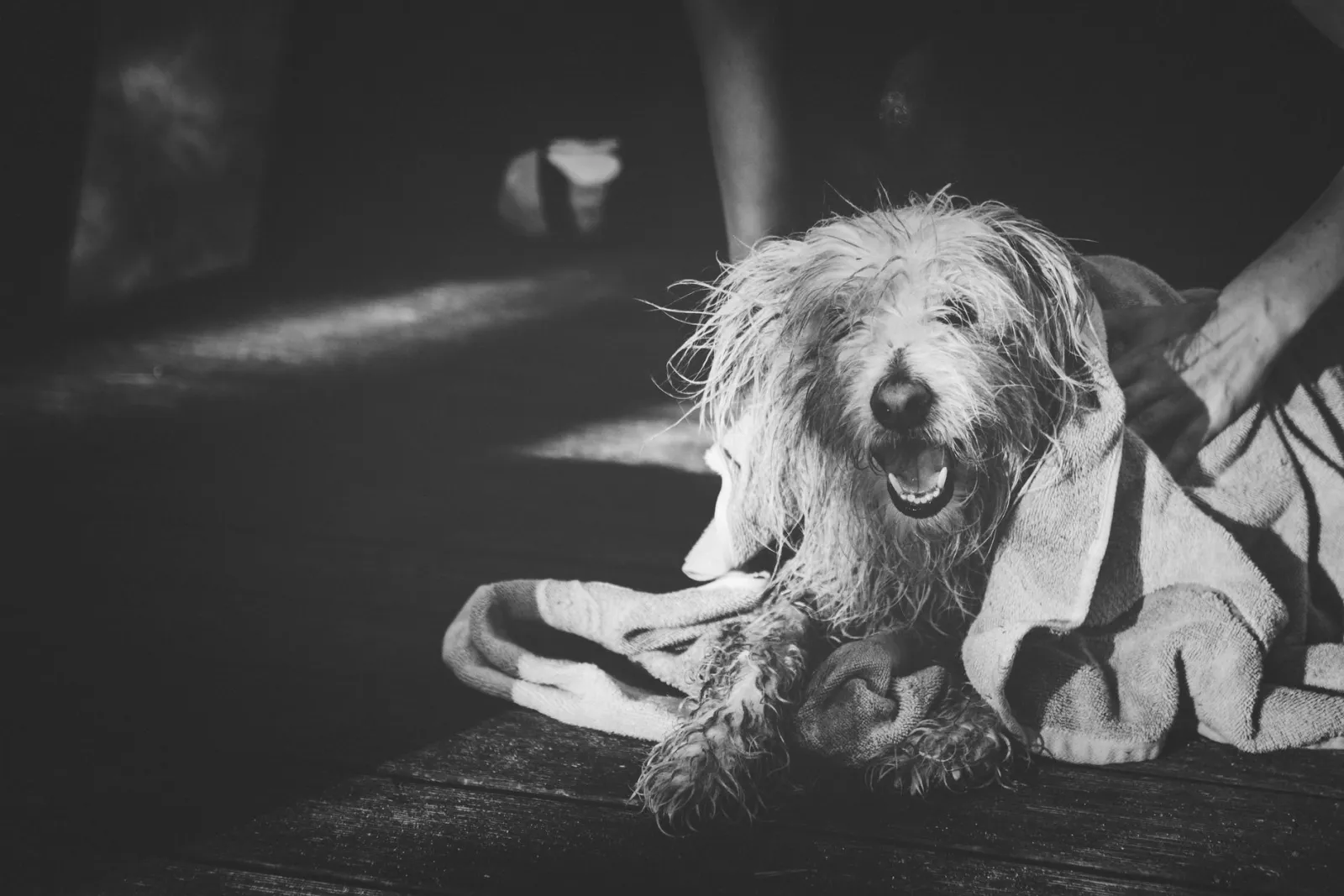
A dedicated drying towel earns its place in the dog-owning household because the alternative — a shared bath towel, a pile of paper towels, or letting the dog air-dry — creates more work than it saves. A dog that comes in wet from rain, a pond, or a bath carries a surprising amount of water in its coat, and that water has to go somewhere. Without a towel reserved for the job, it goes into your floors, your furniture, and your washing machine in the form of a soggy, smelly load of laundry.
The first practical argument is absorbency. A purpose-made drying towel is typically designed with a textured or looped surface that grabs water rather than pushing it around, so a few passes over the back, legs, and belly remove most of the surface moisture. A standard bath towel tends to saturate quickly and then simply spreads dampness across the coat. When a towel is already soaked, every additional stroke makes the dog wetter, not drier, which is why owners often give up halfway and end up with a damp dog on the sofa anyway.
The second argument is hygiene and household separation. Dog coats carry dirt, mud, and the general outdoor debris that comes with walks, and a towel used on the dog should not then be used on human skin or hung back in the family bathroom. Keeping one towel dedicated to the dog keeps that debris contained to a single item you can wash on its own schedule. It also means you always know where the dog towel is, instead of discovering mid-shake that the only clean towel left is the good one.
The third argument is control during the drying itself. Dogs shake, twist, and try to escape a towel, and a towel sized and shaped for the animal is easier to wrap around the body and hold in place while you work down the legs and paws. A large, heavy towel that drags on the floor is awkward to manage with one hand while the other steadies the dog. A towel that is too small leaves the hindquarters and tail soaking, which is exactly where water tends to drip onto floors and into car seats.
Finally, consider the use cases that make a dedicated towel pay off repeatedly: the wet walk in autumn and winter, the post-bath dry, the muddy paw wipe at the door, and the towel left in the car for the unplanned swim. In each of these, having a towel that is absorbent, easy to handle, and reserved for the dog turns a messy moment into a quick routine. The towel is not a luxury item; it is the tool that keeps the water off your home and the mud out of your laundry.
How Dog Drying Towels Differ from Regular Bath Towels
A regular bath towel is built around absorbency for smooth, flat surfaces and a human body that stands still. A dog towel has to solve a different set of problems: a wriggling animal, a coat that traps water in layers, and a need to get the dog dry enough to release back into the house without soaking the floors. That mismatch is why the two products behave so differently in practice.
The first difference is the fabric surface. Standard terry cloth relies on loops that absorb well but tend to grip and drag across fur, especially on longer or double coats. Dog drying towels typically use a flatter, denser weave or a microfiber pile that slides over the coat rather than snagging it. This matters most around the legs, ears, and tail, where a looped towel catches and pulls. A smoother surface lets you wipe in long strokes down the body instead of patting awkwardly.
Absorbency per pass is the second factor. A dog comes out of a bath carrying a surprising amount of water held in the undercoat, and a thin cotton towel saturates quickly and then just pushes water around. Dog towels are generally denser and hold more water before they need wringing, so a single towel can do the work that would otherwise take two or three bath towels. The practical result is fewer trips to the linen cupboard and less water transferred to the floor mid-drying.
Size and shape follow from the use case. Bath towels are square and sized for wrapping a person; dog towels are often longer and narrower, or shaped with a hood or a wrap that closes around the body. A longer format lets you drape the towel over the back and work down both sides without repositioning constantly, and a wrap style keeps a damp dog covered while you deal with the paws. For small breeds a hand-towel size is often enough; for large, heavy-coated dogs you want a towel with enough length to cover the torso in one pass.
Durability and washing also separate them. Dog towels get washed far more often, often with pet bedding and at higher temperatures, and they take abrasion from claws and teeth. Fabrics chosen for dogs tend to tolerate repeated hot washes and rough handling better than decorative bath towels, whose loops can pull and whose hems fray. If you plan to keep one towel by the door for muddy walks as well as baths, that resilience matters more than plushness.
Finally, consider the drying job itself. A bath towel is designed to finish the job on skin; a dog towel is designed to remove the bulk of the water so the coat can air-dry or be finished with a low-heat dryer. Judging a dog towel by how soft it feels is misleading — the useful question is how much water it lifts per stroke and how quickly it can be wrung out and reused.
Microfiber vs Cotton: Choosing the Right Material
When you are choosing a drying towel for a dog, the material matters more than almost any other feature. The two realistic options for most households are microfiber and cotton, and they behave very differently once they are wet and pressed against a damp coat. Microfiber is a synthetic fabric made of very fine fibers, which gives it a large surface area relative to its weight. That structure lets it grip water and lift loose dirt and hair rather than simply pushing them around. Cotton, by contrast, is a natural fiber that absorbs well but releases water more slowly and tends to mat down when soaked.
The practical difference shows up in how each material handles a wet dog. A microfiber towel tends to pull moisture off the coat quickly with light pressure, so you can work over the body, legs, and belly in fewer passes. Because the fibers grab at loose fur, it also collects shedding hair instead of spreading it across the floor. Cotton towels are softer and more familiar to most dogs, and they are excellent for a final pat-down or for wrapping a dog while it settles. The trade-off is that cotton saturates faster and then stops absorbing, so you may need a second towel to finish the job.
Drying speed and reuse are where the choice becomes practical for a busy home. Microfiber dries relatively quickly between uses and can often be wrung out and pressed back into service during a single drying session. Cotton holds more water and takes longer to dry on the line or in the dryer, which matters if you are washing towels frequently. If you dry your dog several times a week, a small set of microfiber towels can cover more sessions than the same number of cotton towels.
Consider the dog’s coat and temperament as well. Short, smooth coats are easy to dry with either material, and a cotton towel is often enough. Dense, double coats and long hair benefit from the water-lifting action of microfiber, especially around the chest, ears, and paws where moisture lingers. For nervous or sensitive dogs, a soft cotton towel used gently may be more readily accepted, while a microfiber towel works well for dogs that tolerate a brisk rub-down. Many owners keep both on hand: microfiber for the bulk of the water and cotton for comfort and finishing.
Finally, think about care and longevity. Microfiber loses some of its absorbency if washed with fabric softener or high heat, so it needs a simple, gentle wash routine. Cotton is forgiving and can be washed hot, but it wears and thins over time. Matching the material to how often you bathe or walk in wet weather, and to your laundry habits, will keep the towel useful for longer.
Size and Shape: Finding the Right Fit for Your Dog
Size and shape matter more than most owners expect. A towel that is too small forces you to chase the dog around for a second pass, while an oversized one drags on the floor, picks up dirt, and becomes awkward to wring out. The right fit depends on three things: the dog’s overall body size, its coat type, and how you plan to use the towel—a quick paw-and-belly wipe after a walk calls for something different than a full post-bath dry.
For small breeds and puppies, a hand towel or a compact towel roughly the length of the dog’s body works well. You want enough fabric to wrap around the torso once with a little overlap, but not so much that it bunches up. A towel that covers the back and sides in a single drape lets you pat rather than scrub, which is gentler on short coats and keeps the process calm for nervous dogs.
Medium and large dogs benefit from a towel long enough to reach from the shoulders to the hindquarters when draped over the back. As a rule of thumb, the towel should span the dog’s body length with a comfortable margin on each end so you can fold it over the flanks. Bath towels suit most medium breeds; larger breeds and double-coated dogs often need a bigger towel or two towels used in sequence—one to absorb the bulk of the water, a second to finish the coat and catch drips.
Shape is as important as size. Rectangular towels are the most versatile: you can fold them lengthwise to create a long drying strip for legs and belly, or bunch them for the face and ears. Square towels wrap neatly around the chest and work well for small dogs. If your dog has a long coat, a larger, flatter towel gives you more surface area to press against the fur and lift moisture out rather than pushing it around. For short-coated dogs, a smaller, denser towel is easier to control and less likely to slide off.
Think about the drying routine you actually follow. If your dog tolerates being wrapped like a burrito after a bath, choose a towel with enough length to tuck the ends securely. If you dry standing up, section by section, a longer towel lets you work down the legs and tail without repositioning constantly. Matching the towel’s dimensions to your dog’s frame and your own handling style keeps drying quick, reduces mess, and makes the towel easier to launder and store between uses.
Absorbency and Drying Speed Explained
Absorbency in a dog drying towel comes down to two things: how much water the fabric can hold, and how quickly it releases that water into the air so it can keep absorbing. A towel that soaks up a lot but holds onto the moisture becomes heavy and stops working partway through. The materials that perform best combine thirsty fibers with a structure that lets water spread out across the surface rather than pooling in one spot.
Microfiber is the reference point here. Its fine fibers create far more surface area than a standard cotton towel of the same size, and that surface area is what grabs water. In practice, a microfiber towel tends to pull a noticeable amount of moisture off a wet coat in a single pass, where a plain cotton towel often just pushes water around and needs several passes to make progress. The difference is most obvious on short, dense coats and on the legs and belly, where water clings close to the skin.
Drying speed depends on how the towel is used as much as on the fabric. A common mistake is rubbing in circles, which flattens the fibers and traps water against the coat. Pressing the towel firmly and squeezing sections of fur works better, because it wrings moisture into the fabric instead of smearing it across the dog. Wringing the towel out partway through and continuing with a drier section keeps absorption high; a saturated towel is effectively done working.
Thickness and weave matter for different jobs. Looser, plush weaves hold more water and suit a soaked dog after a rainy walk or a bath, when there is a lot to remove. Thinner, tighter weaves dry faster between uses and are easier to wring, which makes them handy for paws, faces, and quick touch-ups. A dog with a long or double coat usually benefits from a higher-capacity towel plus a second, thinner one for finishing the extremities.
Drying speed of the towel itself is the practical side that owners notice day to day. Microfiber tends to air-dry faster than thick cotton terry, which matters if you are washing and reusing towels regularly. Hanging a towel loosely rather than bunched on a hook lets air reach the fibers and keeps it ready for the next walk. Matching the towel’s absorbency and drying behavior to your dog’s coat type and your routine is what turns a good towel into one you actually reach for.
How to Use a Drying Towel After Baths and Rainy Walks
Using a drying towel well is mostly about sequence and pressure rather than effort. Start by removing the worst of the water before the towel does any real work. Most of the moisture sits on the surface of the coat and in the loose fur, so a quick squeeze of the paws and a gentle pass along the back with your hand or a dedicated absorbent cloth will stop the towel from becoming saturated in seconds. A towel that is already soaked cannot absorb more, so the first pass should be light and fast, then set that towel aside and reach for a drier one if the coat is still heavy with water.
For a dog that has just come in from the rain, the goal is different from a full bath. You are not trying to dry the coat completely, only to stop water tracking through the house and to keep the dog comfortable. Work from the head and shoulders backward, because water runs down the body and you do not want to push it into the chest or belly. Pat and press rather than rub. Rubbing tangles longer fur and pushes water deeper into the undercoat, which then takes far longer to dry. Press the towel flat against the coat, hold it for a moment so the fabric can draw moisture away, then lift and move to the next section.
After a bath, the coat holds much more water, so plan on several passes with more than one towel. Begin with the back, flanks and haunches, then the chest and belly, and finish with the legs and paws, which are usually the last to dry and the most likely to leave wet prints. Pay particular attention to the areas where fur is thickest and where water collects, such as behind the front legs, around the neck and along the tail. These are the spots that stay damp longest and the ones most likely to drip onto floors and furniture.
Paws deserve their own routine. A dedicated small towel kept by the door makes it easy to wipe each foot after a wet walk, pressing the fabric around the pads and between the toes rather than scrubbing. This keeps mud off carpets and reduces the amount of water the dog brings inside. For longer coats, a towel alone will not dry the dog fully; it removes surface water so that air drying can finish the job, and the dog should be kept somewhere warm and out of draughts until the coat is dry to the touch.
Finally, match the towel to the task. A larger towel suits the body, while a smaller, thinner cloth is easier to control around the face, ears and paws. Keep a dry towel by the door for rainy days and a separate one for bath time, and wash them regularly so they stay absorbent. A towel that has lost its softness or is packed with lint will smear water around instead of lifting it, so replace or launder it when it stops doing its job.
Keeping Mud and Wet Dog Smells Out of Your Home
Mud and wet-dog smell are really two separate problems, and they are best handled at two different points in the routine. Mud is a containment issue: the goal is to stop it crossing the threshold in the first place. Smell is an absorption and airflow issue: the goal is to remove moisture and odor-carrying residue before it settles into fabric and carpet. A drying towel does useful work on both fronts, but only if it is used at the right moment rather than as a last step after the dog has already tracked through the hallway.
For mud, the practical sequence is to intercept the dog before it reaches soft flooring. Keep a dedicated towel within arm’s reach of the main entrance, and use it on the paws and lower legs while the dog is still standing on a hard, wipeable surface. A towel with a textured or ribbed pile grips clumped mud better than a smooth, flat weave, which tends to smear wet soil across the floor instead of lifting it. For dogs that come in heavily soiled, a towel used dry first to take off the bulk, followed by a second pass with a slightly damp corner, removes more than a single wet wipe-down and leaves less residue to transfer to carpets.
Smell is mostly a moisture problem. A wet coat holds odor, and that odor transfers to whatever the dog lies on. Toweling a dog down thoroughly after a wet walk, paying attention to the chest, belly, armpits and between the back legs where moisture lingers longest, does more to control household smell than any surface spray. A towel that is already damp or has been left crumpled in a basket will redistribute stale odor rather than remove it, so rotate towels and wash them regularly at a warm temperature rather than reusing the same one for days.
Placement matters as much as technique. A small towel station by each door the dog uses, plus one in the car for trips to muddy ground, means the towel is there when it is needed instead of being fetched while the dog drips on the floor. Absorbent microfiber towels pack small enough to keep in a hallway drawer or boot, which makes the habit realistic on a dark, wet evening. For very wet, long-coated dogs, a larger towel or a drying coat used after the initial toweling keeps moisture off furniture while the coat finishes drying.
Finally, manage the surfaces the dog contacts immediately after drying. A washable mat or a dedicated towel on the dog’s usual resting spot catches residual dampness and can be laundered far more easily than a sofa or rug. Airflow helps too: leaving a damp towel spread out to dry rather than bunched up prevents it becoming a source of musty smell itself. The overall principle is simple — intercept at the door, dry thoroughly rather than superficially, and keep the towels themselves clean and dry, so the equipment removes mud and odor instead of moving them around the house.
Washing and Caring for Dog Drying Towels
Washing and caring for dog drying towels comes down to three variables: how much soil and oil the fabric has picked up, how hot the wash and dry cycles run, and how the towel is stored between uses. Microfibre and similar synthetic blends lose absorbency when they are washed with fabric softener, because the softener coats the fibres and blocks the tiny channels that hold water. Skip softener entirely and use a mild, low-residue detergent; a liquid detergent formulated for technical fabrics works well, and using less than the bottle suggests is usually better than using more. Wash dog towels separately from human laundry, especially anything that will touch faces or food surfaces, and shake them out outdoors before washing to remove loose hair and grit that would otherwise clog the machine.
Temperature is a trade-off. A warm wash helps lift the oils and waxes that dogs leave on fabric, but very hot water can damage synthetic fibres over time and set odours rather than remove them. A normal warm cycle is a sensible default for routine washes, reserving a hotter cycle for towels that have been used on muddy walks or after a swim. For heavily soiled towels, a pre-rinse or a short soak in plain water before the main cycle loosens the worst of the dirt so the detergent can do its job. If a towel still smells after washing, rewash it rather than drying it, since heat will lock the smell in.
Drying matters as much as washing. Tumble drying on low heat restores the loft and fluffiness that make a towel feel absorbent, but high heat can melt or stiffen synthetic fibres and shorten the towel’s useful life. Air drying works well in warm weather, though towels dried flat or on a line can feel stiff until they are used once or twice. Avoid leaving damp towels bunched in a bag or basket; spread them out so air can circulate, and wash them promptly rather than letting them sit for days.
Between washes, store drying towels dry and loosely folded rather than compressed in a cupboard, and keep a clean towel separate from one that has been used on a wet dog. A practical rotation helps: one towel in use, one in the wash, one clean and ready. Towels used on paws and muddy underbellies tend to need washing more often than those used only to blot a damp coat, so judge by feel and smell rather than by a fixed schedule. Replacing towels when the fibres flatten, the edges fray, or absorbency drops noticeably keeps the routine effective.
Drying Towels for Puppies and Sensitive Skin
Puppies and dogs with sensitive skin need a gentler approach to drying than the typical adult coat. A puppy’s skin is thinner and more reactive, and its coat is often softer and less dense than an adult’s, so a towel that feels pleasantly scrubby on a mature Labrador can be irritating on a young or delicate dog. The same applies to senior dogs, dogs with sparse or fine hair, and breeds whose skin reacts easily to friction. In these cases, the goal shifts from maximum water absorption to a balance of absorbency, softness, and low friction.
The first criterion is fabric texture. Looped terry cloth and tightly woven microfiber can feel rough against thin skin, especially when dragged back and forth. For sensitive dogs, look for towels with a short, dense pile or a smooth, brushed surface that glides rather than grips. A towel that feels soft against your own inner wrist is a reasonable benchmark; if it feels scratchy there, it will likely feel worse on a puppy’s belly or inner thighs, where the skin is thinnest.
The second criterion is technique, which matters as much as the towel itself. Instead of rubbing, press the towel against the coat and let it absorb, working in sections from the back toward the legs and head. Patting and blotting reduce friction and the risk of tangling fine puppy hair. For faces and ears, a smaller, thinner towel or a soft cloth is easier to control and less likely to be pulled away abruptly. Puppies in particular benefit from short, calm drying sessions rather than one long wrestle, so a towel that absorbs quickly lets you finish before the dog becomes restless.
Weight and size also play a role. An oversized, heavy towel is awkward to maneuver around a small puppy and can feel overwhelming. A lighter towel in a smaller size gives you more control and is easier to wrap around a wriggling body. For dogs with sensitive skin, a towel that stays soft after repeated washing is worth prioritizing, since stiff, stiffened fabric from detergent residue or hard water is a common source of irritation. Choosing a gentle, fragrance-free wash routine and skipping fabric softener helps keep the fibers supple.
Finally, consider how the towel behaves on the areas most prone to irritation: the armpits, groin, and between the toes. These spots trap moisture and are easily abraded by rough fabric, so a soft towel used with a blotting motion is the safer choice. Keeping a dedicated soft towel for these zones, separate from the heavier towel used on the back and sides, is a practical habit. The right towel for a puppy or sensitive dog is not the most absorbent one on the shelf but the one that lets you dry thoroughly with minimal rubbing and no lingering dampness against the skin.
Building a Practical Grooming Kit Around Your Drying Towel
A drying towel works best as the centerpiece of a small, coherent grooming kit rather than as a standalone purchase. The logic is simple: most of the mess a dog brings into the house is created in the minutes after a walk or bath, and the tools you reach for in that window determine whether the towel actually solves the problem or just moves the water around. Build the kit around the towel’s job — absorbing moisture and containing debris — and add only what supports that job.
Start with a second towel, ideally of a different type from your primary drying towel. Two towels let you do a first pass that takes the bulk of the water and a second pass that finishes the coat, which is far more effective than pressing one saturated towel repeatedly against the dog. A microfiber towel paired with a more absorbent waffle-weave or chenille-style towel covers both stages well. Keep them stored together so the routine stays quick, because a dog that has to wait while you search for a towel will shake — and shaking redistributes water onto walls, furniture, and you.
A dedicated mat or towel-down zone belongs in the kit as well. Placing a moisture-absorbing mat at the entry point or beside the bath gives the dog a predictable place to stand during drying, which reduces wandering and the trail of damp pawprints that follows. The mat does not need to be elaborate; what matters is that it stays in the same spot so the dog learns the routine and settles instead of resisting. Pair it with a simple paw-cleaning cloth kept nearby, since paws are the part of the dog most likely to carry mud and grit past the towel stage.
Grooming tools that complement the towel depend on coat type. For double-coated and long-haired dogs, a undercoat rake or slicker brush used before toweling removes loose fur that would otherwise mat into the towel and reduce its absorbency; brushing first also shortens drying time because the coat is less clumped. For short-coated dogs, a rubber curry or grooming mitt is often enough to loosen dirt and stimulate the skin before the towel pass. The principle is to remove what the towel cannot absorb — loose hair and surface debris — before the towel touches the coat.
Finally, include a small storage solution so the kit functions as a unit: a basket, bin, or hanging organizer that holds the towels, brush, and paw cloth in one accessible place. A kit that lives in a single location gets used consistently; one scattered across cabinets gets skipped. Rotate towels regularly and wash them without fabric softener, which coats fibers and reduces absorbency over time. The goal is a compact, repeatable system where the drying towel does its job well because everything around it — the second towel, the mat, the pre-brush — has already cleared the way.
Frequently asked questions
What is the best material for a dog drying towel?
Microfiber is generally the most effective material for drying a dog because its fine fibers lift water from the coat instead of just pushing it around. Cotton terry towels are absorbent and work well, but they tend to saturate faster and need more passes over the dog. Look for a towel with a soft, dense pile and finished edges, since rough or frayed fabric can snag fur. The best choice is one that absorbs quickly, feels gentle against skin, and is sized large enough to wrap around your dog’s body.
How many drying towels should I keep for my dog?
A practical setup is one towel in active use, one clean spare ready to go, and one in the wash. Dogs often get wet more than once in a day, especially in rainy weather or after muddy walks, so having a dry backup avoids reaching for a damp towel. If your dog has a thick or long coat, keep an extra towel on hand because the first one will soak through quickly. Rotating towels also gives each one time to dry fully between uses.
Can I use a regular bath towel to dry my dog?
Yes, a regular bath towel can dry your dog, and many owners use one successfully. The main drawbacks are that standard cotton towels absorb less efficiently than microfiber and can become heavy and soaked before the dog is dry. They also tend to be larger than needed, which makes wrapping a small dog awkward. A bath towel works best if you blot and press rather than rub, and if you have a second dry towel ready for a final pass.
How do I wash dog drying towels without spreading odors?
Shake loose hair off outdoors before the towel goes anywhere near your machine, then wash towels separately from human laundry. Use a normal detergent and a warm wash cycle, and avoid overloading the drum so water can move through the fabric. Skip fabric softener, since it coats fibers and reduces absorbency. Dry the towels completely, ideally in fresh air or a dryer on a suitable setting, because a towel that stays damp develops a lingering smell. Store clean towels somewhere dry and ventilated.
Are microfiber drying towels safe for puppies?
Microfiber towels are generally safe for puppies when used gently. The fabric is soft and does not scratch skin, but puppies have delicate coats and thin skin, so blot and press rather than rubbing briskly. Keep the towel away from the puppy’s mouth, since loose fibers should not be chewed or swallowed. Introduce the towel calmly, let the puppy sniff it first, and keep sessions short so drying does not become stressful. Always supervise use, and stop if the puppy seems uncomfortable.
How do I dry a wet dog quickly without soaking the house?
Start at the door: confine the dog to a hard-floored area or a washable mat before toweling begins. Use an absorbent towel to press water out of the legs, belly, and chest first, since those areas drip most. Work from the head toward the tail, wringing or swapping towels as they saturate. A second dry towel for a final pass removes remaining surface moisture. Keep the dog in that contained area until the coat is mostly dry, and wipe down floors afterward.
Do dog drying towels work for short-haired breeds?
Yes, drying towels work well for short-haired breeds, though the job is different. Short coats hold less water, so a quick blot with a microfiber towel often removes most surface moisture. The towel is especially useful for drying legs, paws, and the belly, where mud and dampness collect. Because short-haired dogs dry faster, you may not need a large towel; a smaller one sized for the body works fine. A final dry pass helps prevent damp patches on furniture.
How often should I replace my dog’s drying towel?
Replace a drying towel when it stops absorbing well, develops a persistent smell that survives washing, or shows frayed edges and thin patches. Fabric softener buildup and repeated washing gradually reduce absorbency, so a towel that leaves the dog damp after several passes has likely reached the end of its useful life. Keep towels clean and fully dried between uses to extend their life. Having a spare on hand makes it easy to retire a worn towel without interrupting your routine.
Read next :How do self-cleaning cat litters work? · Home Bargains Garden Furniture: A Practical Guide for Pet Owners · Standard Sofa Sizes: A Complete Guide to Choosing the Right Fit · Best Dog Toys: A Practical Guide for a Happy, Healthy Home · Safe Indoor Plants for Dogs: A Room-by-Room Guide to Pet-Safe Greenery
Work out your own case in 30 seconds:
Methodology
This calculator produces an indicative estimate based on the parameters you enter. The ranges used reflect typical market tiers in the eco and energy savings space and are neither a commercial offer nor a guarantee. Prices and availability may vary.
Full guide :Appliances
More from this guide :
Was this guide helpful?
Share your experience with the WiseHomeGuides community.